


Coenzyme Q10 protects against burn-induced mitochondrial dysfunction and impaired insulin signaling in mouse skeletal muscle
- PMID: 30761259
- PMCID: PMC6356165
- DOI: 10.1002/2211-5463.12580
Coenzyme Q10 protects against burn-induced mitochondrial dysfunction and impaired insulin signaling in mouse skeletal muscle
Abstract
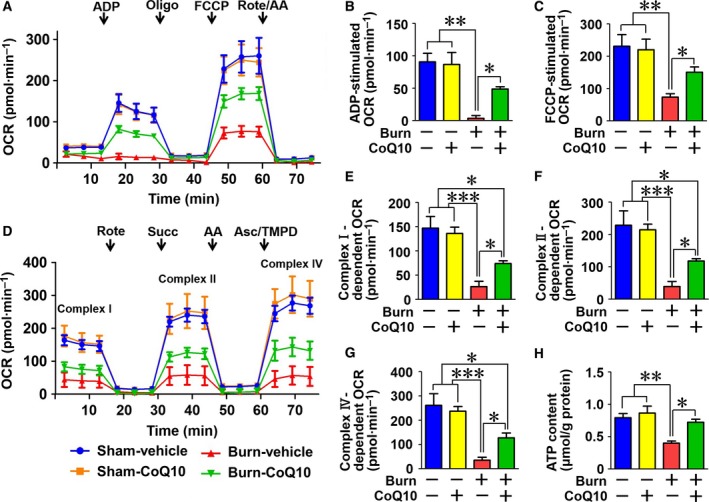
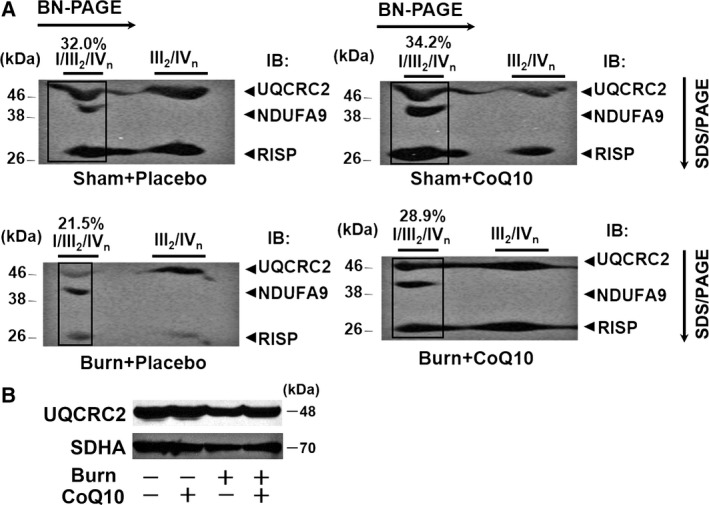
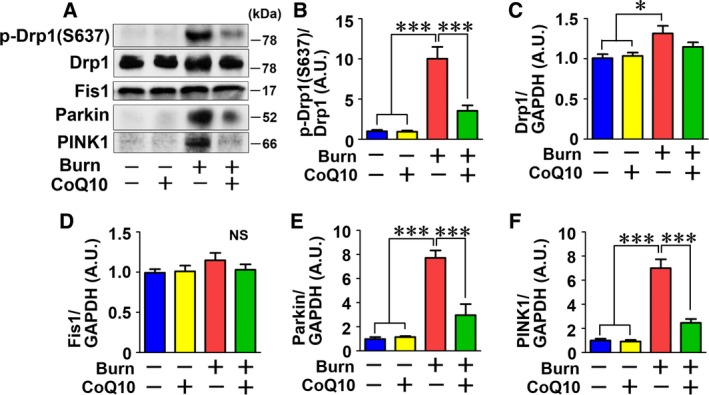
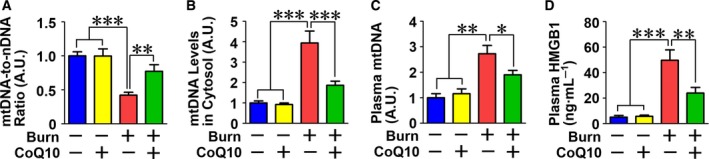
Mitochondrial dysfunction is associated with metabolic alterations in various disease states, including major trauma (e.g., burn injury). Metabolic derangements, including muscle insulin resistance and hyperlactatemia, are a clinically significant complication of major trauma. Coenzyme Q10 (CoQ10) is an essential cofactor for mitochondrial electron transport, and its reduced form acts as a lipophilic antioxidant. Here, we report that burn injury induces impaired muscle insulin signaling, hyperlactatemia, mitochondrial dysfunction (as indicated by suppressed mitochondrial oxygen consumption rates), morphological alterations of the mitochondria (e. g., enlargement, and loss of cristae structure), mitochondrial oxidative stress, and disruption of mitochondrial integrity (as reflected by increased mitochondrial DNA levels in the cytosol and circulation). All of these alterations were significantly alleviated by CoQ10 treatment compared with vehicle alone. These findings indicate that CoQ10 treatment is efficacious in protecting against mitochondrial dysfunction and insulin resistance in skeletal muscle of burned mice. Our data highlight CoQ10 as a potential new strategy to prevent mitochondrial damage and metabolic dysfunction in burn patients.
Keywords: burn injury; coenzyme Q10; insulin resistance; mitochondrial dysfunction; skeletal muscle.
Figures




References
-
- Cochran A, Edelman LS, Saffle JR and Morris SE (2007) The relationship of serum lactate and base deficit in burn patients to mortality. J Burn Care Res 28, 231–240. - PubMed
-
- Gore DC, Ferrando A, Barnett J, Wolf SE, Desai M, Herndon DN, Goodwin C & Wolfe RR (2000) Influence of glucose kinetics on plasma lactate concentration and energy expenditure in severely burned patients. J Trauma 49, 673–677; discussion 677‐8. - PubMed
-
- Brealey D, Brand M, Hargreaves I, Heales S, Land J, Smolenski R, Davies NA, Cooper CE and Singer M (2002) Association between mitochondrial dysfunction and severity and outcome of septic shock. Lancet 360, 219–223. - PubMed
Publication types
MeSH terms
Substances
Grants and funding
LinkOut - more resources
Full Text Sources
Medical
Research Materials
