


Impact of the SPOP Mutant Subtype on the Interpretation of Clinical Parameters in Prostate Cancer
- PMID: 30761387
- PMCID: PMC6370327
- DOI: 10.1200/PO.18.00036
Impact of the SPOP Mutant Subtype on the Interpretation of Clinical Parameters in Prostate Cancer
Abstract
Purpose: Molecular characterization of prostate cancer, including The Cancer Genome Atlas, has revealed distinct subtypes with underlying genomic alterations. One of these core subtypes, SPOP (speckle-type POZ protein) mutant prostate cancer, has previously only been identifiable via DNA sequencing, which has made the impact on prognosis and routinely used risk stratification parameters unclear.
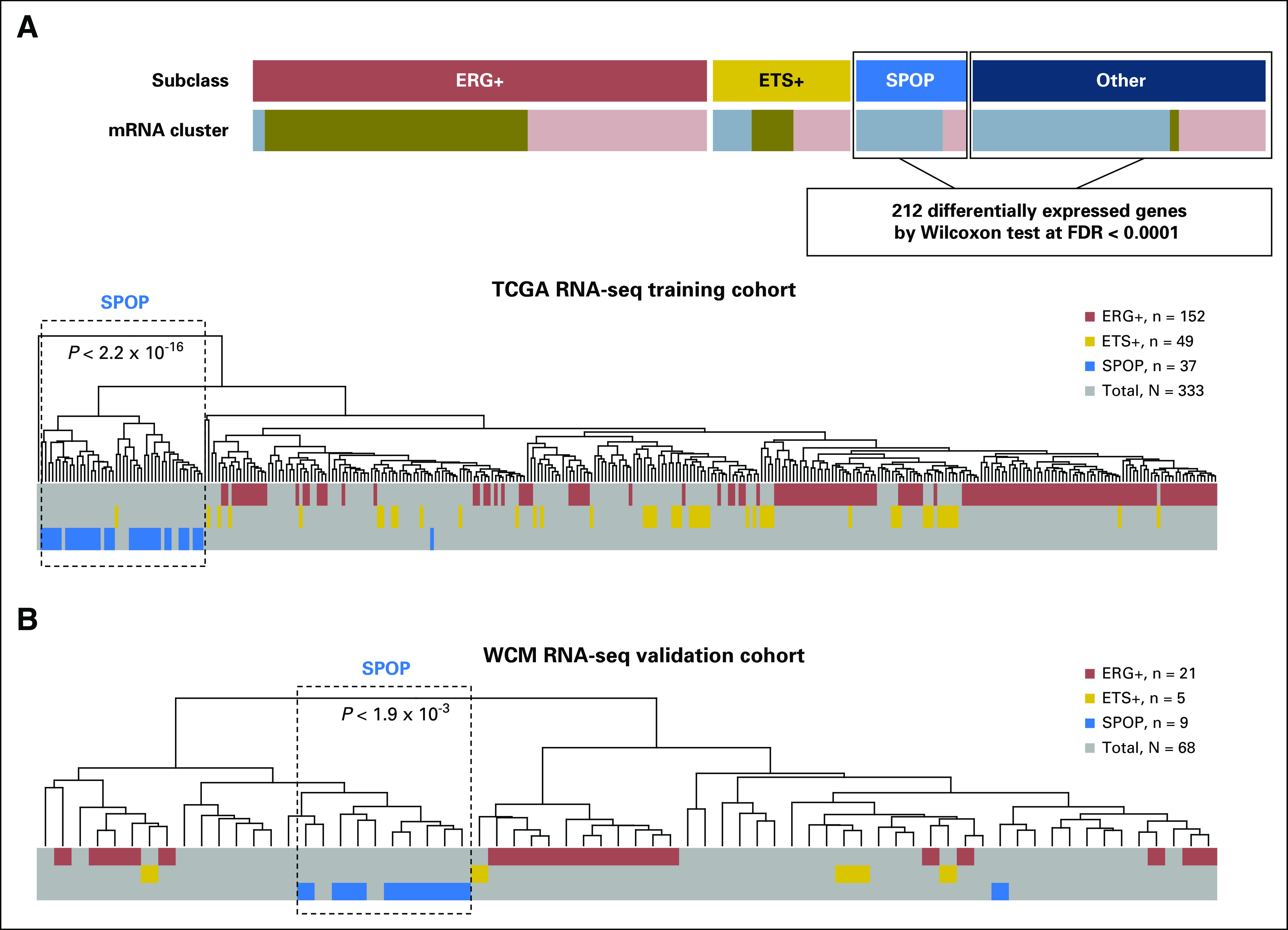
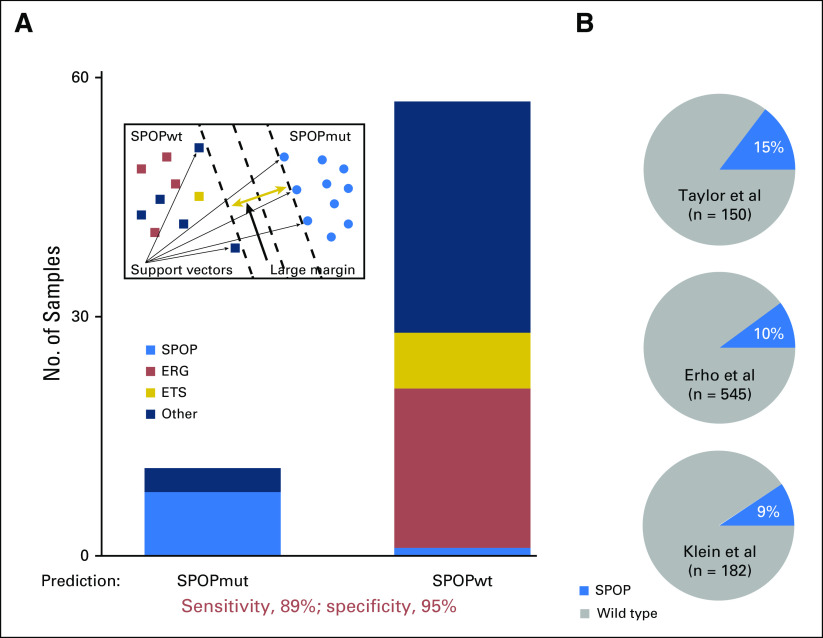
Methods: We have developed a novel gene expression signature, classifier (Subclass Predictor Based on Transcriptional Data), and decision tree to predict the SPOP mutant subclass from RNA gene expression data and classify common prostate cancer molecular subtypes. We then validated and further interrogated the association of prostate cancer molecular subtypes with pathologic and clinical outcomes in retrospective and prospective cohorts of 8,158 patients.
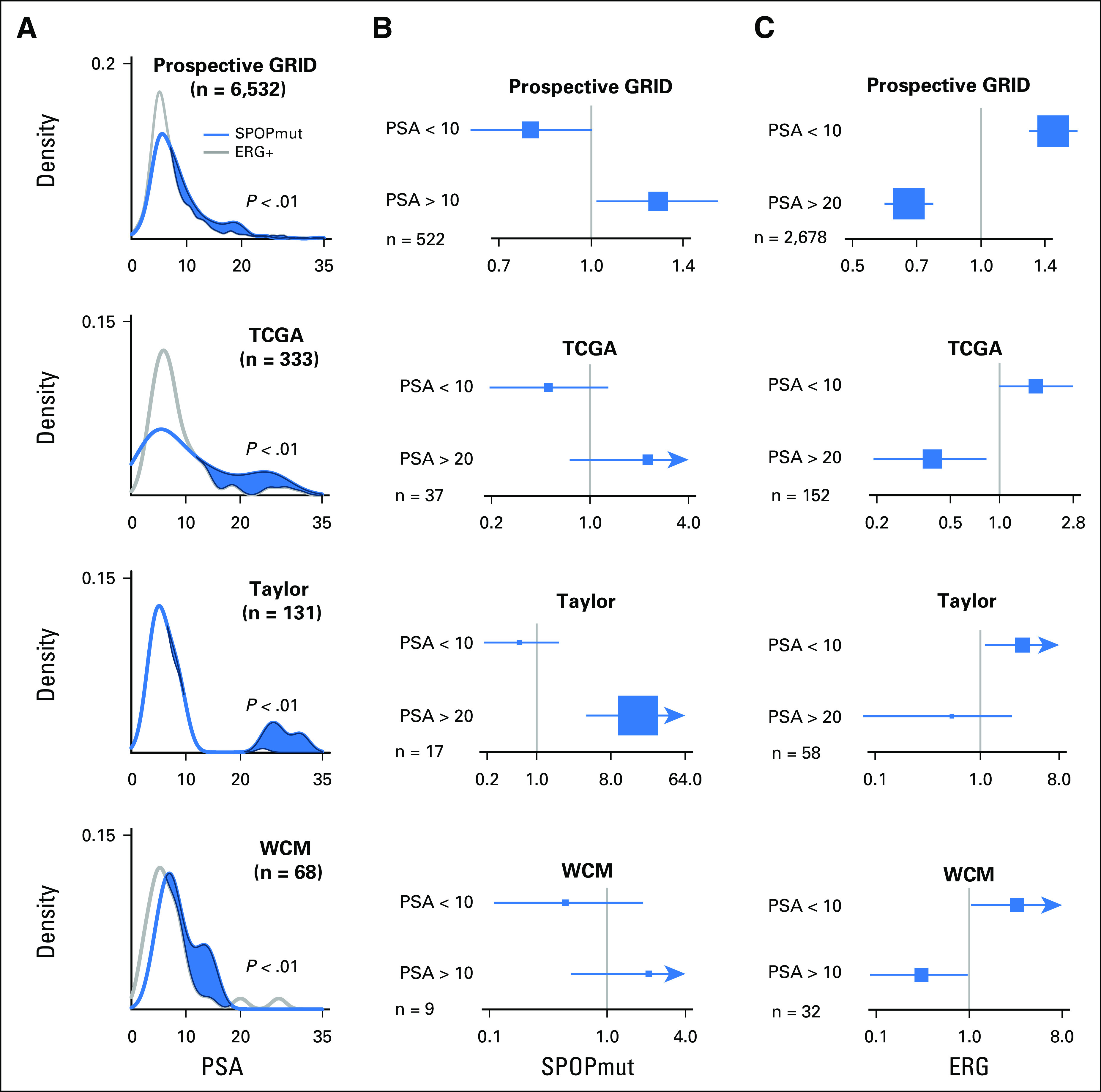
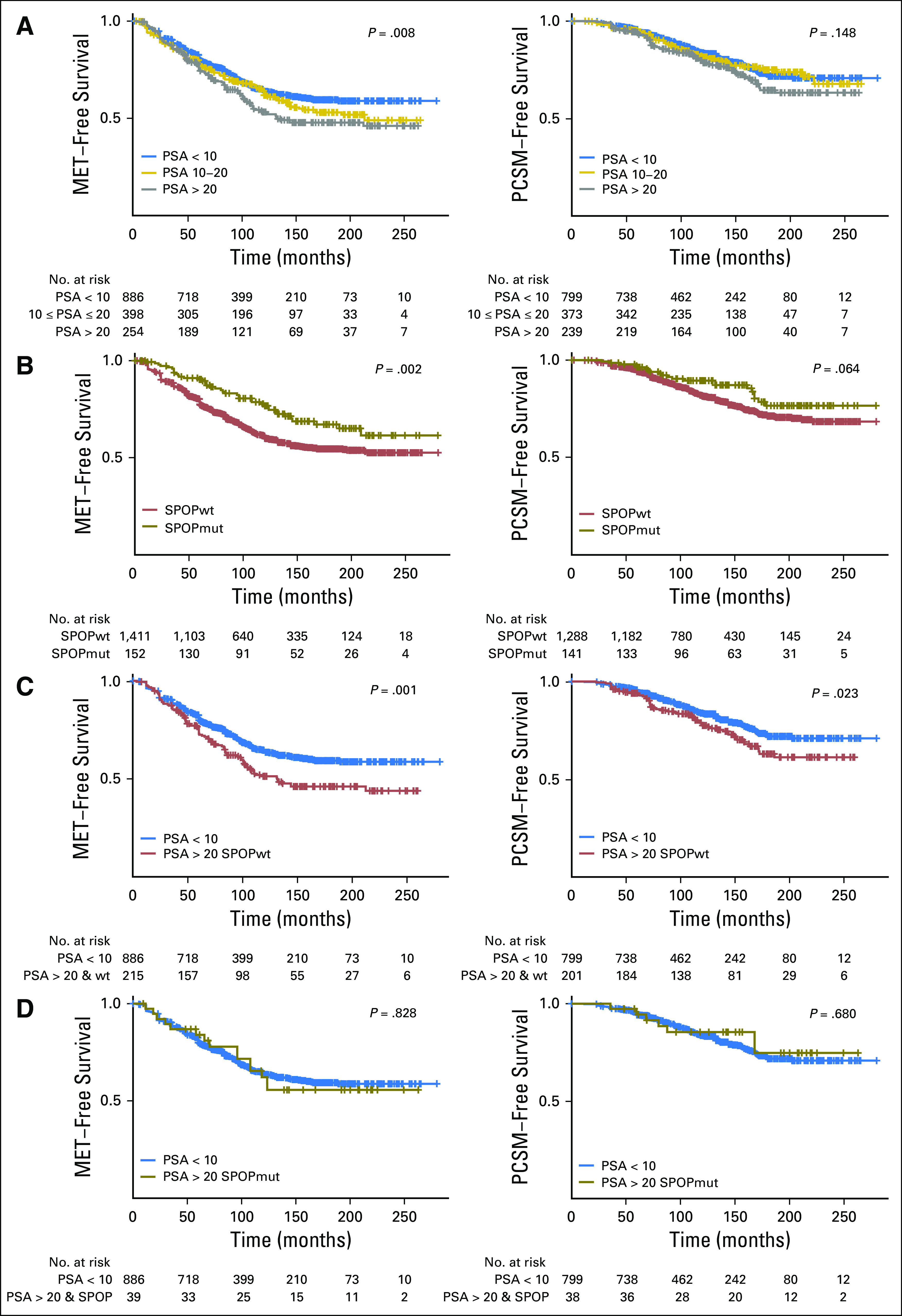
Results: The subclass predictor based on transcriptional data model showed high sensitivity and specificity in multiple cohorts across both RNA sequencing and microarray gene expression platforms. We predicted approximately 8% to 9% of cases to be SPOP mutant from both retrospective and prospective cohorts. We found that the SPOP mutant subclass was associated with lower frequency of positive margins, extraprostatic extension, and seminal vesicle invasion at prostatectomy; however, SPOP mutant cancers were associated with higher pretreatment serum prostate-specific antigen (PSA). The association between SPOP mutant status and higher PSA level was validated in three independent cohorts. Despite high pretreatment PSA, the SPOP mutant subtype was associated with a favorable prognosis with improved metastasis-free survival, particularly in patients with high-risk preoperative PSA levels.
Conclusion: Using a novel gene expression model and a decision tree algorithm to define prostate cancer molecular subclasses, we found that the SPOP mutant subclass is associated with higher preoperative PSA, less adverse pathologic features, and favorable prognosis. These findings suggest a paradigm in which the interpretation of common risk stratification parameters, particularly PSA, may be influenced by the underlying molecular subtype of prostate cancer.
Conflict of interest statement
AUTHORS’ DISCLOSURES OF POTENTIAL CONFLICTS OF INTEREST The following represents disclosure information provided by authors of this manuscript. All relationships are considered compensated. Relationships are self-held unless noted. I = Immediate Family Member, Inst = My Institution. Relationships may not relate to the subject matter of this manuscript. For more information about ASCO’s conflict of interest policy, please refer to www.asco.org/rwc or ascopubs.org/po/author-center. Deli Liu No relationship to disclose Mandeep Takhar Employment: GenomeDx Mohammed Alshalalfa Employment: GenomeDx Travel, Accommodations, Expenses: GenomeDx Nicholas Erho Employment: GenomeDx Jonathan Shoag No relationship to disclose Robert B. Jenkins Patents, Royalties, Other Intellectual Property: Abbott Molecular, GenomeDx R. Jeffrey Karnes Research Funding: GenomeDx Patents, Royalties, Other Intellectual Property: GenomeDx Travel, Accommodations, Expenses: GenomeDx Ashley E. Ross Ashley E. Ross Stock and Other Ownership Interests: GenomeDx Honoraria: Healthtronics Consulting or Advisory Role: Healthtronics Research Funding: Metamark Genetics Edward M. Schaeffer Consulting or Advisory Role: OPKO Diagnostics, AbbVie Mark A. Rubin Research Funding: Eli Lilly, Janssen Pharmaceuticals Bruce Trock Consulting or Advisory Role: GenomeDx Consulting or Advisory Role: Myriad Genetics Research Funding: Myriad Genetics, MDxHealth Eric A. Klein Consulting or Advisory Role: GenomeDx, Genomic Health Speakers’ Bureau: Genomic Health Robert B. Den Consulting or Advisory Role: GenomeDx Speakers’ Bureau: Bayer Research Funding: Medivation, Astellas Pharma, GenomeDx Travel, Accommodations, Expenses: GenomeDx Scott A. Tomlins Leadership: Strata Oncology Stock and Other Ownership Interests: Strata Oncology Consulting or Advisory Role: AbbVie, Janssen Pharmaceuticals, Astellas Pharma, Medivation, Strata Oncology, Sanofi, Almac Diagnostics Research Funding: Astellas Pharma (Inst), Medivation (Inst), GenomeDx (Inst) Patents, Royalties, Other Intellectual Property: Coauthor on a patent issued to the University of Michigan on ETS gene fusions in prostate cancer Travel, Accommodations, Expenses: Strata Oncology Daniel E. Spratt No relationship to disclose Elai Davicioni Employment: GenomeDx Leadership: GenomeDx Stock and Other Ownership Interests: GenomeDx Patents, Royalties, Other Intellectual Property: Cancer diagnostics using biomarkers 20140066323 Travel, Accommodations, Expenses: GenomeDx Andrea Sboner No relationship to disclose Christopher E. Barbieri Patents, Royalties, Other Intellectual Property: Coinventor on a patent application filed regarding SPOP mutations in prostate cancer by Weill Cornell Medicine
Figures

References
-
- National Comprehensive Cancer Network NCCN guidelines: Prostate cancer (version 2.2017) https://www.nccn.org/professionals/physician_gls/pdf/prostate.pdf
Grants and funding
LinkOut - more resources
Full Text Sources
Research Materials
Miscellaneous
