Review
. 2019 Jun;38(1-2):25-49.
doi: 10.1007/s10555-019-09782-9.

Imaging tumor acidosis: a survey of the available techniques for mapping in vivo tumor pH

Affiliations
Review

Imaging tumor acidosis: a survey of the available techniques for mapping in vivo tumor pH

Annasofia Anemone et al. Cancer Metastasis Rev. 2019 Jun.

Abstract

Cancer cells are characterized by a metabolic shift in cellular energy production, orchestrated by the transcription factor HIF-1α, from mitochondrial oxidative phosphorylation to increased glycolysis, regardless of oxygen availability (Warburg effect). The constitutive upregulation of glycolysis leads to an overproduction of acidic metabolic products, resulting in enhanced acidification of the extracellular pH (pHe ~ 6.5), which is a salient feature of the tumor microenvironment. Despite the importance of pH and tumor acidosis, there is currently no established clinical tool available to image the spatial distribution of tumor pHe. The purpose of this review is to describe various imaging modalities for measuring intracellular and extracellular tumor pH. For each technique, we will discuss main advantages and limitations, pH accuracy and sensitivity of the applied pH-responsive probes and potential translatability to the clinic. Particular attention is devoted to methods that can provide pH measurements at high spatial resolution useful to address the task of tumor heterogeneity and to studies that explored tumor pH imaging for assessing treatment response to anticancer therapies.

Keywords: Chemical Exchange Saturation Transfer (CEST) imaging; Iopamidol; Magnetic resonance imaging; Tumor acidosis; pH imaging; pH-responsive probes.


Conflict of interest statement

The authors declare that they have no conflict of interest.

Figures
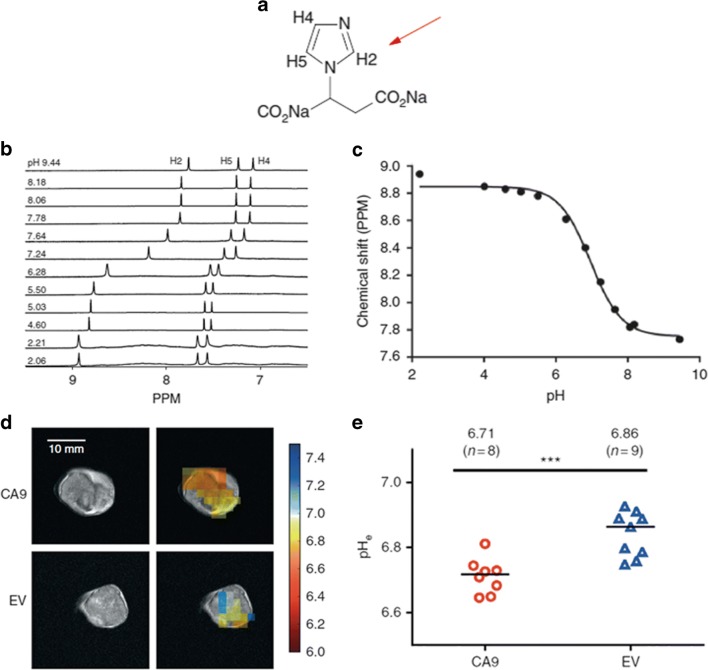
Fig. 1
Fig. 1
MRS imaging of tumor pH. Chemical formula of ISUCA and indications of proton resonances (pH-dependent H2, red arrow) on the imidazole ring (a). Plasmatic MR spectra of ISUCA at different pH values indicate the chemical shift dependency of H2 from pH changes (b). pH calibration curve of the chemical shift of H2 with changes in pH (c). Parametric pHe map over-imposed on T2-weighted MR images of high expressing CAIX (CA9) and low expression CAIX (EV) tumors (d) and median pHe value for CA9 and EV tumors (e). Adapted with permission from British Journal of Cancer 2018, 119, 622–630
Fig. 2
Fig. 2
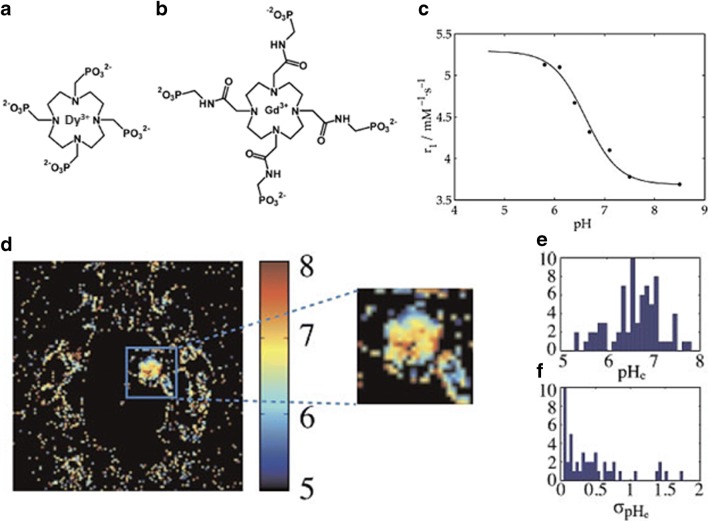
MRI-based relaxometry imaging of tumor pH. Chemical structure of the pH-insensitive T2 agent, Dy-DOTP (a) and of the pH-sensitive T1 agent, Gd-DOTA-4AmP (b). pH dependence of Gd-DOTA-4AmP relaxivity (c). Tumor pHe maps obtained following the injection of the cocktail of the two agents (d) and histograms of pH values (e) and standard deviations (f) within a region of interest. Reproduced with permission from NMR in Biomedicine 2011, 24, 1380–1391
Fig. 3
Fig. 3
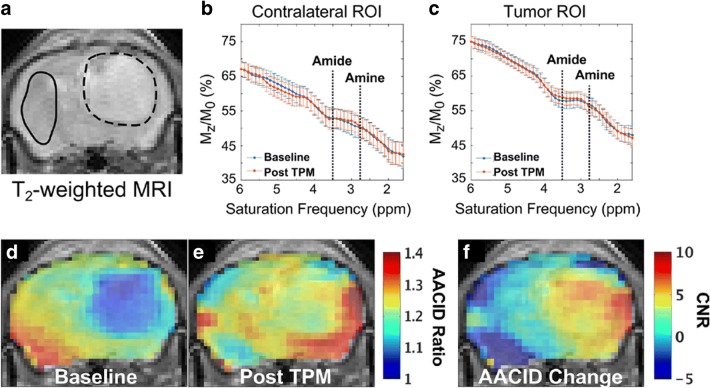
MRI-CEST imaging of tumor pH using endogenous DIACEST approach. T2-weighted MR image of a mouse brain with a U87 GBM tumor showing (a) region of interests (ROI) for the tumor region (dashed line) and for the contralateral region (solid line). CEST spectra from the contralateral (b) and from the tumor tissue (c) ROIs at baseline (blue) and ~ 75 min (red) after administration of 120 mg/kg of topiramate (TPM). The AACID measurement from the amine (2.75 ppm) and the amide (3.5 ppm) signal allows the calculation of the AACID maps before and ~ 75 min after i.p. injection of TPM (d, e, respectively) and the calculation of the AACID change map showing tumor selective acidification (f). Adapted with permission from Journal of Neuro-Oncology 2016, 130, 465–472
Fig. 4
Fig. 4
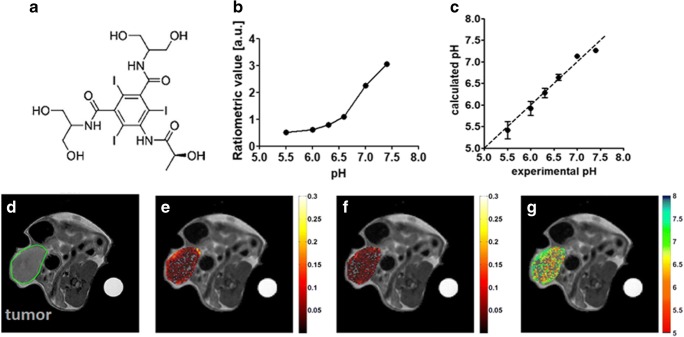
MRI-CEST imaging of tumor pH using exogenous DIACEST probes. Chemical structure of Iopamidol (a), pH dependence of the ratiometric values (b) calculated by ratioing the ST% contrast for the two amide groups (4.2 ppm and 5.5 ppm) and accuracy of the proposed method by comparing calculated vs. measured pH values (c) at 7 T. Adapted with permission by John Wiley and Sons from Magnetic Resonance in Medicine 2011, 65, 202–211. Representative T2w anatomical images of a TS/A mammary bearing tumor mouse with tumor ROI highlighted in green (d). Contrast ST% difference map calculated at 4.2 ppm (e) and 5.5 ppm (f) after Iopamidol i.v. injection (as ST% post–ST% pre injection) and corresponding calculated tumor pHe map over-imposed on the anatomical image (g)
Fig. 5
Fig. 5
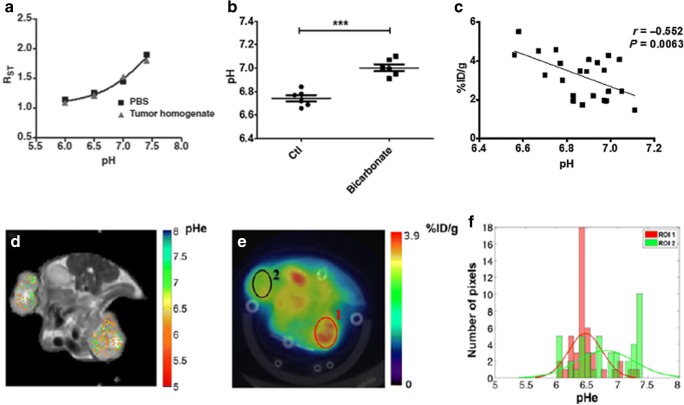
First in vivo demonstration of the relationship between increased glucose uptake and tumor acidosis. Plot of the pH dependence of the ratiometric (RST) values in the pH range from 6 to 7.4 for Iopamidol in phosphate buffer solution and in tumor tissue homogenate at 3 T (a). Average tumor pHe values calculated in mice drinking natural or sodium bicarbonated water showing a statistically significant increase of tumor pHe after 5 days (b). Scatterplots with regression line (solid line) showing a marked and significant correlation between 18F-FDG-PET %ID/g uptake and MRI-CEST-derived tumor acidosis (c). Combined MRI T2w/CEST pH (d) and 18F-FDG PET/CT (e) images of a representative TS/A tumor-bearing mouse. The tumor on the right side (ROI 1) shows a higher 18F-FDG uptake in the PET image, corresponding to more acidic pHe values in the MRI-CEST pHe map, whereas tumor on the left side (ROI 2) is characterized by lower 18F-FDG uptake values and corresponding less acidic pH values, as shown in the histogram plot (g). Adapted with permission from Cancer Research 2016, 76, 6463–6470
Fig. 6
Fig. 6
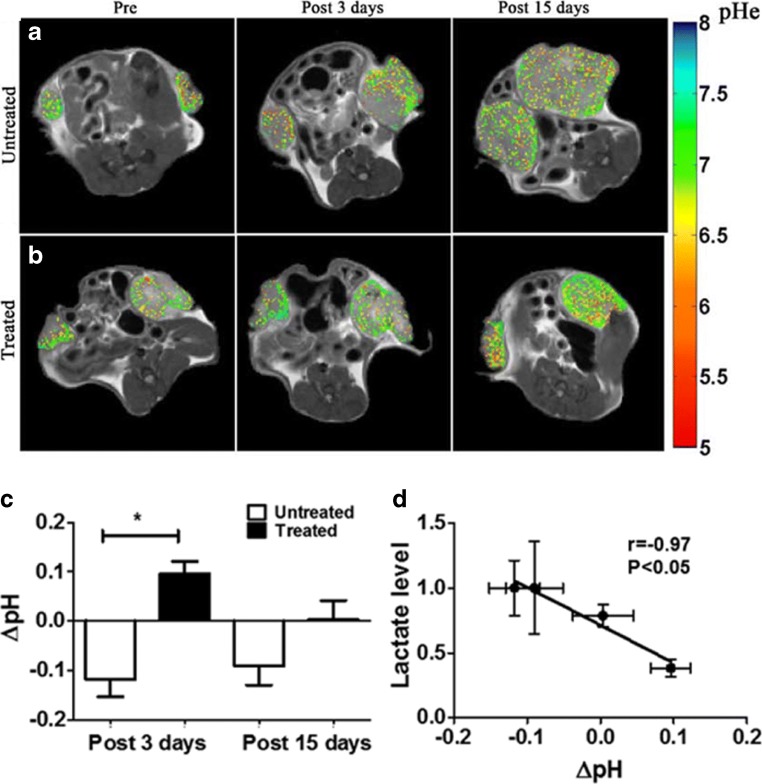
MRI-CEST tumor pH assessment of treatment response to novel anticancer therapies. Tumor extracellular pH maps (measured following Iopamidol injection) for representative mice at baseline, 3 days and 15 days for control group (a) or upon dichloroacetate (DCA) treatment (b) showing increased reduction of tumor acidosis. Changes in mean tumor pH values (in comparison to baseline tumor pH values) between untreated and treated mice with DCA at different time points (c) and correlation with lactate level measured in excised tumors (d). Adapted with permission from International Journal of Oncology 2017, 51, 498–506
Fig. 7
Fig. 7
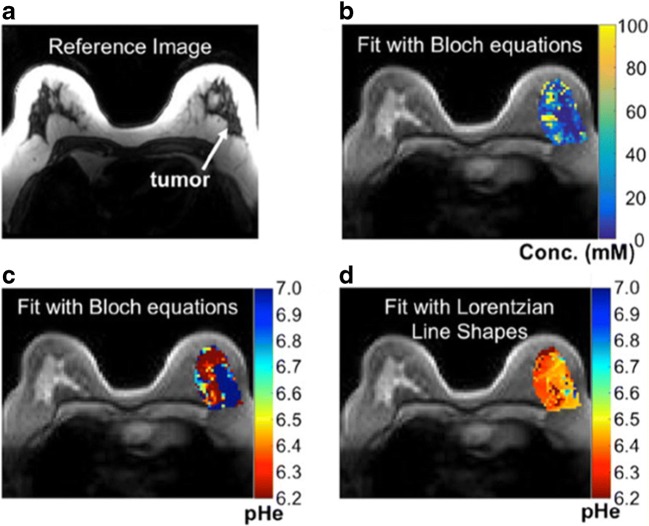
MRI-CEST imaging of tumor pH at clinical level. Representative patient with high-grade invasive ductal carcinoma and anatomical T2-weighted image (a) and parametric iopamidol concentration map (b) and tumor pHe map calculated by Bloch fitting (c) or by Lorentzian fitting (d) procedures overlaid on the anatomical image, showing, for the first time, tumor acidosis in patients. Adapted by permission from Springer Nature, Molecular Imaging and Biology 2017, 19, 617–625
Fig. 8
Fig. 8
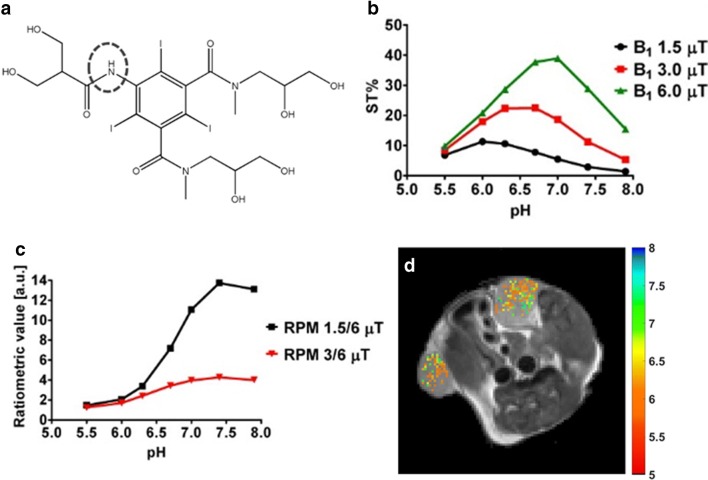
MRI-CEST imaging of tumor pH using exogenous DIACEST probes. Iobitridol chemical structure (a). Iobitridol MRI-CEST contrast (ST%) dependence with pH at three different RF saturation powers (b). Ratiometric approach between two different power levels allows to set up a pH calibration curve (c). Representative pH maps of a TS/A tumor-bearing mouse obtained upon rationing the difference ST map at 1.5 μT and at 6 μT after Iobitridol i.v. injection (d). Adapted with permission from Journal of the American Chemical Society 2014, 136, 14,333–14,336, https://pubs.acs.org/doi/10.1021/ja5059313. Copyright 2014 American Chemical Society
Fig. 9
Fig. 9
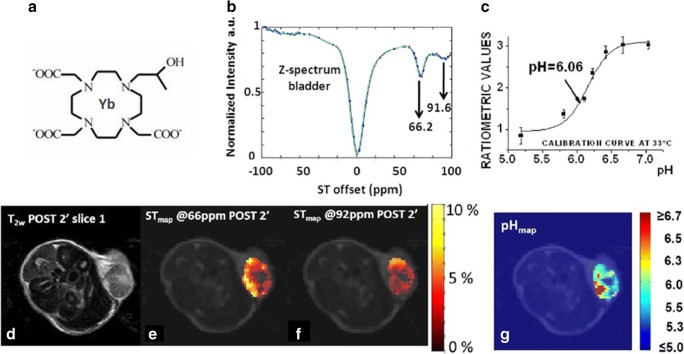
MRI-CEST imaging of tumor pH using exogenous PARACEST probes. Chemical structure of Yb-HPDO3A (a), Z-spectrum from the bladder region 15 min after the i.v. injection of Yb-HPDO3A (b) and pH calibration curve measured at 33 °C (c). T2w image (d) and ST maps calculated when the irradiation offset is set at 66 ppm (e) and at 92 ppm (f) post 2 min after the i.v. injection of Yb-HPDO3A and measured tumor pH map (g). Adapted with permission from Magnetic Resonance in Medicine 2014, 71, 326–332
Fig. 10
Fig. 10
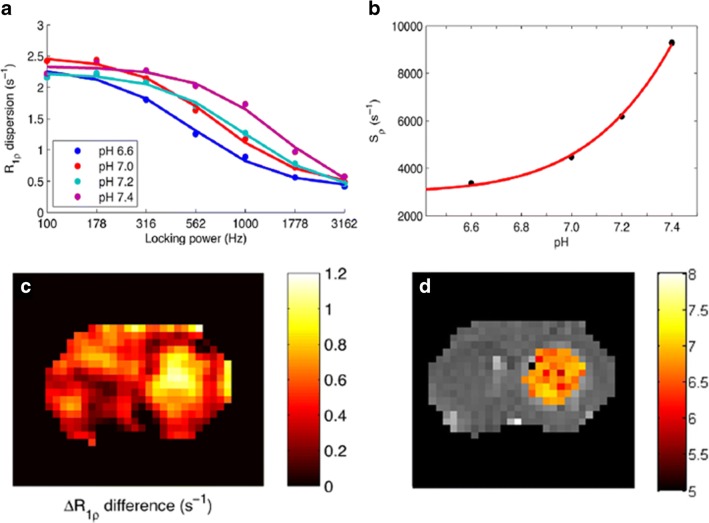
MRI-spin-lock imaging of tumor pH. Measured R1ρ dispersion curves for Iohexol at several pH values but constant agent concentration (a) and calibration curve for the fitted s0 parameter as a function of pH (b). ΔR1ρ difference map at 10 min after injection (c) and corresponding pH map from the tumor-bearing rat brain calculated as average of six ΔR1ρ difference maps at different time points after iohexol i.v. injection (d). Adapted with permission from Magnetic Resonance in Medicine 2018, 79, 298–305
Fig. 11
Fig. 11
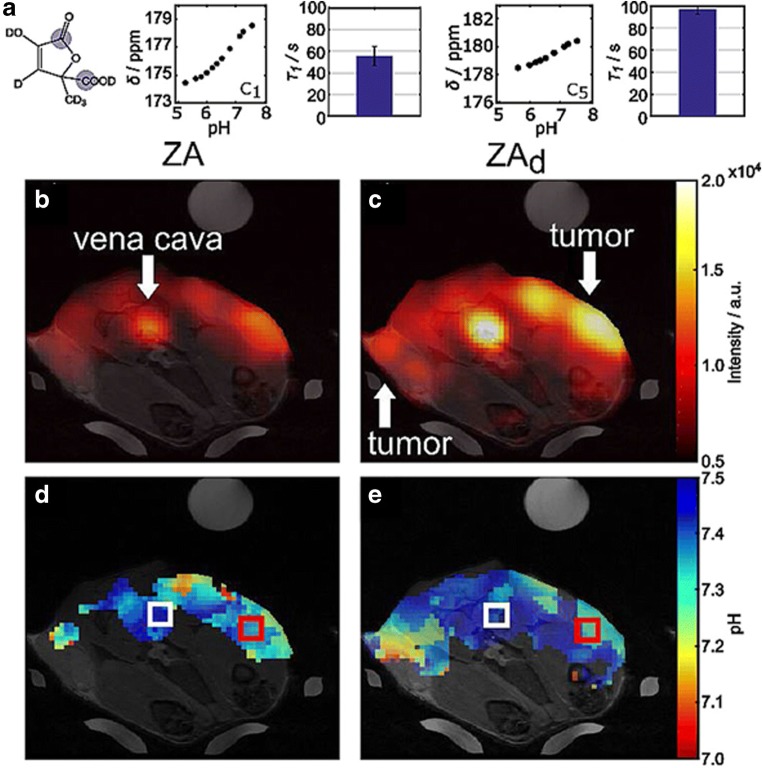
MRI-hyperpolarized imaging of tumor pH. Chemical structure of [1,5-13C2, 3,6,6,6-D4] zymonic acid (ZAd) with T1 values and pH-dependent chemical shifts of the C1 and C5 carbon atoms (a). In vivo signal intensity images acquired after tail-vein injection of ZA (b) and ZAd (c) overlaid on anatomical T1-weighted 1H images. pH images calculated from the chemical shift differences of C5 and urea, weighted by the respective signal intensities, show an acidification of the tumor microenvironment for both ZA (d) and ZAd (e). Reproduced with permission from ChemPhysChem 2017, 18, 2422–2425
Fig. 12
Fig. 12
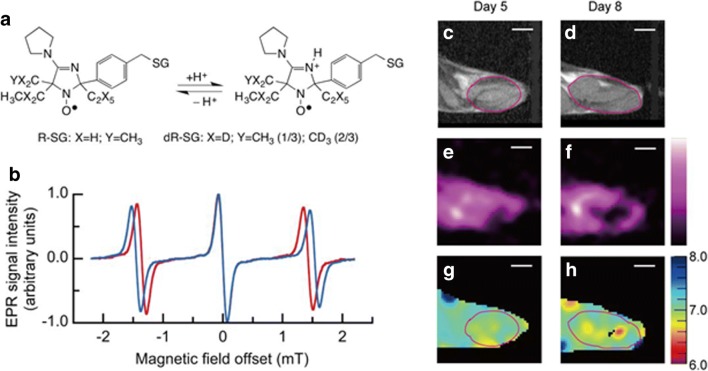
EPR-based imaging of tumor pH. Chemical structures and scheme of protonation of the pH-sensitive nitroxyl radical (R-SG) and its deuterium-enriched (dR-SG) analog (a). First derivative EPR spectra of 2 mM dR-SG measured at 750 MHz in alkaline (pH = 10.0, blue line) and acidic (pH = 3.0, red line) solutions (b). T2-weighted proton MR anatomical images of the SCC VII tumor-bearing mouse leg in the sagittal plane, acquired at day 5 (c) and 8 (d), respectively, and representative images of EPR signal intensity reconstructed from the 3D data (e, f) and corresponding tumor pHe maps at the two time points (g, h). The white scale bar on the images corresponds to 5 mm. Adapted with permission from Analytical Chemistry 2018, 90, 13,938–13,945
Fig. 13
Fig. 13
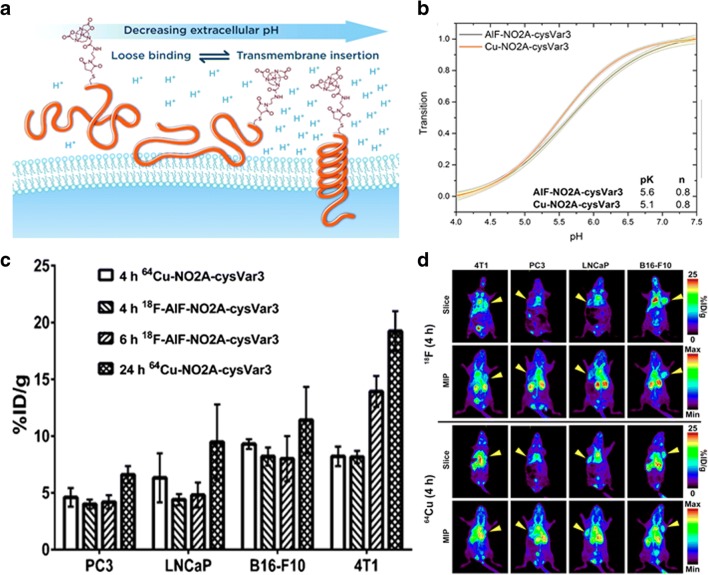
PET-based imaging of tumor pH. Schematic cartoon of the different folding states of pHLIP peptide in decreasing extracellular pH conditions (a). pH-dependent bilayer insertion of NO2A-cysVar3 constructs (b) and graph (c) of the ex vivo tumor uptake (%ID/g) for different radiolabeled peptides (64Cu and 18F) in several tumor models (prostate: PC3 and LNCaP, melanoma: B16F10, and breast: 4T1) and time points (4, 6, and 24 h). Slices and maximum intensity projections (MIP) PET images of radiolabeled peptides in tumor models at 4 h (d). The yellow arrowheads indicate where the tumor is located in each mouse. Adapted with permission from Bioconjugate Chemistry 2016, 27, 2014–2023
Fig. 14
Fig. 14
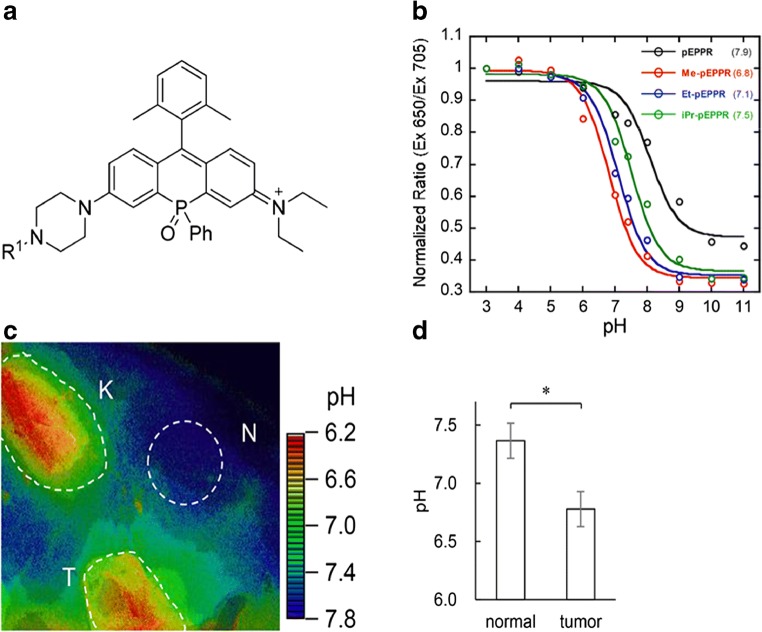
Optical imaging of tumor pH. Chemical structure of phosphorus-substituted rhodamine-based probe (a). pH calibration curves of several substituted rhodamine probes based on the ratio of fluorescence intensity at 650 nm and 705 nm with pKa values of the probes given in parentheses (b). In vivo fluorescence ratio images of mice with subcutaneous tumors (c, K kidney, N normal tissue, T tumor). Graph of mean pH values for normal tissue and tumor (d). Adapted with permission from Journal of the American Chemical Society 2018, 140, 5925–5933, doi:10.1021/jacs.8b00277. Copyright 2018 American Chemical Society
Fig. 15
Fig. 15
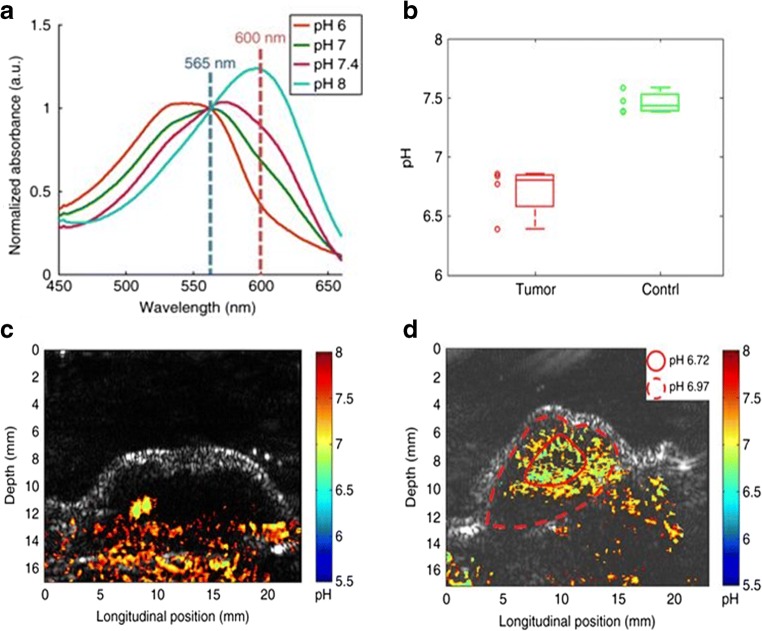
Photoacoustic imaging of tumor pH. Spectral properties of SNARF-5F encapsulated polyacrylamide based nanoparticle (NP) at different pH values (a). Boxplot showing the measured pH levels in tumor and healthy tissues (b) and quantitative PAI pH maps after SNARF-PAA NP injection in healthy (c) and in tumor (d) tissues overlaid to B-mode ultrasound images. Adapted with permission from Nature Communications 2017, 8, 471

References

    1. Denko NC. Hypoxia, HIF1 and glucose metabolism in the solid tumour. Nature Reviews. Cancer. 2008;8(9):705–713. - PubMed
    1. Shaw RJ. Glucose metabolism and cancer. Current Opinion in Cell Biology. 2006;18(6):598–608. - PubMed
    1. Warburg O. On the origin of cancer cells. Science. 1956;123(3191):309–314. - PubMed
    1. Gatenby RA, Gillies RJ. Why do cancers have high aerobic glycolysis? Nature Reviews. Cancer. 2004;4(11):891–899. - PubMed
    1. Schornack PA, Gillies RJ. Contributions of cell metabolism and H+ diffusion to the acidic pH of tumors. Neoplasia. 2003;5(2):135–145. - PMC - PubMed

Publication types