


Depressive symptoms in inflammatory bowel disease: an extraintestinal manifestation of inflammation?
- PMID: 30762873
- PMCID: PMC6693970
- DOI: 10.1111/cei.13276
Depressive symptoms in inflammatory bowel disease: an extraintestinal manifestation of inflammation?
Abstract
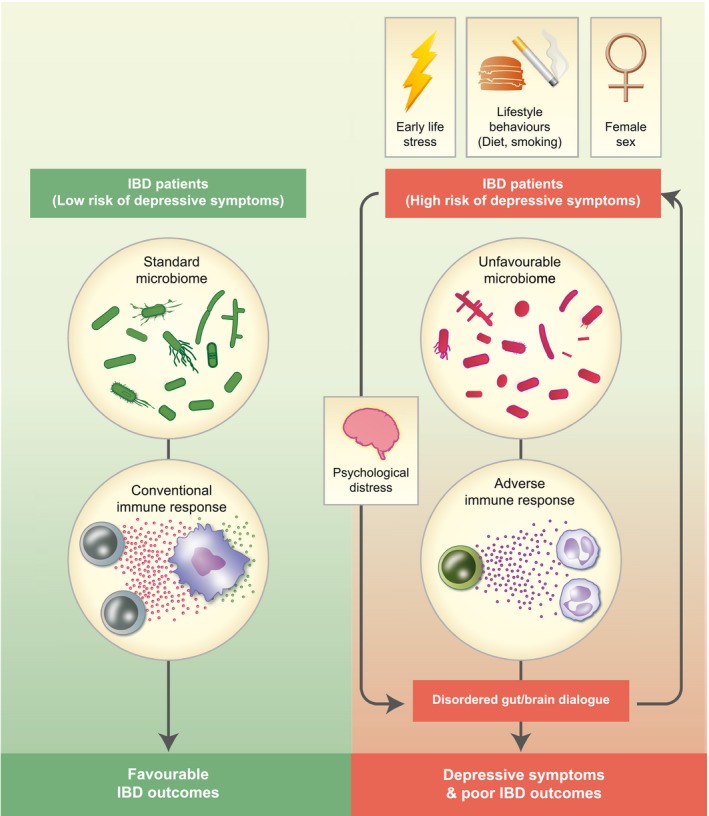
Depressive symptoms are reported by more than 20% of people with inflammatory bowel disease (IBD), while sleep difficulties and fatigue are even more common. Co-morbid depressive symptoms predict a poor IBD course, including increased risk of relapse and surgery, which is inconsistently improved by psychological treatments. Rather than being distinct systems, there is compelling evidence for bidirectional communication between gut and brain, driven by neural, metabolic, endocrine and inflammatory mediators. An emerging concept is that depressive symptoms may be mechanistically linked to excess inflammation and dysregulation of the gut-brain axis. Given the close link between the intestinal microbiota and host immune responses, patients prone to shifts in their intestinal microbiome, including smokers, those with poor diet and early life stress, may be exposed to exaggerated immune responses. Excess inflammation is associated with brain changes (depressive symptoms, fatigue, sleep difficulties) and worsening gastrointestinal symptoms, which are exacerbated by psychological distress. Equally, treatments both for depressive symptoms and IBD provide opportunities to break this cycle by reducing the causes and effects of inflammation. As well as addressing potential risk factors such as smoking and diet, treatments to alter the microbiome may reduce depressive symptoms. Observational evidence suggests that anti-inflammatory treatments for IBD may improve co-morbid depressive symptoms correlating with reduction in inflammation. With a growing range of treatments targeting inflammation centrally, peripherally and in the gut, IBD provides a unique model to understand the interplay between brain and gut in the pathogenesis of depressive symptoms, both in IBD and in the whole population.
Keywords: depressive symptoms; gut-brain-axis; inflammation; inflammatory bowel disease; microbiome.
© 2019 British Society for Immunology.
Conflict of interest statement
None.
Figures
References
-
- Cosnes J, Cattan S, Blain A et al Long‐term evolution of disease behavior of Crohn’s disease. Inflamm Bowel Dis 2002; 8:244–50. - PubMed
-
- Burisch J, Munkholm P. The epidemiology of inflammatory bowel disease. Scand J Gastroenterol 2015; 50:942–51. - PubMed
-
- Burisch J. Crohn’s disease and ulcerative colitis. Occurrence, course and prognosis during the first year of disease in a European population‐based inception cohort. Dan Med J 2014; 61:B4778. - PubMed
-
- National Institute for Health and Care Excellence (NICE) . Clinical Guideline 91: depression in adults with a chronic physical health problem: recognition and management [Internet]. Available at: https://www.nice.org.uk/guidance/cg91 (accessed 30th November 2018).
Publication types
MeSH terms
Grants and funding
LinkOut - more resources
Full Text Sources
Medical
Research Materials
