


Comparison of postpartum sonographic findings after uneventful vaginal and cesarean section deliveries
- PMID: 30763015
- PMCID: PMC6444312
- DOI: 10.15557/JoU.2018.0045
Comparison of postpartum sonographic findings after uneventful vaginal and cesarean section deliveries
Abstract
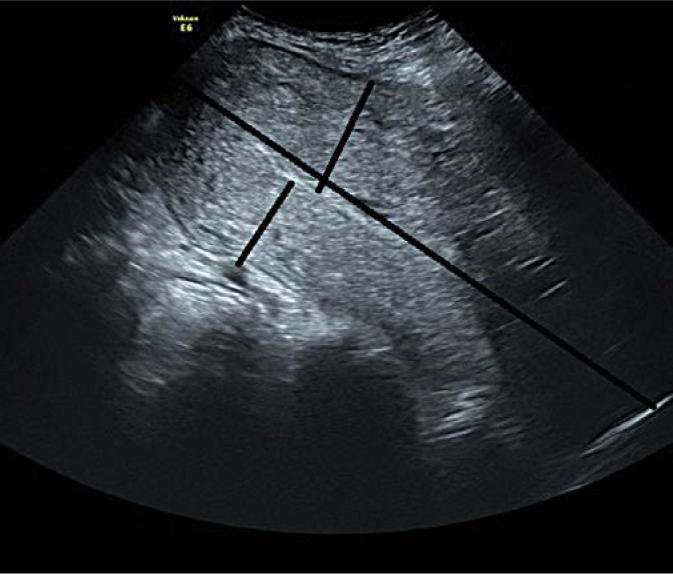
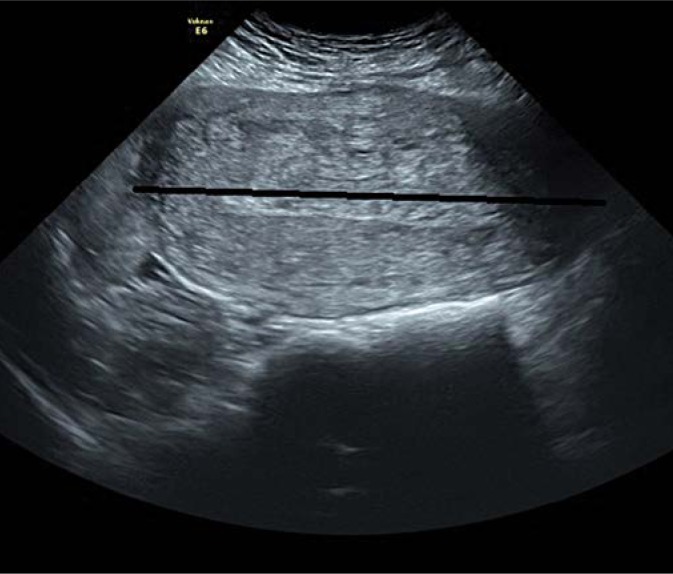
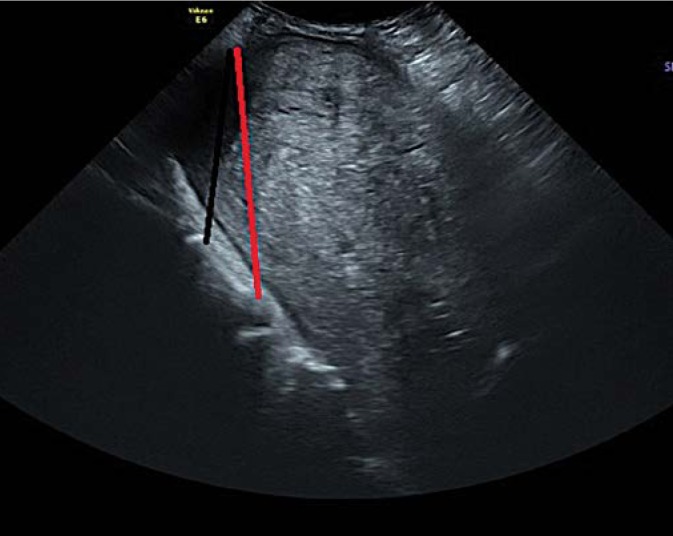
Objective: To prospectively determine the sonographic findings of the postpartum uterus 24 hours after vaginal delivery and cesarean section. Methods: Women who had uneventful vaginal delivery or cesarean section from July 2015 to May 2018 in a tertiary care hospital were prospectively included. Uterine lengths, endometrium, amout of free fluid, the distance between the uterine fundus-promontorium and uterine fundus-L5 were evaluated 24 hours after delivery. Results: The mean (min-max) endometrial thickness in the vaginal delivery and cesarean section groups were 13.3 (4-25) and 12.4 (4-29) mm, respectively. Fundus-cervix length was significantly higher in the vaginal delivery group compared to the cesarean section group (184.05 ± 16.8 vs 163.6 ± 6.7 mm, p <0.001). The measurements of anterior and anterior-posterior walls of the uterus, anteroposterior uterine length and uterine width were similar in both groups. Promontorium-fundus length was significantly higher in patients who delivered vaginally than those by cesarean section (123.3 ± 13.6 vs 108.7 ± 23.3 mm, p = 0.005). Conclusion: The measurement of L5-fundus distance is a simple and effective technique to evaluate the size of the uterus. Homogenous endometrium up to 30 mm in asymptomatic patients may be a normal finding 24 hours after delivery. The results of this study may be helpful in the decision-making process in cases of early postpartum hemorrhage or hemodynamic instability.
Objective: To prospectively determine the sonographic findings of the postpartum uterus 24 hours after vaginal delivery and cesarean section. Methods: Women who had uneventful vaginal delivery or cesarean section from July 2015 to May 2018 in a tertiary care hospital were prospectively included. Uterine lengths, endometrium, amout of free fluid, the distance between the uterine fundus-promontorium and uterine fundus-L5 were evaluated 24 hours after delivery. Results: The mean (min–max) endometrial thickness in the vaginal delivery and cesarean section groups were 13.3 (4–25) and 12.4 (4–29) mm, respectively. Fundus-cervix length was significantly higher in the vaginal delivery group compared to the cesarean section group (184.05 ± 16.8 vs 163.6 ± 6.7 mm, p <0.001). The measurements of anterior and anterior-posterior walls of the uterus, anteroposterior uterine length and uterine width were similar in both groups. Promontorium-fundus length was significantly higher in patients who delivered vaginally than those by cesarean section (123.3 ± 13.6 vs 108.7 ± 23.3 mm, p = 0.005). Conclusion: The measurement of L5-fundus distance is a simple and effective technique to evaluate the size of the uterus. Homogenous endometrium up to 30 mm in asymptomatic patients may be a normal finding 24 hours after delivery. The results of this study may be helpful in the decision-making process in cases of early postpartum hemorrhage or hemodynamic instability.
Figures
References
-
- Al-Zirqi I, Vangen S, Forsen L, Stray-Pedersen B: Prevalence and risk factors of severe obstetric haemorrhage. BJOG 2008; 115: 1265–1272. - PubMed
-
- Plunk M, Lee JH, Kani K, Dighe M: Imaging of postpartum complications: A multimo-dality review. AJR Am J Roentgenol 2013; 200: W143–W154. - PubMed
-
- Thomassin-Naggara I, Darai E, Bazot M: Gynecological pelvic infection: What is the role of imaging? Diagn Interv Imaging 2012; 93: 491–499. - PubMed
-
- Kamaya A, Ro K, Benedetti NJ, Chang PL, Desser TS: Imaging and diagnosis of postpartum complications: Sonography and other imaging modalities. Ultrasound Q 2009; 25: 151–162. - PubMed
-
- Luo A, Mao P: Late postpartum hemorrhage due to placental and fetal membrane residuals: Experience of two cases. Clin Exp Obstet Gynecol 2015; 42: 104–105. - PubMed
LinkOut - more resources
Full Text Sources