


Prevalence and characteristics of acute respiratory virus infections in pediatric cancer patients
- PMID: 30763464
- PMCID: PMC7166696
- DOI: 10.1002/jmv.25432
Prevalence and characteristics of acute respiratory virus infections in pediatric cancer patients
Abstract
Background: Patients with pediatric cancer have a higher risk of morbidity and mortality because of respiratory viral infections than other patient populations.
Objectives: To investigate the causative viruses of respiratory infections and their burden among patients with pediatric cancer in Lebanon.
Study design: Nasopharyngeal swabs along with clinical and demographic data were collected from patients with pediatric cancer presenting febrile episodes with upper respiratory tract symptoms. Total nucleic acid was extracted from specimens followed by the real-time PCR analysis targeting 14 respiratory viruses to estimate the frequency of infections.
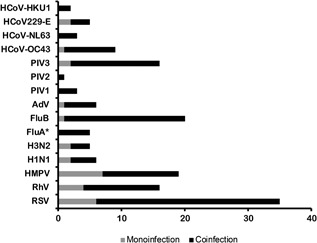
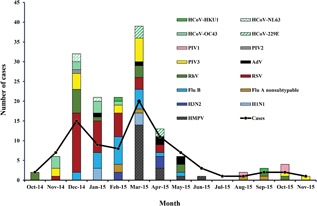
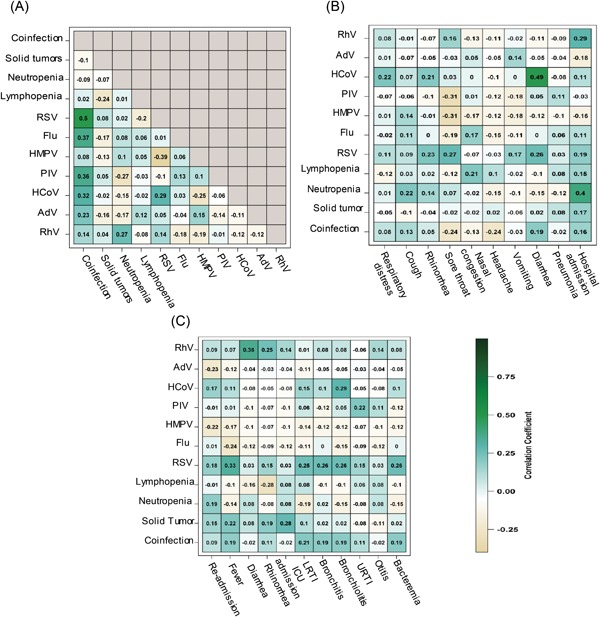
Results: We obtained 89 nasopharyngeal swabs from patients with pediatric cancer (mean age, 5.8 ± 4.2 years). Real-time PCR confirmed viral infection in 77 swabs (86.5%). Among these, 151 respiratory viruses were detected. Several viruses cocirculated within the same period; respiratory syncytial virus (RSV) being the most common (45.45%), followed by parainfluenza virus (PIV; 26%), influenza type B (26%), human metapneumovirus (24.6%), and human coronavirus (HCoV; 24.6%). Coinfections were detected in 55% of the subjects, and most of them involved RSV with one or more other viruses. A strong correlation was found between PIV, Flu (influenza of any type), RSV, and HCoV with the incidence of coinfections. RSV was associated with lower respiratory tract infections, nasal congestion, bronchitis, and bacteremia. HCoV was associated with bronchiolitis; rhinovirus was associated with hospital admission.
Conclusion: Patients with pediatric cancer have a high burden of respiratory viral infections and a high incidence of coinfections. Molecular diagnostics can improve management of febrile episodes and reduce antibiotic use.
Keywords: coinfection; patients with pediatric cancer; prevalence; real-time PCR; respiratory tract infections; virus infections.
© 2019 Wiley Periodicals, Inc.
Conflict of interest statement
The authors declare that there are no conflict of interests.
Figures
References
-
- Fazekas T, Eickhoff P, Rauch M, et al. Prevalence and clinical course of viral upper respiratory tract infections in immunocompromised pediatric patients with malignancies or after hematopoietic stem cell transplantation. J Pediatr Hematol Oncol. 2012;34(6):442‐449. 10.1097/MPH.0b013e3182580bc8 - DOI - PubMed
-
- Perlin E, Bang KM, Shah A, et al. The impact of pulmonary infections on the survival of lung cancer patients. Cancer. 1990;66(3):593‐596. - PubMed
Publication types
MeSH terms
LinkOut - more resources
Full Text Sources
Medical
