


The epidemiology of hepatitis C virus in Central Asia: Systematic review, meta-analyses, and meta-regression analyses
- PMID: 30765844
- PMCID: PMC6376025
- DOI: 10.1038/s41598-019-38853-8
The epidemiology of hepatitis C virus in Central Asia: Systematic review, meta-analyses, and meta-regression analyses
Abstract
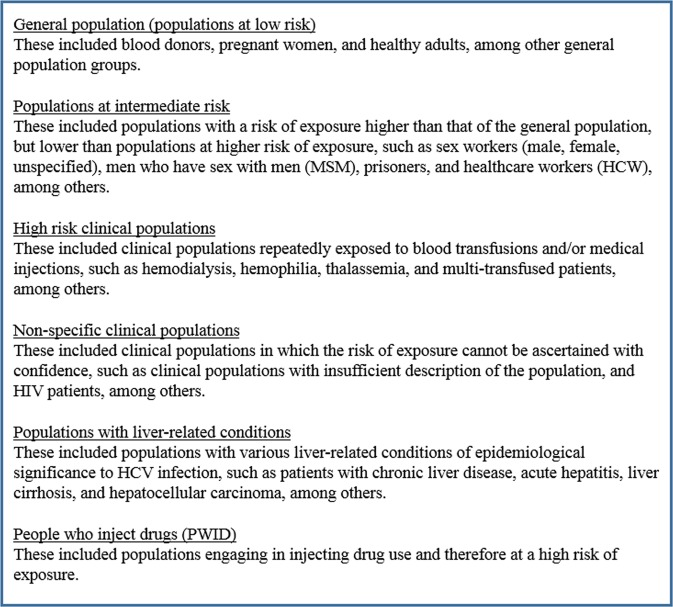
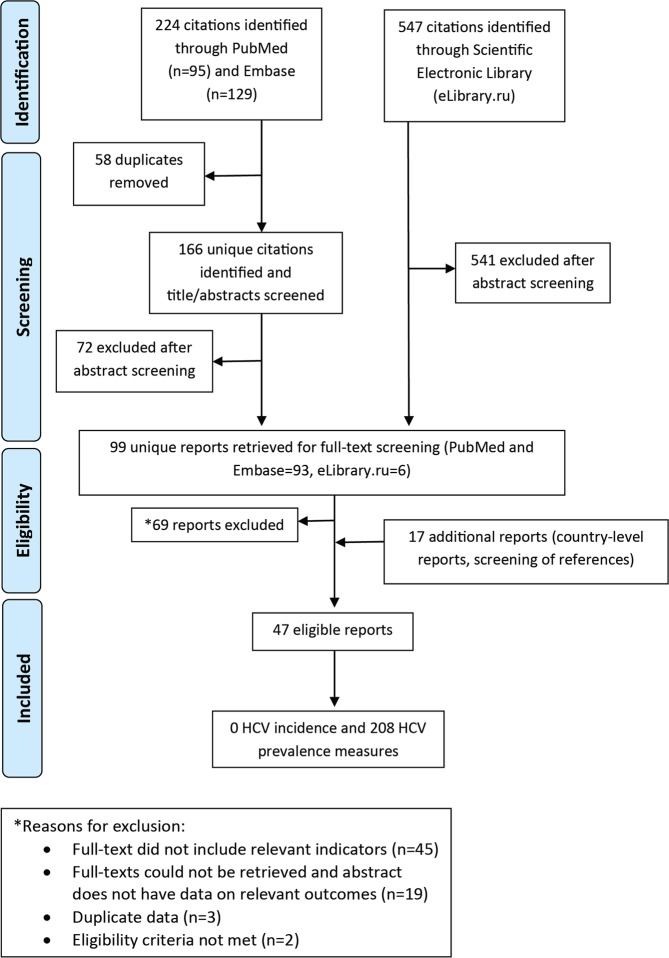
The objective was to delineate hepatitis C virus (HCV) epidemiology in countries of Central Asia (CA), specifically Kazakhstan, Kyrgyzstan, Tajikistan, Turkmenistan, and Uzbekistan. A systematic review was conducted guided by the Cochrane Collaboration Handbook, and reported using PRISMA guidelines. Meta-analyses were performed using DerSimonian-Laird random-effects models with inverse variance weighting. Random-effects meta-regression analyses were performed on general population studies. The systematic review identified a total of 208 HCV prevalence measures. No incidence or Turkmenistan studies were identified. Meta-analyses estimated HCV prevalence among the general population at 0.7% (95%CI: 0.7-0.8%) in Kazakhstan, 2.0% (95%CI: 1.7-2.4%) in Kyrgyzstan, 2.6% (95%CI: 1.7-3.6%) in Tajikistan, and 9.6 (95%CI: 5.8-14.2%) in Uzbekistan. Across CA, the pooled mean prevalence was 13.5% (95%CI: 10.9-16.4%) among non-specific clinical populations, 31.6% (95%CI: 25.8-37.7%) among populations with liver-related conditions, and 51.3% (95%CI: 46.9-55.6%) among people who inject drugs. Genotypes 1 (52.6%) and 3 (38.0%) were most frequent. Evidence was found for statistically-significant differences in prevalence by country, but not for a temporal decline in prevalence. CA is one of the most affected regions by HCV infection with Uzbekistan enduring one of the highest prevalence levels worldwide. Ongoing HCV transmission seems to be driven by injecting drug use and healthcare exposures.
Conflict of interest statement
The authors declare no competing interests.
Figures
References
-
- WHO. Global Hepatitis Report, 2017. Online at: http://www.who.int/hepatitis/publications/global-hepatitis-report2017/en/ (2017).
-
- World Health Organization. Global health sector strategy on viral hepatitis 2016–2021. Towards ending viral hepatitis. Online at: http://www.who.int/hepatitis/strategy2016-2021/ghss-hep/en/ (2016).
-
- World Health Organization. Combating hepatitis B and C to reach elimination by 2030: advocacy brief. Online at: http://apps.who.int/iris/handle/10665/206453 (2016).
Publication types
MeSH terms
LinkOut - more resources
Full Text Sources
Medical
