


Simultaneous Radiological and Fiberendoscopic Evaluation of Swallowing ("SIRFES") in Patients After Surgery of Oropharyngeal/Laryngeal Cancer and Postoperative Dysphagia
- PMID: 30767078
- PMCID: PMC6825654
- DOI: 10.1007/s00455-019-09979-8
Simultaneous Radiological and Fiberendoscopic Evaluation of Swallowing ("SIRFES") in Patients After Surgery of Oropharyngeal/Laryngeal Cancer and Postoperative Dysphagia
Abstract
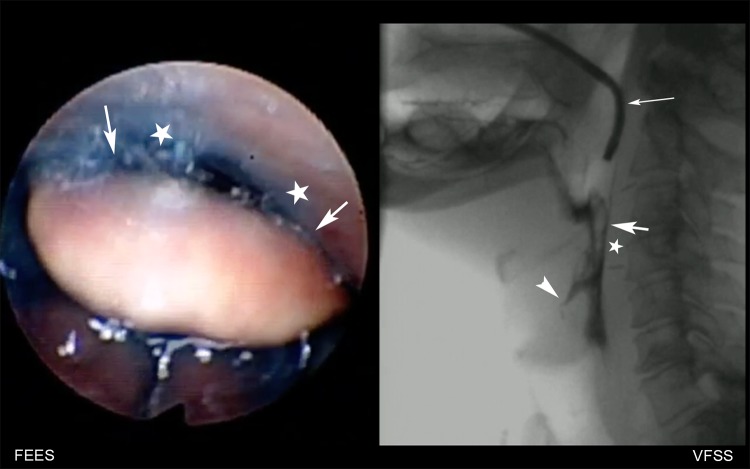
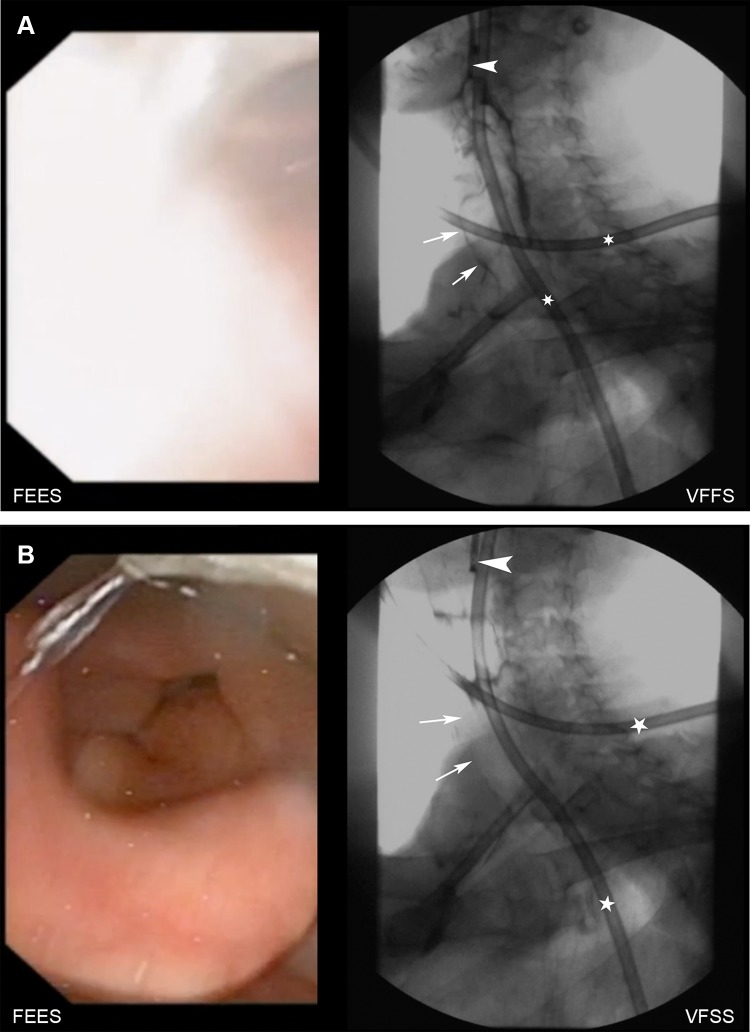
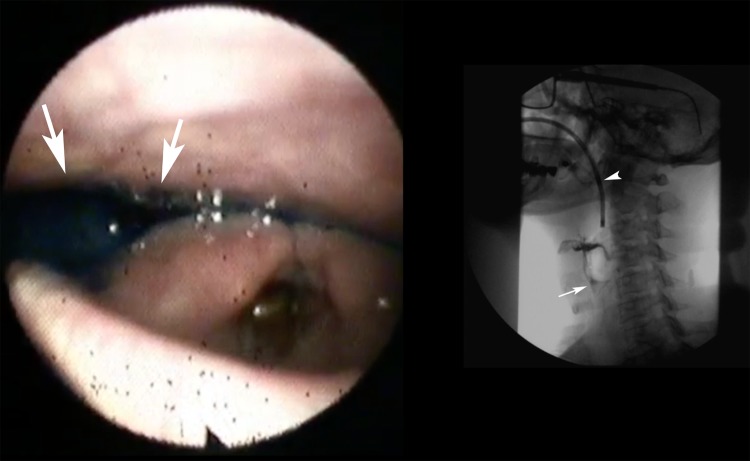
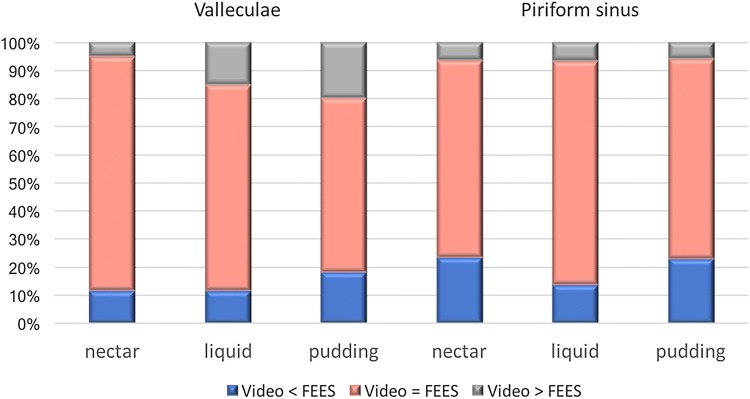
To compare the results of a simultaneously performed videofluoroscopic swallowing study and fiberendoscopic evaluation of swallowing in patients with dysphagia after surgery and radiotherapy for oropharyngeal or laryngeal cancer. This prospective study included 31 patients who were examined simultaneously with a standardized protocol. The fiberendoscopic and videofluoroscopic swallowing loops were independently scored by two otorhinolaryngologists/phoniatricians and two radiologists. The presence of penetration/aspiration, the amount of pharyngeal residues and the position of the bolus head when triggering of pharyngeal swallow begins were evaluated. Generalized linear models were used to model the impact of rater, method, bolus and quantities as well as specified moderation effects on scorings. In addition, post hoc Wilcoxon tests were used. Rater agreement was assessed using weighted kappas and their 95% confidence intervals. A total of 202 swallow sequences in 29 patients was evaluated. Interrater agreement was substantial to excellent for both methods (weighted k = 0.979-0.613). Significant differences between both methods were found when assessing the penetration-aspiration scale (p = 0.001, tendency of higher scores by videofluoroscopic (median = 2.59) as opposed to fiberendoscopic (median = 2.14) and the residue severity scores in the valleculae (p = 0.029) and the sinus piriformes (p = 0.002) with larger residues scored by fiberendoscopic evaluation of swallowing. No significant differences were found regarding the time point of triggering (p = 0.273). Simultaneous evaluation of swallowing with FEES and VFSS showed significantly different results in symptomatic patients after tumor operation and radiotherapy.
Keywords: Cineradiography; Deglutition; Deglutition disorders; Endoscopy; Pharyngeal neoplasms; Respiratory aspiration.
Conflict of interest statement
The authors declare that they have no conflict of interest.
Figures
References
-
- Heijnen BJ, Speyer R, Kertscher B, Cordier R, Koetsenruijter KW, Swan K, Bogaardt H. Dysphagia, speech, voice, and trismus following radiotherapy and/or chemotherapy in patients with head and neck carcinoma: review of the literature. Biomed Res Int. 2016;2016:6086894. doi: 10.1155/2016/6086894. - DOI - PMC - PubMed
-
- Jensen K, Lambertsen K, Torkov P, Dahl M, Jensen AB, Grau C. Patient assessed symptoms are poor predictors of objective findings. Results from a cross sectional study in patients treated with radiotherapy for pharyngeal cancer. Acta Oncol. 2007;46:1159–1168. doi: 10.1080/02841860701491041. - DOI - PubMed
MeSH terms
LinkOut - more resources
Full Text Sources
Medical
