New Insights in Cannabinoid Receptor Structure and Signaling
- PMID: 30767756
- PMCID: PMC6864585
- DOI: 10.2174/1874467212666190215112036
New Insights in Cannabinoid Receptor Structure and Signaling
Abstract
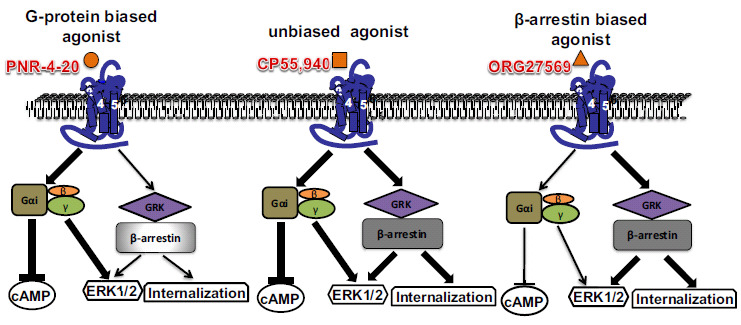
Background: Cannabinoid has long been used for medicinal purposes. Cannabinoid signaling has been considered the therapeutic target for treating pain, addiction, obesity, inflammation, and other diseases. Recent studies have suggested that in addition to CB1 and CB2, there are non-CB1 and non-CB2 cannabinoid-related orphan GPCRs including GPR18, GPR55, and GPR119. In addition, CB1 and CB2 display allosteric binding and biased signaling, revealing correlations between biased signaling and functional outcomes. Interestingly, new investigations have indicated that CB1 is functionally present within the mitochondria of striated and heart muscles directly regulating intramitochondrial signaling and respiration.
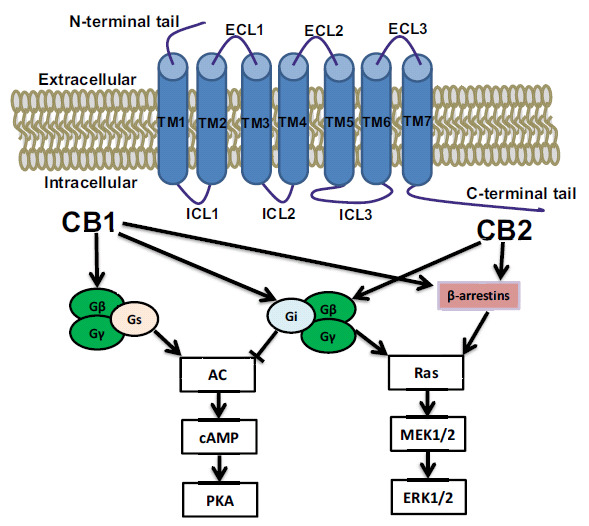
Conclusion: In this review, we summarize the recent progress in cannabinoid-related orphan GPCRs, CB1/CB2 structure, Gi/Gs coupling, allosteric ligands and biased signaling, and mitochondria-localized CB1, and discuss the future promise of this research.
Keywords: Cannabinoid receptor; allosteric ligand; biased signaling; mitochondria; orphan GPCRs; structure..
Copyright© Bentham Science Publishers; For any queries, please email at epub@benthamscience.net.
Figures
References
-
- Adams I.B., Martin B.R. Cannabis: Pharmacology and toxicology in animals and humans. Addiction. 1996;91:1585–1614. - PubMed
-
- Lambert D.M. Medical use of cannabis through history. J. Pharm. Belg. 2001;56:111–118. - PubMed
-
- di Tomaso E., Beltramo M., Piomelli D. Brain cannabinoids in chocolate. Nature. 1996;382:677–678. - PubMed
-
- Lambert D.M., Fowler C.J. The endocannabinoid system: Drug targets, lead compounds, and potential therapeutic applications. J. Med. Chem. 2005;48:5059–5087. - PubMed
Publication types
MeSH terms
Substances
LinkOut - more resources
Full Text Sources