


Shortened Sleep Duration Causes Sleepiness, Inattention, and Oppositionality in Adolescents With Attention-Deficit/Hyperactivity Disorder: Findings From a Crossover Sleep Restriction/Extension Study
- PMID: 30768404
- PMCID: PMC6441371
- DOI: 10.1016/j.jaac.2018.09.439
Shortened Sleep Duration Causes Sleepiness, Inattention, and Oppositionality in Adolescents With Attention-Deficit/Hyperactivity Disorder: Findings From a Crossover Sleep Restriction/Extension Study
Abstract
Objective: Although poor sleep is often reported in adolescents with attention-deficit/hyperactivity disorder (ADHD), prior studies have been correlational. This study investigated whether sleep duration is causally linked to sleepiness, inattention, and behavioral functioning in adolescents with ADHD.
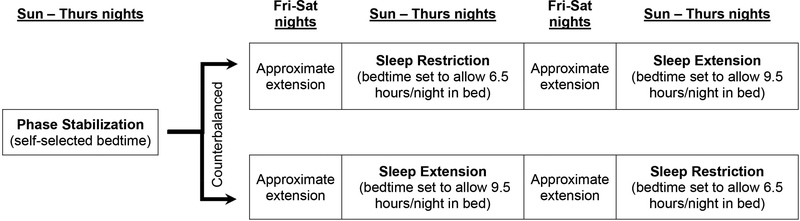
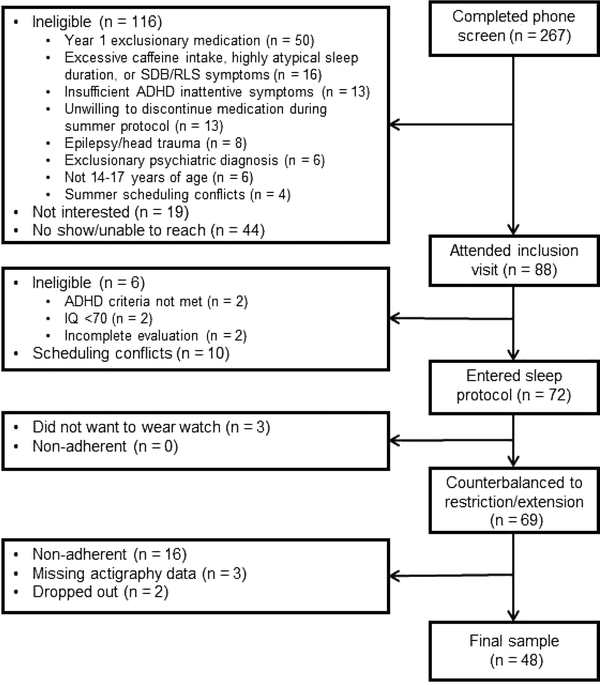
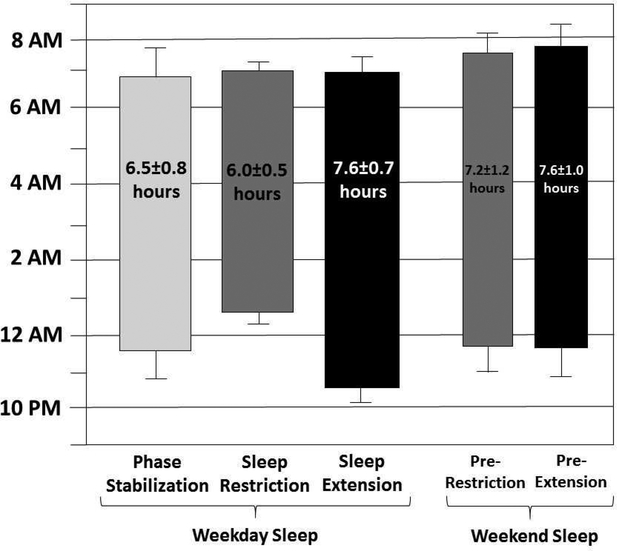
Method: A total of 72 adolescents (aged 14-17 years) entered a 3-week sleep protocol using an experimental crossover design. The protocol included a phase stabilization week, followed in randomized counterbalanced order by 1 week of sleep restriction (6.5 hours) and 1 week of sleep extension (9.5 hours). Sleep was monitored with actigraphy and daily sleep diaries, with laboratory visits at the end of each week. Analyses included 48 adolescents who had complete actigraphy data and successfully completed the sleep protocol (defined a priori as obtaining ≥1 hour actigraphy-measured sleep duration during extension compared to restriction). Parent and adolescent ratings of daytime sleepiness, ADHD symptoms, sluggish cognitive tempo (SCT), and oppositional behaviors were the primary measures. The A-X Continuous Performance Test (CPT) was a secondary measure.
Results: Compared to the extended sleep week, parents reported more inattentive and oppositional symptoms during the restricted sleep week. Both parents and adolescents reported more SCT symptoms and greater daytime sleepiness during restriction compared to extension. Adolescents reported less hyperactivity-impulsivity during sleep restriction than extension. No effects were found for parent-reported hyperactivity-impulsivity, adolescent-reported ADHD inattention, or CPT performance.
Conclusion: This study provides the first evidence that sleep duration is a causal contributor to daytime behaviors in adolescents with ADHD. Sleep may be an important target for intervention in adolescents with ADHD.
Clinical trial registration information: Cognitive and Behavioral Effects of Sleep Restriction in Adolescents With ADHD; https://clinicaltrials.gov/; NCT02732756.
Keywords: adolescence; attention-deficit/hyperactivity disorder; comorbidity; sleep deprivation; sluggish cognitive tempo.
Copyright © 2018 American Academy of Child and Adolescent Psychiatry. Published by Elsevier Inc. All rights reserved.
Figures
Comment in
-
Editorial: Time to Wake Up: Appreciating the Role of Sleep in Attention-Deficit/Hyperactivity Disorder.J Am Acad Child Adolesc Psychiatry. 2019 Apr;58(4):398-400. doi: 10.1016/j.jaac.2018.10.013. Epub 2019 Feb 2. J Am Acad Child Adolesc Psychiatry. 2019. PMID: 30768390
References
-
- Hysing M, Lundervold AJ, Posserud MB, Sivertsen B. Association between sleep problems and symptoms of attention deficit hyperactivity disorder in adolescence: Results from a large population-based study. Behavioral sleep medicine. 2016;14(5):550–564. - PubMed
-
- Becker SP. The triple threat of sleep, adolescence, and ADHD In: Hiscock H, Sciberras E, eds. Sleep and ADHD. Amsterdam: Elsevier; in press.
-
- Sung V, Hiscock H, Sciberras E, Efron D. Sleep problems in children with attention-deficit/hyperactivity disorder: prevalence and the effect on the child and family. Archives of pediatrics and adolescent medicine. 2008;162(4):336–342. - PubMed
-
- Langberg JM, Molitor SJ, Oddo LE, Eadeh HM, Dvorsky MR, Becker SP. Prevalence, patterns, and predictors of sleep problems and daytime sleepiness in young adolescents with ADHD. Journal of attention disorders. 2017:1087054717690810. - PubMed
Publication types
MeSH terms
Associated data
Grants and funding
LinkOut - more resources
Full Text Sources
Medical
