


Survival and functional outcomes of molecularly defined childhood posterior fossa ependymoma: Cure at a cost
- PMID: 30768777
- PMCID: PMC6508980
- DOI: 10.1002/cncr.31995
Survival and functional outcomes of molecularly defined childhood posterior fossa ependymoma: Cure at a cost
Abstract
Background: Posterior fossa ependymoma (PFE) comprises 2 groups, PF group A (PFA) and PF group B (PFB), with stark differences in outcome. However, to the authors' knowledge, the long-term outcomes of PFA ependymoma have not been described fully. The objective of the current study was to identify predictors of survival and neurocognitive outcome in a large consecutive cohort of subgrouped patients with PFE over 30 years.
Methods: Demographic, survival, and neurocognitive data were collected from consecutive patients diagnosed with PFE from 1985 through 2014 at the Hospital for Sick Children in Toronto, Ontario, Canada. Subgroup was assigned using genome-wide methylation array and/or immunoreactivity to histone H3 K27 trimethylation (H3K27me3).
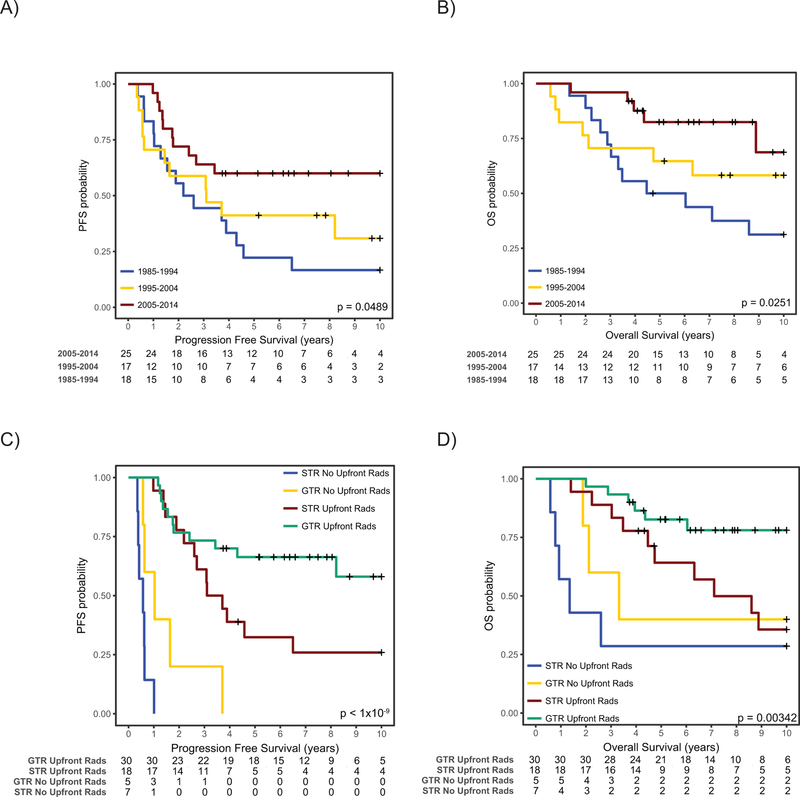
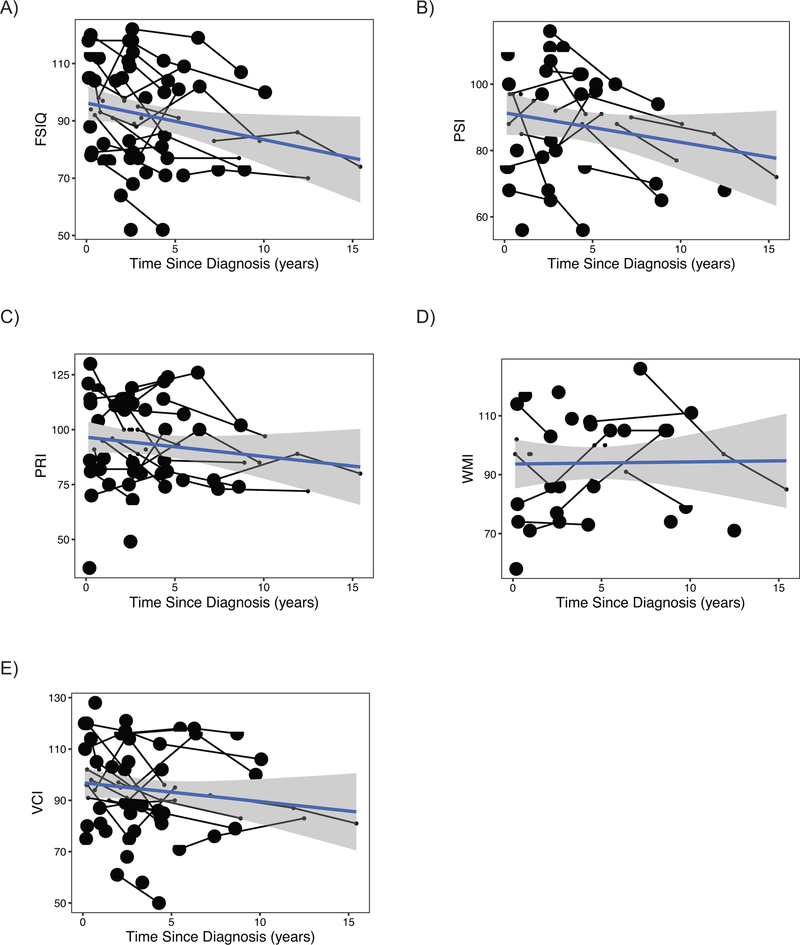
Results: A total of 72 PFE cases were identified, 89% of which were PFA. There were no disease recurrences noted among patients with PFB. The 10-year progression-free survival rate for all patients with PFA was poor at 37.1% (95% confidence interval, 25.9%-53.1%). Analysis of consecutive 10-year epochs revealed significant improvements in progression-free survival and/or overall survival over time. This pertains to the increase in the rate of gross (macroscopic) total resection from 35% to 77% and the use of upfront radiotherapy increasing from 65% to 96% over the observed period and confirmed in a multivariable model. Using a mixed linear model, analysis of longitudinal neuropsychological outcomes restricted to patients with PFA who were treated with focal irradiation demonstrated significant continuous declines in the full-scale intelligence quotient over time with upfront conformal radiotherapy, even when correcting for hydrocephalus, number of surgeries, and age at diagnosis (-1.33 ± 0.42 points/year; P = .0042).
Conclusions: Data from a molecularly informed large cohort of patients with PFE clearly indicate improved survival over time, related to more aggressive surgery and upfront radiotherapy. However, to the best of the authors' knowledge, the current study is the first, in a subgrouped cohort, to demonstrate that this approach results in reduced neurocognitive outcomes over time.
Keywords: ependymoma; molecular subgroup; neurocognitive outcome; survival.
© 2019 American Cancer Society.
Conflict of interest statement
Conflict of interest: Authors disclose no conflict of interest.
Figures
References
-
- Khatua S, Ramaswamy V, Bouffet E. Current therapy and the evolving molecular landscape of paediatric ependymoma. Eur J Cancer 2017;70: 34–41. - PubMed
Publication types
MeSH terms
Supplementary concepts
Grants and funding
LinkOut - more resources
Full Text Sources
Medical
