Review
. 2019 Sep;197(3):278-293.
doi: 10.1111/cei.13279. Epub 2019 Mar 11.

Neuroimmunology - the past, present and future

Affiliations
Review

Neuroimmunology - the past, present and future

E Nutma et al. Clin Exp Immunol. 2019 Sep.

Abstract

Neuroimmunology as a separate discipline has its roots in the fields of neurology, neuroscience and immunology. Early studies of the brain by Golgi and Cajal, the detailed clinical and neuropathology studies of Charcot and Thompson's seminal paper on graft acceptance in the central nervous system, kindled a now rapidly expanding research area, with the aim of understanding pathological mechanisms of inflammatory components of neurological disorders. While neuroimmunologists originally focused on classical neuroinflammatory disorders, such as multiple sclerosis and infections, there is strong evidence to suggest that the immune response contributes to genetic white matter disorders, epilepsy, neurodegenerative diseases, neuropsychiatric disorders, peripheral nervous system and neuro-oncological conditions, as well as ageing. Technological advances have greatly aided our knowledge of how the immune system influences the nervous system during development and ageing, and how such responses contribute to disease as well as regeneration and repair. Here, we highlight historical aspects and milestones in the field of neuroimmunology and discuss the paradigm shifts that have helped provide novel insights into disease mechanisms. We propose future perspectives including molecular biological studies and experimental models that may have the potential to push many areas of neuroimmunology. Such an understanding of neuroimmunology will open up new avenues for therapeutic approaches to manipulate neuroinflammation.

Keywords: central nervous system; inflammation; neurodegeneration; neuroimmunology; neuroinflammation.


Conflict of interest statement

None.

Figures
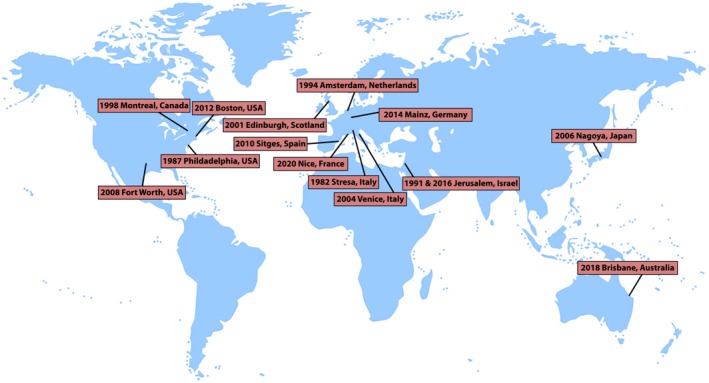
Figure 1
Figure 1
World map showing location of International School of Neuroimmunology (ISNI) meetings.
Figure 2
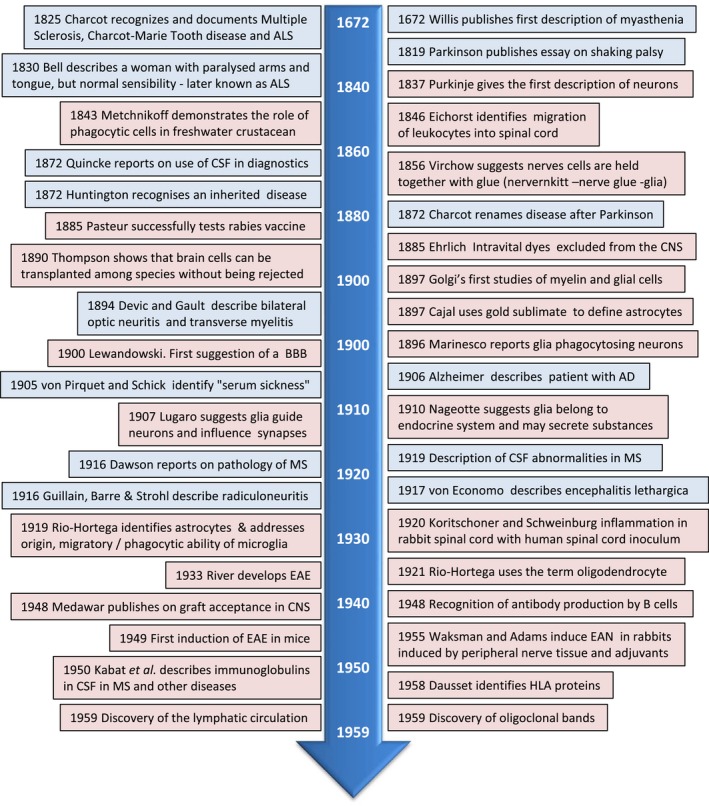
Figure 2
Neuroimmunology timeline 1672–1959 clinical studies = blue box; research = pink box. AD = Alzheimer’s disease; ALS = amyotrophic lateral sclerosis; BBB = blood–brain barrier; CNS = central nervous system; CSF = cerebrospinal fluid; EAE = experimental autoimmune encephalomyelitis; EAN = experimental autoimmune neuritis; HLA = human leucocyte antigen; MS = multiple sclerosis.
Figure 3
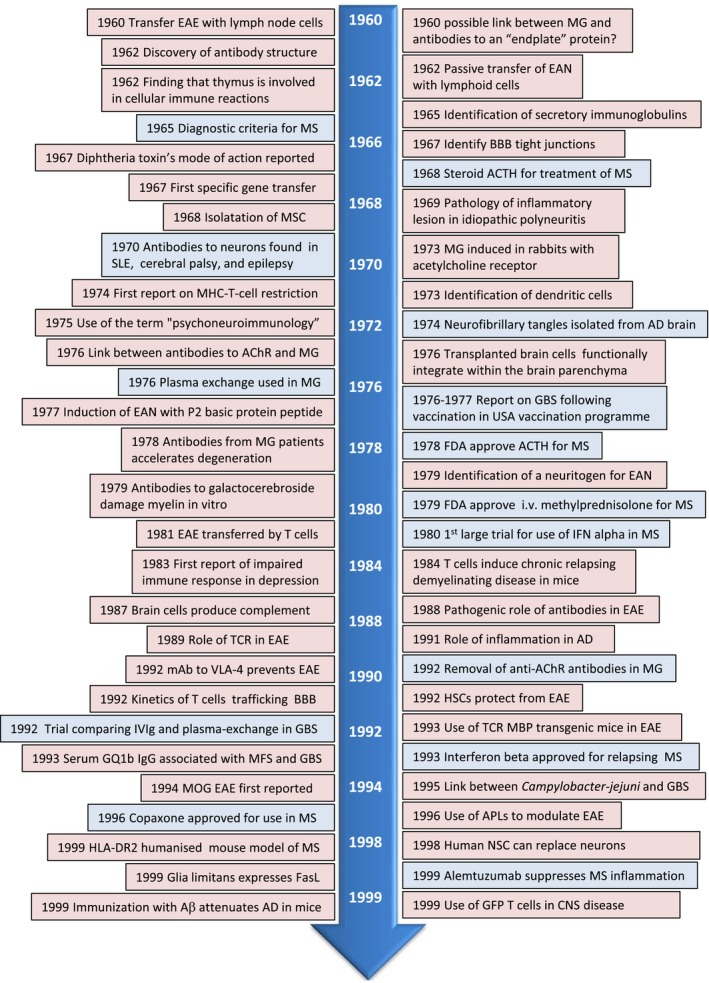
Figure 3
Neuroimmunology timeline 1960–1999 clinical studies = blue box; research = pink box. Aβ = A beta; AChR = acetyl choline receptor; ACTH = adrenocorticotrophic hormone; AD = Alzheimer’s disease; BBB =  blood–brain barrier; CNS = central nervous system; EAE = experimental autoimmune encephalomyelitis, EAN = experimental autoimmune neuritis; FDA = US Food and Drug Administration; GBS = Guillain–Barré syndrome; GFP = green fluorescent protein; HLA = human leucocyte antigen; HSC = haematopoietic stem cells; IFN = interferon; MG = myasthenia gravis; MHC = major histocompatibility antigen; MOG = myelin associated glycoprotein; MS = multiple sclerosis; MSC = mesenchymal stem cells; NSC = neuronal stem cells; TCR = T cell receptor.
Figure 4
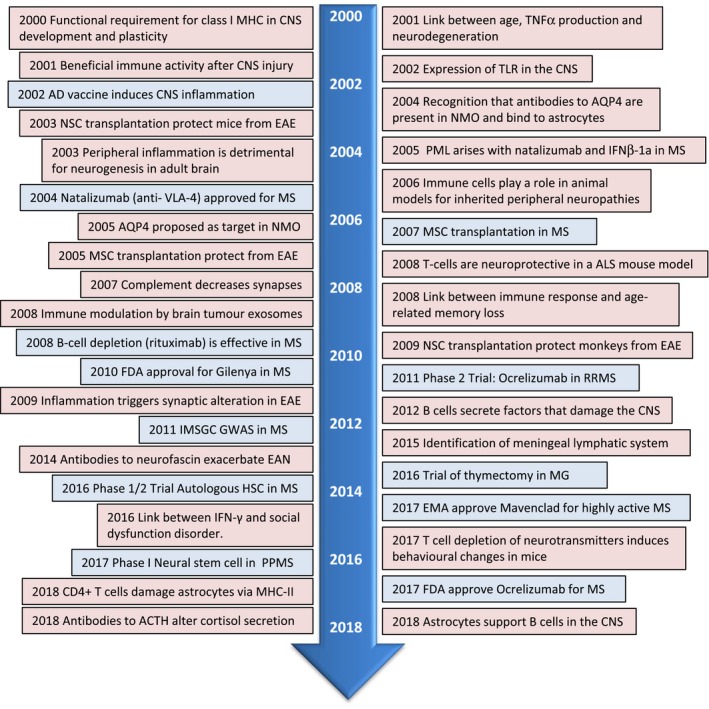
Figure 4
Neuroimmunology timeline 2001–2018. Clinical studies = blue box; research = pink box. ACTH = adrenocorticotrophic hormone; ALS = amyotrophic lateral sclerosis; AQP4 = aquaporin 4; CNS = central nervous system; EAE = experimental autoimmune encephalomyelitis; EAN = experimental autoimmune neuritis; EMA = European medical agency; FDA = US Food and Drug Administration; GWAS = genomewide association study; IFN = interferon; IMSGC = International Multiple Sclerosis Genetics Consortium (IMSGC); MHC = major histocompatibility antigen; MG = myasthenia gravis; MS = multiple sclerosis; MSC = mesenchymal stem cells; NMO = neuromyelitis optica; NSC ; neuronal stem cells; PML = progressive multifocal leucoencephalopathy; PPMS = primary progressive multiple sclerosis; RRMS = relapsing–remitting multiple sclerosis; VLA‐4 = integrin α4β1 (very late antigen‐4); TLR = Toll‐like receptors; TNF = tumour necrosis factor.

References

    1. Kim S, Kim H, Yim YS et al Maternal gut bacteria promote neurodevelopmental abnormalities in mouse offspring. Nature 2017; 549:528–32. - PMC - PubMed
    1. Peferoen L, Kipp M, van der Valk P, van Noort JM, Amor S. Oligodendrocyte‐microglia cross‐talk in the central nervous system. Immunology 2014; 141:302–13. - PMC - PubMed
    1. Perry VH, Cunningham C, Holmes C. Systemic infections and inflammation affect chronic neurodegeneration. Nat Rev Immunol 2007; 7:161–7. - PubMed
    1. Schaafsma W, Basterra LB, Jacobs S et al Maternal inflammation induces immune activation of fetal microglia and leads to disrupted microglia immune responses, behavior, and learning performance in adulthood. Neurobiol Dis 2017; 106:291–300. - PubMed
    1. Choi GB, Yim YS, Wong H et al The maternal interleukin‐17a pathway in mice promotes autism‐like phenotypes in offspring. Science 2016; 351:933–9. - PMC - PubMed