


Prevalence and factors associated with warts in primary school children in Tema District, Sohag Governorate, Egypt
- PMID: 30774146
- PMCID: PMC6351504
- DOI: 10.1186/s42506-018-0007-0
Prevalence and factors associated with warts in primary school children in Tema District, Sohag Governorate, Egypt
Abstract
Background: Warts are one of the most common, persistent, and frustrating cutaneous problems encountered in dermatology clinical practice especially in younger generations.
Objective: To determine the prevalence of warts in primary school children in Tema District, Sohag, Egypt, and to determine possible factors associated with transmission.
Participants and methods: A school-based cross-sectional (prevalence) study was carried out during the academic year 2015-2016 in six primary schools in Tema District, Sohag Governorate, Egypt. A total of 1045 students were examined. Data was collected using a self-administered semi-structured questionnaire which was taken home by the student to be completed by his/her caregiver.
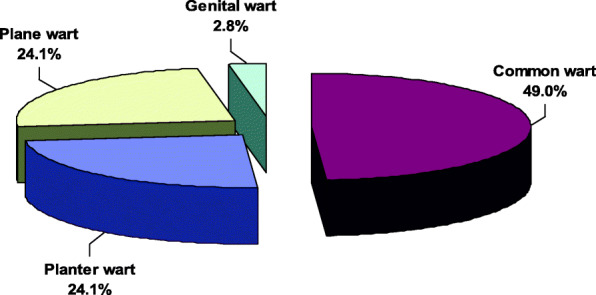
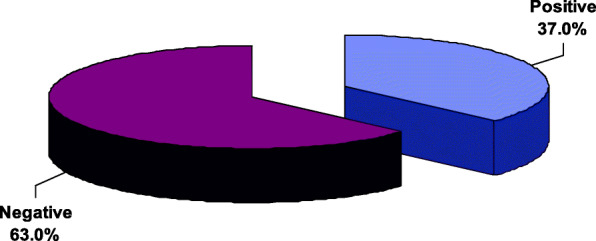
Results: Among 1045 examined school students, 108 students were diagnosed as having warts with a prevalence rate of 10.3%. Common wart was the most common type among students (49.0%) followed by plantar and plane warts (24.1%, each) while genital wart was the least one (2.8%). There was no significant sex or age difference. The prevalence of warts was significantly higher among students from public schools, rural areas, and big families; students with lower paternal education level; and students who were sharing shoes, walking barefoot, having contact with house pets, or exposed to water channels.
Conclusion: Warts, especially the common variant, are highly prevalent in primary school children. The significant factors associated with the development of warts in these children were big family size and sharing shoes. Other significant associated factors included living in rural areas, attending public schools, illiterate parents, fathers with manual work, and swimming in water canals.
Keywords: Prevalence; Primary school children; Risk factors; Warts.
Conflict of interest statement
Reviewing the proposal and approval of the research was carried out before starting by the Ethics Committee of Assiut Faculty of Medicine. Administrative approvals were completed from the Ministry of Education and school management as required. The study objectives were explained to students in the class before examination and filling the questionnaire. Informed written consent was obtained from caregivers who welcomed to participate in the study. Privacy of the students during physical examination was maintained. No sensitive questions were included in the study. Risk factors for transmission and preventive measures were explained in a simple way to children. Medical advice and treatment were offered for free to the affected children. Confidentiality of all data was assured.Not applicable (as there is no data from any individual person)The authors declare that they have no competing interests.Springer Nature remains neutral with regard to jurisdictional claims in published maps and institutional affiliations.
Figures
References
-
- Kasim K, Amer S, Mosaad M, Abdel-Wahed A, Allam H. Some epidemiologic aspects of common warts in rural primary school children. ISRN Epidemiol. 2013;2013:1–6. Article ID 283591. 10.5402/2013/283591 - DOI
-
- Makhlouf NN. The prevalence of dermatological diseases among school children in Bab El-Shaareya region, Cairo city thesis [M.S. of dermatology and venereology] Cairo: Faculty of Medicine, Al-Azhar University; 2007.
MeSH terms
LinkOut - more resources
Full Text Sources
Medical
