


Contribution of ghrelin to functional gastrointestinal disorders' pathogenesis
- PMID: 30774270
- PMCID: PMC6371003
- DOI: 10.3748/wjg.v25.i5.539
Contribution of ghrelin to functional gastrointestinal disorders' pathogenesis
Abstract
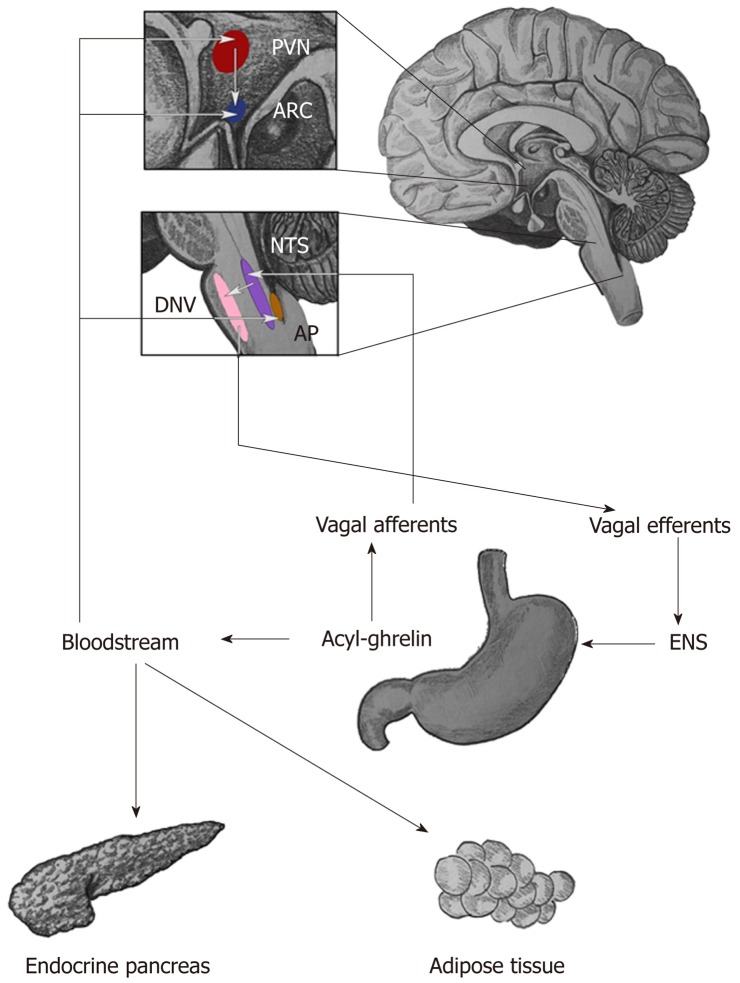
Functional gastrointestinal disorders (FGID) are heterogeneous disorders with a variety of clinical manifestations, primarily defined by signs and symptoms rather than a definite underlying cause. Their pathophysiology remains obscure and, although it is expected to differ according to the specific FGID, disruptions in the brain-gut axis are now thought to be a common denominator in their pathogenesis. The hormone ghrelin is an important component of this axis, exerting a wide repertoire of physiological actions, including regulation of gastrointestinal motility and protection of mucosal tissue. Ghrelin's gene shows genetic polymorphism, while its protein product undergoes complex regulation and metabolism in the human body. Numerous studies have studied ghrelin's relation to the emergence of FGIDs, its potential value as an index of disease severity and as a predictive marker for symptom relief during attempted treatment. Despite the mixed results currently available in scientific literature, the plethora of statistically significant findings shows that disruptions in ghrelin genetics and expression are plausibly related to FGID pathogenesis. The aim of this paper is to review current literature studying these associations, in an effort to uncover certain patterns of alterations in both genetics and expression, which could delineate its true contribution to FGID emergence, either as a causative agent or as a pathogenetic intermediate.
Keywords: Cyclic vomiting syndrome; Epigenetic processes; Functional colonic diseases; Functional gastrointestinal disorders; Gastrointestinal disease; Genetics; Ghrelin; Infantile colic; Irritable bowel syndrome.
Conflict of interest statement
Conflict-of-interest statement: No conflicts of interest.
Figures
References
Publication types
MeSH terms
Substances
LinkOut - more resources
Full Text Sources
