


Molecular Mechanisms of Neurodegeneration Related to C9orf72 Hexanucleotide Repeat Expansion
- PMID: 30774737
- PMCID: PMC6350563
- DOI: 10.1155/2019/2909168
Molecular Mechanisms of Neurodegeneration Related to C9orf72 Hexanucleotide Repeat Expansion
Abstract
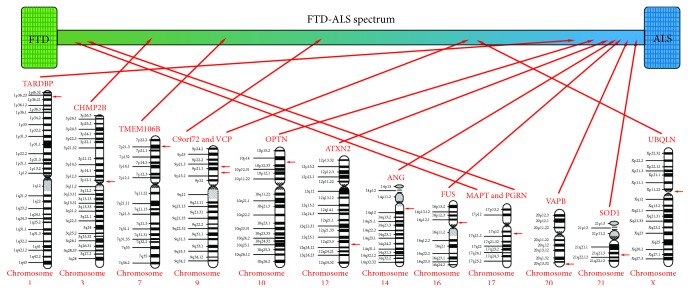
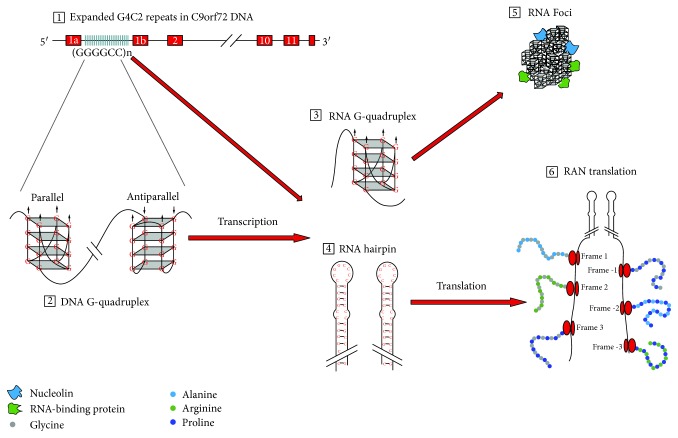
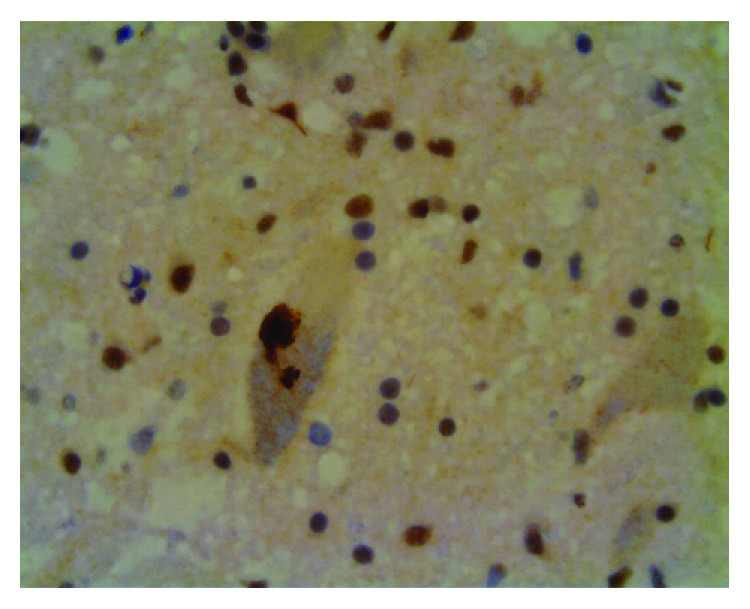
Two clinically distinct diseases, amyotrophic lateral sclerosis (ALS) and frontotemporal dementia (FTD), have recently been classified as two extremes of the FTD/ALS spectrum. The neuropathological correlate of FTD is frontotemporal lobar degeneration (FTLD), characterized by tau-, TDP-43-, and FUS-immunoreactive neuronal inclusions. An earlier discovery that a hexanucleotide repeat expansion mutation in chromosome 9 open reading frame 72 (C9orf72) gene causes ALS and FTD established a special subtype of ALS and FTLD with TDP-43 pathology (C9FTD/ALS). Normal individuals carry 2-10 hexanucleotide GGGGCC repeats in the C9orf72 gene, while more than a few hundred repeats represent a risk for ALS and FTD. The proposed molecular mechanisms by which C9orf72 repeat expansions induce neurodegenerative changes are C9orf72 loss-of-function through haploinsufficiency, RNA toxic gain-of-function, and gain-of-function through the accumulation of toxic dipeptide repeat proteins. However, many more cellular processes are affected by pathological processes in C9FTD/ALS, including nucleocytoplasmic transport, RNA processing, normal function of nucleolus, formation of membraneless organelles, translation, ubiquitin proteasome system, Notch signalling pathway, granule transport, and normal function of TAR DNA-binding protein 43 (TDP-43). Although the exact molecular mechanisms through which C9orf72 repeat expansions account for neurodegeneration have not been elucidated, some potential therapeutics, such as antisense oligonucleotides targeting hexanucleotide GGGGCC repeats in mRNA, were successful in preclinical trials and are awaiting phase 1 clinical trials. In this review, we critically discuss each proposed mechanism and provide insight into the most recent studies aiming to elucidate the molecular underpinnings of C9FTD/ALS.
Figures
References
Publication types
MeSH terms
Substances
Supplementary concepts
Grants and funding
LinkOut - more resources
Full Text Sources
Other Literature Sources
Medical
Miscellaneous
