Review
. 2019 Jan 22;10(7):785-797.
doi: 10.18632/oncotarget.26585.

Emerging approaches to study cell-cell interactions in tumor microenvironment

Affiliations
Review

Emerging approaches to study cell-cell interactions in tumor microenvironment

Nao Nishida-Aoki et al. Oncotarget. .

Abstract

Cell-cell interactions are of crucial importance for tissue formation, homeostasis, regeneration processes, and immune response. Recent studies underlined contribution of cell-cell interaction in tumor microenvironment (TME) for tumor progression and metastasis. Cancer cells modify the host cells to tumor-supportive traits, and the modified host cells contribute to tumor progression by interacting with cancer cells and further modifying other normal cells. However, the complex interaction networks of cancer cells and host cells remained largely unknown. Recent advances in high throughput microscopy and single cells-based molecular analyses have unlocked a new era for studying cell-cell interactions in the complex tissue microenvironment at the resolution of a single cell. Here, we review various model systems and emerging experimental approaches that are used to study cell-cell interactions focusing on the studies of TME. We discuss strengths and weaknesses of each model system and each experimental approach, and how upcoming approaches can solve current fundamental questions of cell-cell interactions in TME.

Keywords: cell–cell interaction; single-cell analysis; tissue heterogeneity; tumor microenvironment.


Conflict of interest statement

CONFLICTS OF INTEREST The authors declare no conflicts of interest.

Figures
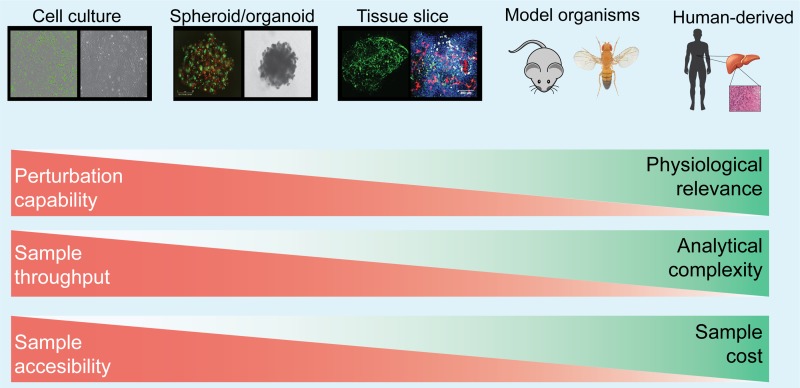
Figure 1
Figure 1. Major experimental model systems for studying cell–cell interaction
Model systems ranges from in vitro assay of cells grown in monolayer, 3D, and spheroid/organoid cultures, to in vivo rodent carcinogenesis models, xenografts of human cancer cell lines, and patient-derived xenografts (PDXs) as well as direct analysis. The strength and weakness of each experimental model are described with red and green bars. A tradeoff exists between sample manipulation and its physiological relevance. Detailed description of each model is also summarized in Table 1.
Figure 2
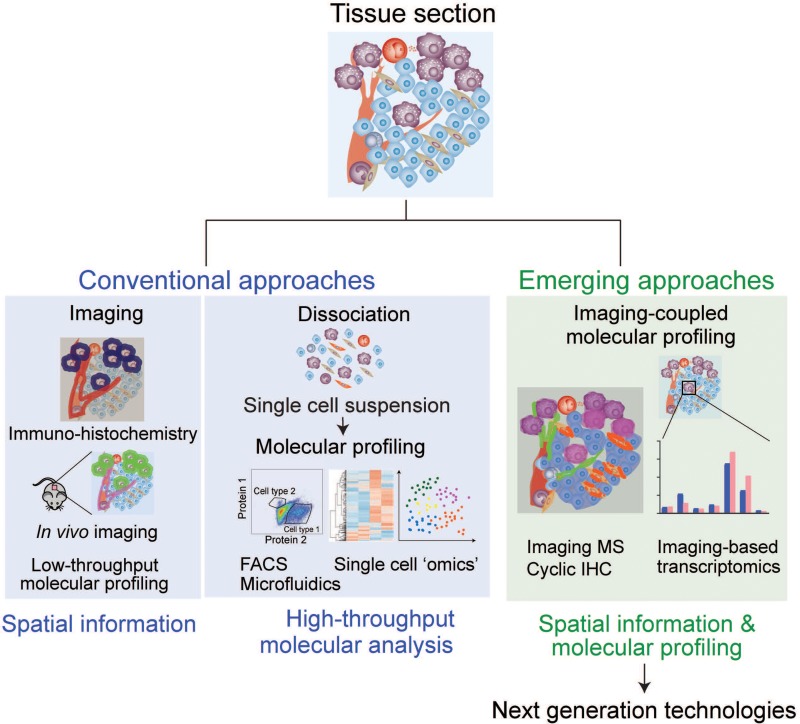
Figure 2. Analytical approaches to study cell–cell interaction
Current microscopy-based analyses are focused on obtaining spatial information of targeted cells/molecules, and cell sorting-based techniques require cell dissociation, which precludes spatial information. Emerging approaches integrate both advantages to obtain molecular and spatial information simultaneously, providing meaningful insights for cell–cell interactions.

References

    1. Bianconi E, Piovesan A, Facchin F, Beraudi A, Casadei R, Frabetti F, Vitale L, Pelleri MC, Tassani S, Piva F, Perez-Amodio S, Strippoli P, Canaider S. An estimation of the number of cells in the human body. Ann Hum Biol. 2013;40:463–71. doi: 10.3109/03014460.2013.807878. - DOI - PubMed
    1. West NR, McCuaig S, Franchini F, Powrie F. Emerging cytokine networks in colorectal cancer. Nat Rev Immunol. 2015;15:615–29. doi: 10.1038/nri3896. - DOI - PubMed
    1. Lyssiotis CA, Kimmelman AC. Metabolic Interactions in the Tumor Microenvironment. Trends Cell Biol. 2017;27:863–75. doi: 10.1016/j.tcb.2017.06.003. - DOI - PMC - PubMed
    1. Becker A, Thakur BK, Weiss JM, Kim HS, Peinado H, Lyden D. Extracellular Vesicles in Cancer: Cell-to-Cell Mediators of Metastasis. Cancer Cell. 2016;30:836–48. doi: 10.1016/j.ccell.2016.10.009. - DOI - PMC - PubMed
    1. Pickup MW, Mouw JK, Weaver VM. The extracellular matrix modulates the hallmarks of cancer. EMBO Rep. 2014;15:1243–53. doi: 10.15252/embr.201439246. - DOI - PMC - PubMed