


Review
doi: 10.1039/c8md00425k.
eCollection 2019 Jan 1.
Recent developments in compounds acting in the DNA minor groove
Affiliations
- PMID: 30774852
- PMCID: PMC6349057
- DOI: 10.1039/c8md00425k
Item in Clipboard
Review
Recent developments in compounds acting in the DNA minor groove
Medchemcomm.
.
Abstract
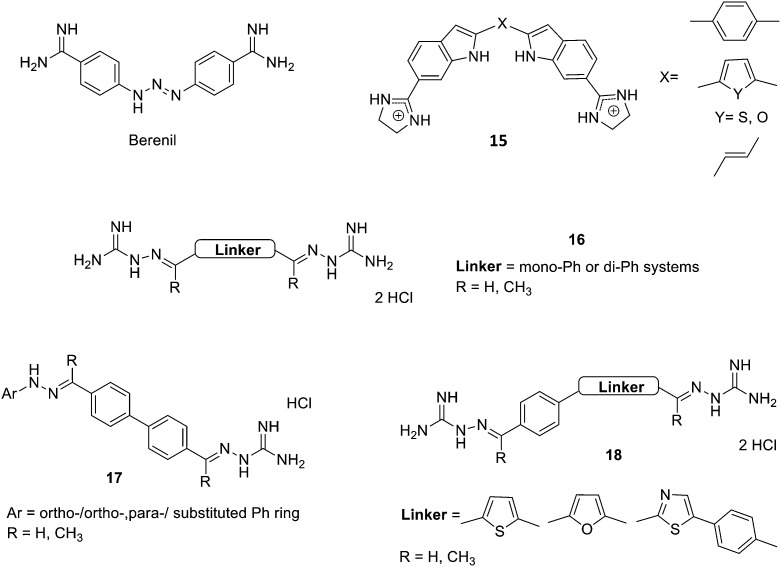
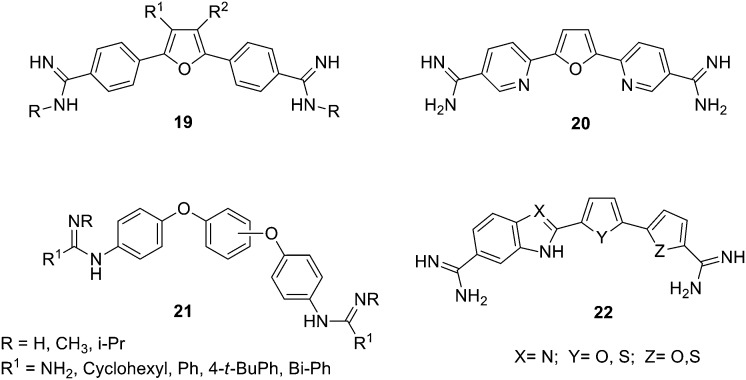
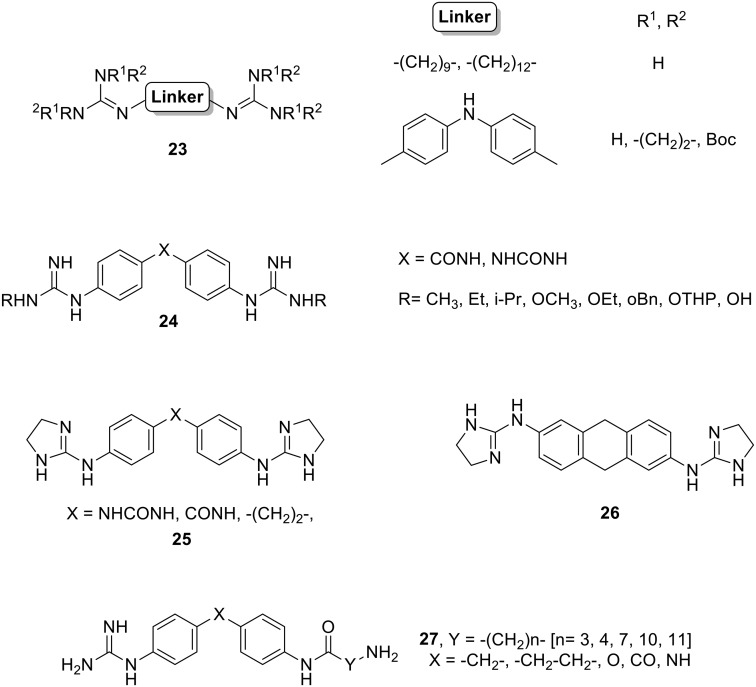
The macromolecule that carries genetic information, DNA, is considered as an exceptional target for diseases depending on cellular division of malignant cells (i.e. cancer), microbes (i.e. bacteria) or parasites (i.e. protozoa). To aim for a comprehensive review to cover all aspects related to DNA targeting would be an impossible task and, hence, the objective of the present review is to present, from a medicinal chemistry point of view, recent developments of compounds targeting the minor groove of DNA. Accordingly, we discuss the medicinal chemistry aspects of heterocyclic small-molecules binding the DNA minor groove, as novel anticancer, antibacterial and antiparasitic agents.
Figures
References
-
- Kennard O. Pure Appl. Chem. 1993;65:1213–1222.
-
- Avendaño C. and Menendez J. C. in Medicinal Chemistry of Anticancer Drugs, Elsevier B.V., Chapter 7: DNA intercalators and Topoisomerase inhibitors, 2008, pp. 199–228.
-
- Sriram D., Yogeeswari P., Thirumurugan R., Ratan Bal T. Nat. Prod. Res. 2005;19:393–412. - PubMed
-
- Ashley N., Poulton J. Biochem. Biophys. Res. Commun. 2009;378:450–455. - PubMed
-
- Foye W. O., Cancer Chemotherapeutic Agents, American Chemical Society, 1995.
Publication types
LinkOut - more resources
Full Text Sources
