


Real-World Evaluation of Patiromer for the Treatment of Hyperkalemia in Hemodialysis Patients
- PMID: 30775627
- PMCID: PMC6365398
- DOI: 10.1016/j.ekir.2018.10.020
Real-World Evaluation of Patiromer for the Treatment of Hyperkalemia in Hemodialysis Patients
Abstract
Introduction: Patiromer is a potassium (K+) binding polymer indicated for treating hyperkalemia. Among patients receiving chronic hemodialysis (HD), this study aimed to identify patient characteristics associated with patiromer initiation, describe patiromer utilization, and analyze serum K+ pre- and post-patiromer initiation.
Methods: In a retrospective cohort study, using electronic health record data from a large dialysis provider in the United States (study period: December 21, 2015, to December 20, 2016), HD patients were included who had a medication order for patiromer, sodium polystyrene sulfonate (SPS), or laboratory evidence of hyperkalemia (no K+ binder [NoKb] cohort). The index date was the first order for patiromer/SPS, or the first K+ ≥5.0 mEq/l (NoKb cohort), respectively. Using multivariable logistic regression, we identified patient characteristics associated with patiromer initiation. We evaluated patiromer utilization using Kaplan-Meier methodology and proportion of days covered. Serum K+ concentrations were assessed pre- versus post-patiromer initiation.
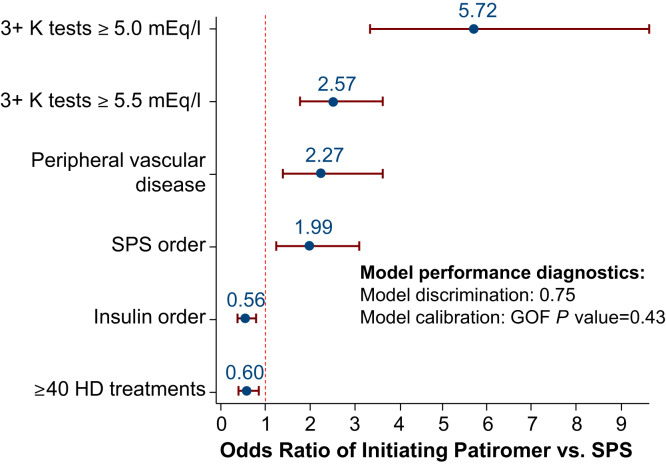
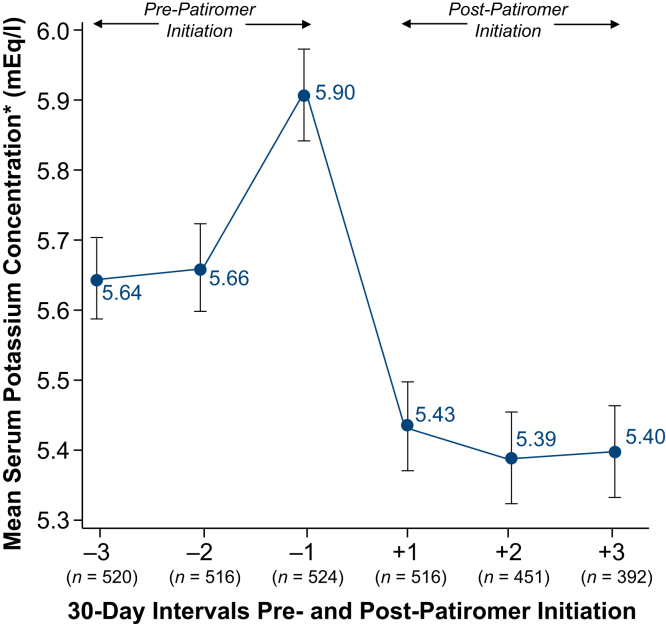
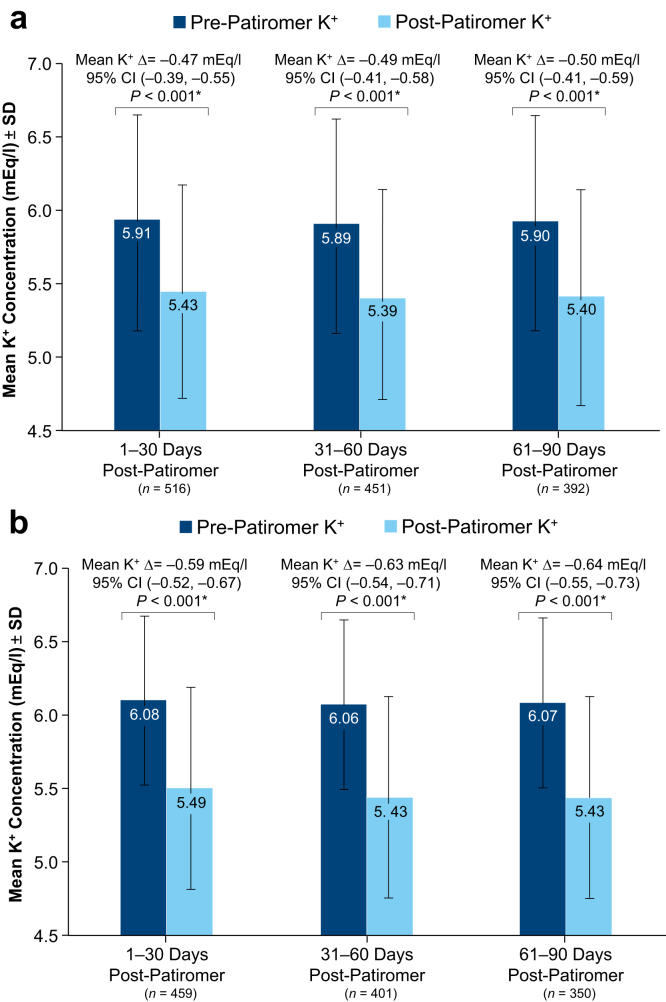
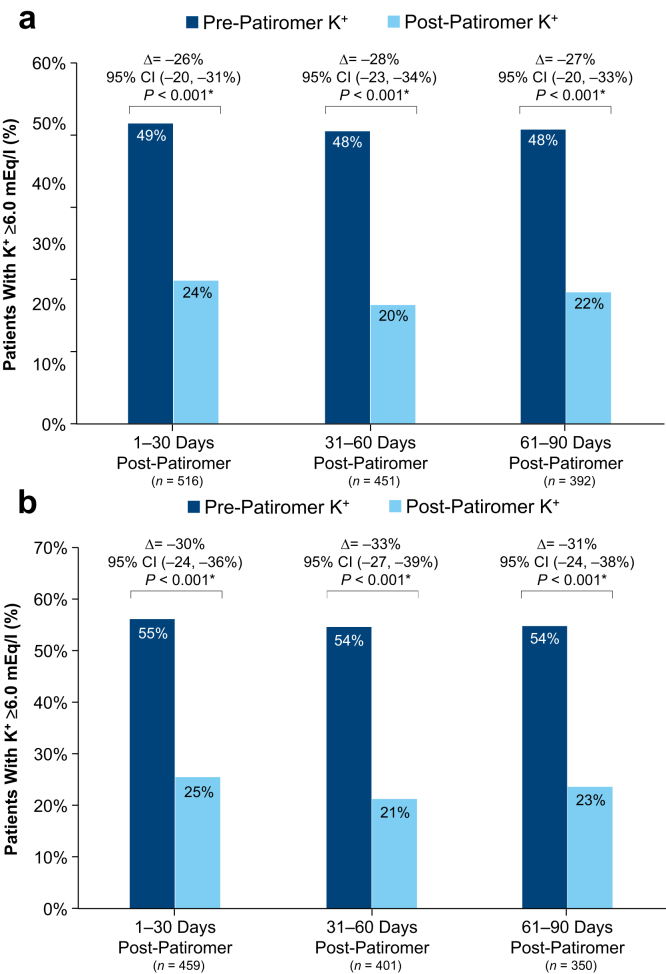
Results: Study cohorts included 527 (patiromer), 852 (SPS), and 8747 (NoKb) HD patients. Median follow-up was 141 days. Patiromer initiators were 2.6 times more likely to have had multiple prior episodes of hyperkalemia (odds ratio [OR]: 2.6; 95% confidence interval [CI]: 1.8-3.7). Most (61%) commenced patiromer on 8.4 g once daily; 60% of patients' first patiromer order remained open after 180 days. Statistically significant reductions in K+, averaging approximately -0.5 mEq/l, were observed post-patiromer initiation (48% pre-patiromer vs. 22% post-patiromer had K+ ≥6.0 mEq/l [P < 0.001]).
Conclusion: Patiromer initiators receiving chronic hemodialysis had comparatively more severe, uncontrolled baseline hyperkalemia. Medication order data show long-term patiromer use was associated with significantly reduced K+.
Keywords: hemodialysis; hyperkalemia; patiromer.
Figures
References
-
- Kovesdy C.P., Regidor D.L., Mehrotra R. Serum and dialysate potassium concentrations and survival in hemodialysis patients. Clin J Am Soc Nephrol. 2007;2:999–1007. - PubMed
-
- Palmer B.F. Managing hyperkalemia caused by inhibitors of the renin-angiotensin-aldosterone system. N Engl J Med. 2004;351:585–592. - PubMed
-
- Albert N.M., Yancy C.W., Liang L. Use of aldosterone antagonists in heart failure. JAMA. 2009;302:1658–1665. - PubMed
LinkOut - more resources
Full Text Sources
Other Literature Sources
