


Environmental Risk Factors Associated with Child Stunting: A Systematic Review of the Literature
- PMID: 30779500
- PMCID: PMC6748290
- DOI: 10.9204/aogh.2361
Environmental Risk Factors Associated with Child Stunting: A Systematic Review of the Literature
Abstract
Background: Stunting, a form of malnutrition characterized by impaired linear growth in the first two years of life, affects one quarter of children globally. While nutritional status remains the key cause of stunting, there is evidence that environmental risk factors are associated with stunting.
Objective: The objective of this review is to explore the current literature and compile the environmental risk factors that have been associated with stunting. Further, we seek to discover which risk factors act independently of nutritional intake.
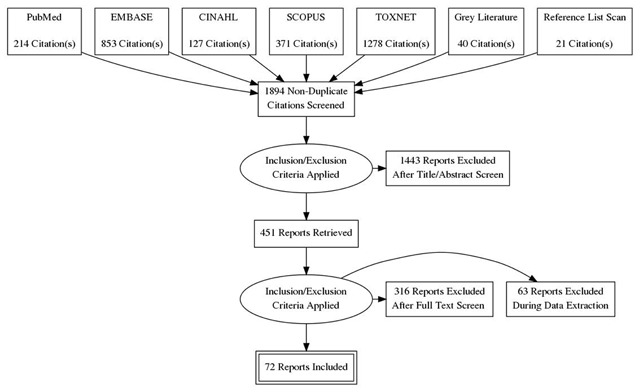
Methods: A systematic search of the literature was performed using PubMed, EMBASE, Scopus, TOXNET, and CINAHL. A search of the grey literature was conducted. Papers were included in this review if they examined an association between childhood stunting and exposure to environmental risk factors.
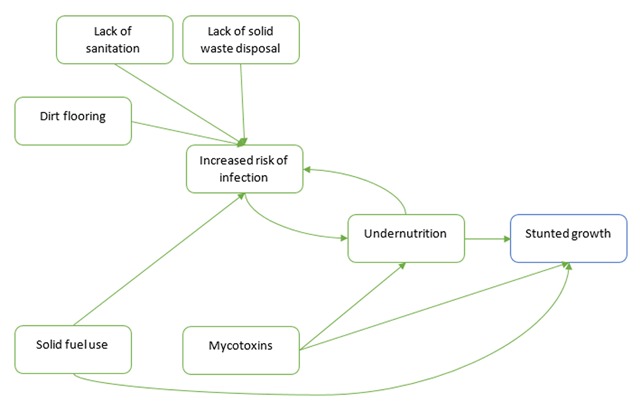
Findings: We included 71 reports in the final analysis. The included studies showed that foodborne mycotoxins, a lack of adequate sanitation, dirt floors in the home, poor quality cooking fuels, and inadequate local waste disposal are associated with an increased risk of childhood stunting. Access to safe water sources was studied in a large number of studies, but the results remain inconclusive due to inconsistent study findings. Limited studies were available for arsenic, mercury, and environmental tobacco, and thus their role in stunting remains inconclusive. The identified research did not control for nutritional intake. A causal model identified solid fuel use and foodborne mycotoxins as being environmental risk factors with the potential to have direct effects on childhood growth.
Conclusions: A diverse range of environmental risk factors are, to varying degrees, associated with stunting, demonstrating the importance of considering how the environment interacts with nutrition. Health promotion activities may be more effective if they consider environmental factors alongside nutritional interventions.
© 2019 The Author(s). This is an open-access article distributed under the terms of the Creative Commons Attribution 4.0 International License (CC-BY 4.0), which permits unrestricted use, distribution, and reproduction in any medium, provided the original author and source are credited. See http://creativecommons.org/licenses/by/4.0/.
Conflict of interest statement
The authors have no competing interests to declare.
Figures
References
-
- UNICEF. Undernutrition contributes to half of all deaths in children under 5 and is widespread in Asia and Africa. http://data.unicef.org/nutrition/malnutrition Published 2014. Accessed December 31, 2014.
-
- World Health Organization. Childhood Stunting: Challenges and opportunities Report of a Promoting Healthy Growth and Preventing Childhood Stunting colloquium. Geneva; 2014.
Publication types
MeSH terms
LinkOut - more resources
Full Text Sources
Medical