


Data model harmonization for the All Of Us Research Program: Transforming i2b2 data into the OMOP common data model
- PMID: 30779778
- PMCID: PMC6380544
- DOI: 10.1371/journal.pone.0212463
Data model harmonization for the All Of Us Research Program: Transforming i2b2 data into the OMOP common data model
Abstract
Background: The All Of Us Research Program (AOU) is building a nationwide cohort of one million patients' EHR and genomic data. Data interoperability is paramount to the program's success. AOU is standardizing its EHR data around the Observational Medical Outcomes Partnership (OMOP) data model. OMOP is one of several standard data models presently used in national-scale initiatives. Each model is unique enough to make interoperability difficult. The i2b2 data warehousing and analytics platform is used at over 200 sites worldwide, which uses a flexible ontology-driven approach for data storage. We previously demonstrated this ontology system can drive data reconfiguration, to transform data into new formats without site-specific programming. We previously implemented this on our 12-site Accessible Research Commons for Health (ARCH) network to transform i2b2 into the Patient Centered Outcomes Research Network model.
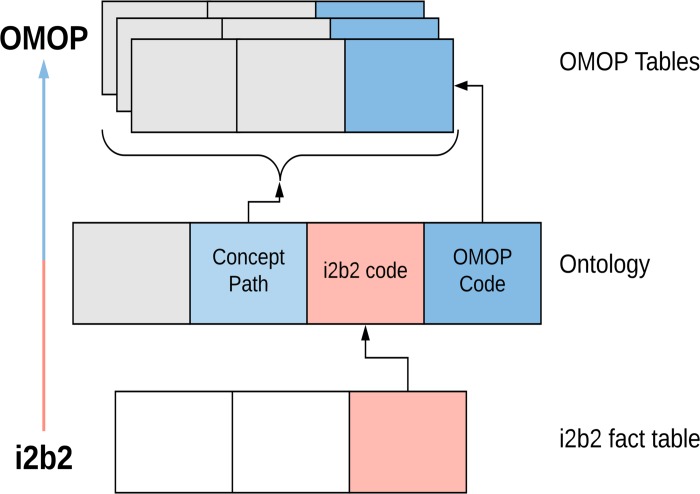
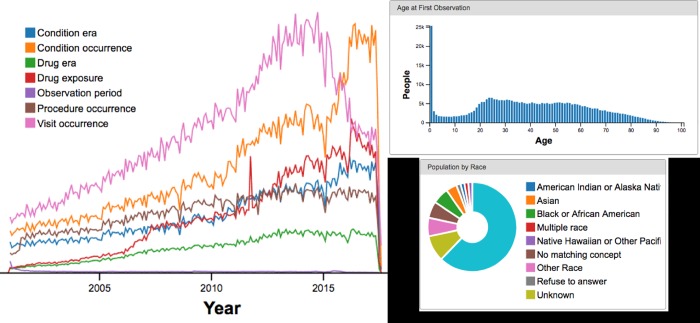
Methods and results: Here, we leverage our investment in i2b2 high-performance transformations to support the AOU OMOP data pipeline. Because the ARCH ontology has gained widespread national interest (through the Accrual to Clinical Trials network, other PCORnet networks, and the Nebraska Lexicon), we leveraged sites' existing investments into this standard ontology. We developed an i2b2-to-OMOP transformation, driven by the ARCH-OMOP ontology and the OMOP concept mapping dictionary. We demonstrated and validated our approach in the AOU New England HPO (NEHPO). First, we transformed into OMOP a fake patient dataset in i2b2 and verified through AOU tools that the data was structurally compliant with OMOP. We then transformed a subset of data in the Partners Healthcare data warehouse into OMOP. We developed a checklist of assessments to ensure the transformed data had self-integrity (e.g., the distributions have an expected shape and required fields are populated), using OMOP's visual Achilles data quality tool. This i2b2-to-OMOP transformation is being used to send NEHPO production data to AOU. It is open-source and ready for use by other research projects.
Conflict of interest statement
The authors have declared that no competing interests exist.
Figures
References
-
- All of Us Research Program. In: National Institutes of Health (NIH) [Internet]. [cited 6 Mar 2017]. Available: https://allofus.nih.gov/
-
- Health Care Provider Organizations | All of Us [Internet]. [cited 3 Feb 2018]. Available: https://allofus.nih.gov/about/program-components/health-care-provider-or...
-
- Verily Life Sciences: Precision Medicine Initiative [Internet]. [cited 3 Feb 2018]. Available: https://verily.com/projects/precision-medicine/precision-medicine-initia...
-
- PCORnet Common Data Model (CDM). In: PCORnet [Internet]. [cited 6 Mar 2017]. Available: http://www.pcornet.org/pcornet-common-data-model/
Publication types
MeSH terms
Grants and funding
LinkOut - more resources
Full Text Sources
