. 2019 Feb 19;14(2):e0212520.
doi: 10.1371/journal.pone.0212520. eCollection 2019.

Optimization of irradiation dose to Aedes aegypti and Ae. albopictus in a sterile insect technique program

Affiliations

Optimization of irradiation dose to Aedes aegypti and Ae. albopictus in a sterile insect technique program

J Guillermo Bond et al. PLoS One. .

Abstract

The sterile insect technique (SIT) may offer a means to control the transmission of mosquito borne diseases. SIT involves the release of male insects that have been sterilized by exposure to ionizing radiation. We determined the effects of different doses of radiation on the survival and reproductive capacity of local strains of Aedes aegypti and Ae. albopictus in southern Mexico. The survival of irradiated pupae was invariably greater than 90% and did not differ significantly in either sex for either species. Irradiation had no significant adverse effects on the flight ability (capacity to fly out of a test device) of male mosquitoes, which consistently exceeded 91% in Ae. aegypti and 96% in Ae. albopictus. The average number of eggs laid per female was significantly reduced in Ae. aegypti at doses of 15 and 30 Gy and no eggs were laid by females that had been exposed to 50 Gy. Similarly, in Ae. albopictus, egg production was reduced at doses of 15 and 25 Gy and was eliminated at 35 Gy. In Ae. aegypti, fertility in males was eliminated at 70 Gy and was eliminated at 30 Gy in females, whereas in Ae. albopictus, the fertility of males that mated with untreated females was almost zero (0.1%) in the 50 Gy treatment and female fertility was eliminated at 35 Gy. Irradiation treatments resulted in reduced ovary length and fewer follicles in both species. The adult median survival time of both species was reduced by irradiation in a dose-dependent manner. However, sterilizing doses of 35 Gy and 50 Gy resulted in little reduction in survival times of males of Ae. albopictus and Ae. aegypti, respectively, indicating that these doses should be suitable for future evaluations of SIT-based control of these species. The results of the present study will be applied to studies of male sexual competitiveness and to stepwise evaluations of the sterile insect technique for population suppression of these vectors in Mexico.


Conflict of interest statement

The authors have declared that no competing interests exist.

Figures
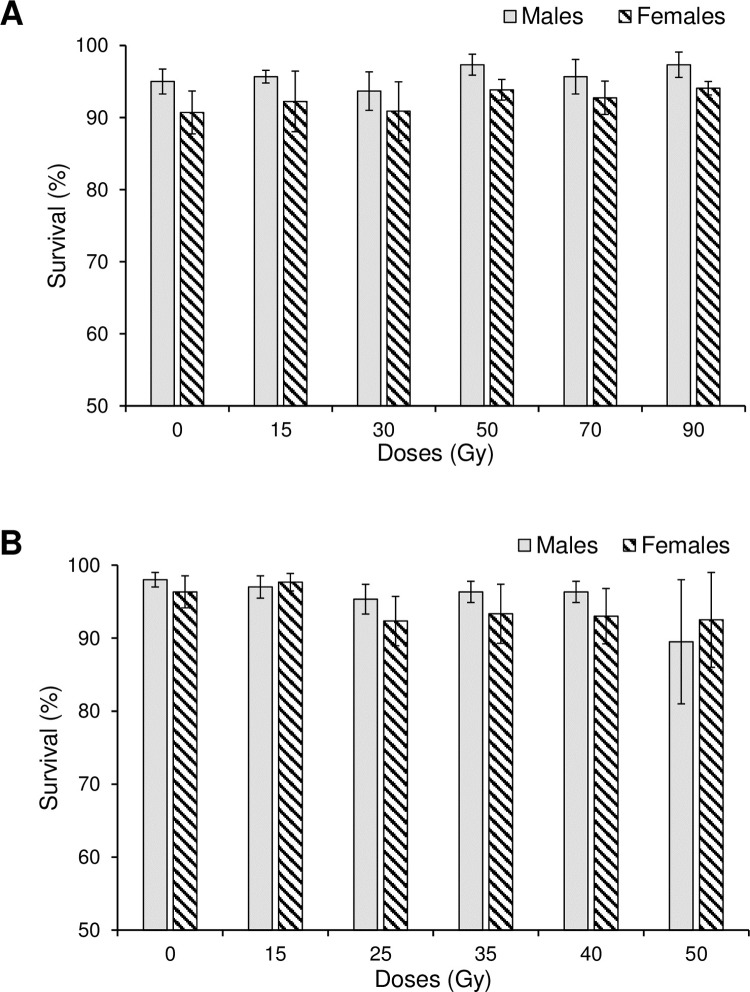
Fig 1
Fig 1. Percentage of survival of males and females following exposure to different irradiation doses.
(A) Aedes aegypti and (B) Aedes albopictus. Vertical bars indicate SE.
Fig 2
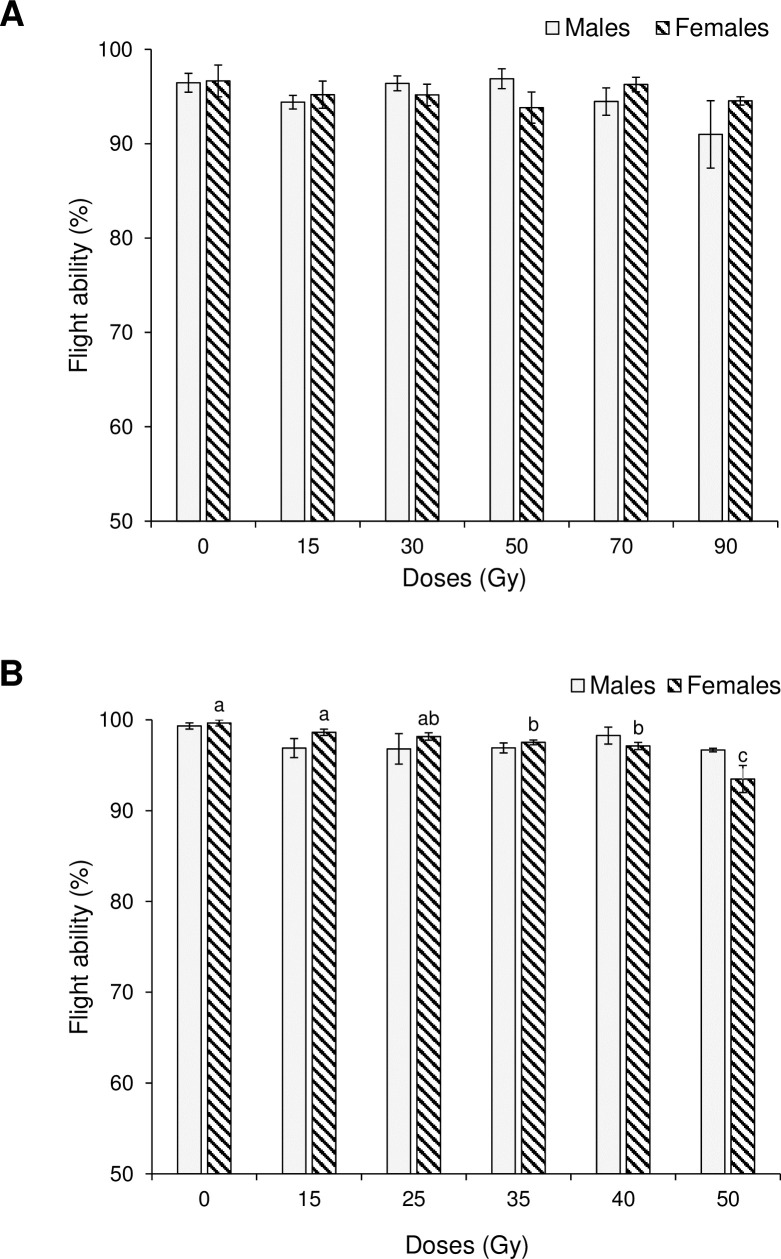
Fig 2. Percentage of flight ability in males and females following exposure to different irradiation doses.
(A) Aedes aegypti and (B) Aedes albopictus Vertical bars indicate SE. Columns without letters did not differ significantly (Kruskal-Wallis, P>0.05). Columns headed by different letters differed significantly for comparisons among treatments applied to females in (B) (Kruskal-Wallis, P≤0.05).
Fig 3
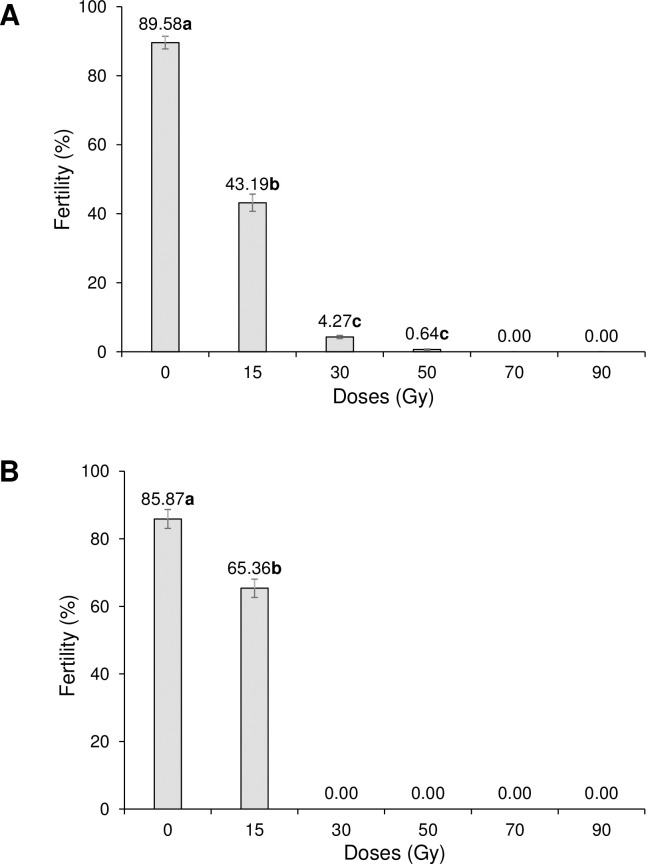
Fig 3. Effects of irradiation on percentage of egg fertility of Aedes aegypti.
(A) Irradiated males mated with non-irradiated females and (B) irradiated females mated with non-irradiated males. Values above columns indicate percentages. Values followed by identical letters do not differ significantly (Tukey, P>0.05). Vertical bars indicate SE.
Fig 4
Fig 4. Effects of irradiation on percentage of egg fertility of Aedes albopictus.
(A) Irradiated males mated with non- irradiated females and (B) irradiated females mated with non-irradiated males. Values above columns indicate percentages. Values followed by identical letters do not differ significantly (Tukey, P>0.05). Vertical bars indicate SE.
Fig 5
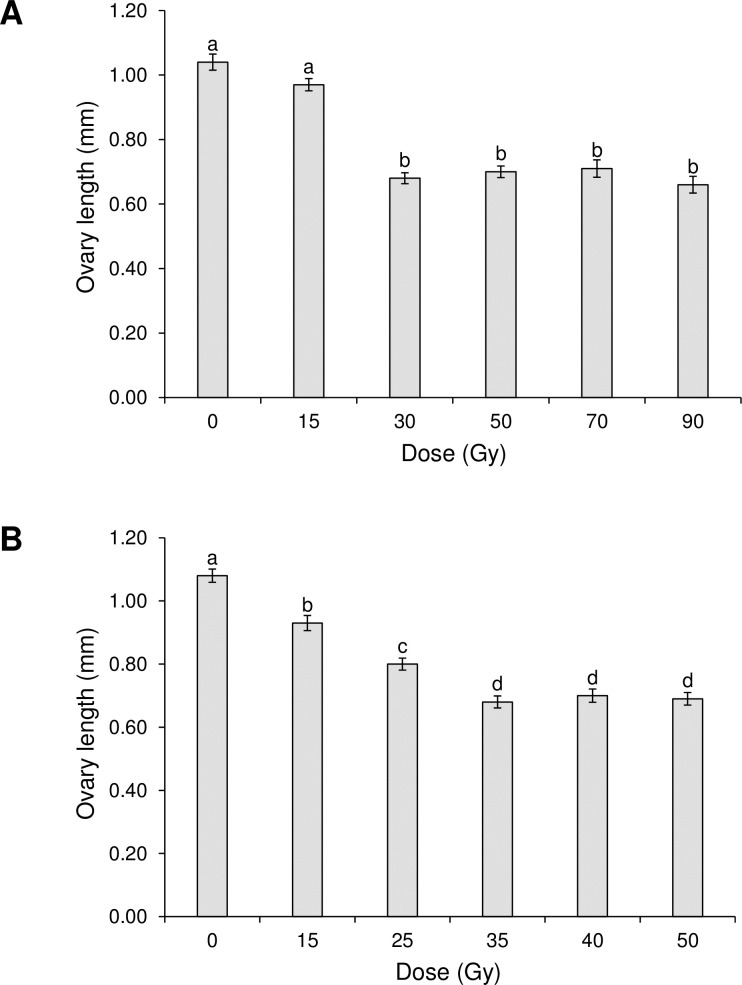
Fig 5. Effect of irradiation on mean ovary length.
(A) Aedes aegypti (A) and (B) Aedes albopictus. Columns headed by identical letters do not differ significantly (Tukey, P>0.05). Vertical bars indicate SE.
Fig 6
Fig 6
Kaplan-Meier survival curves for Ae. aegypti adults (A) males and (B) females following exposure to different doses of radiation in the pupal stage. Pairwise comparisons of survival curves was performed by log-rank test with Benjamini–Hochberg false discovery rate adjusted P-values. Dashed lines indicate median survival times for each radiation treatment.
Fig 7
Fig 7
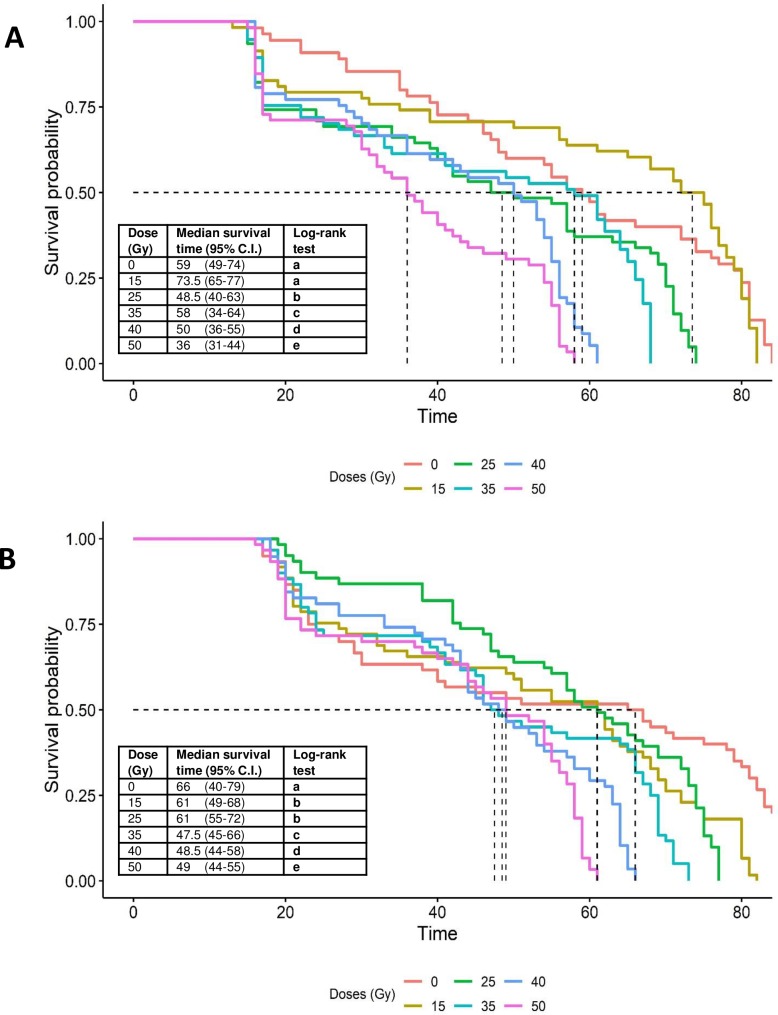
Kaplan-Meier survival curves for Ae. albopictus adults (A) males and (B) females following exposure to different doses of radiation in the pupal stage. Pairwise comparisons of survival curves was performed by log-rank test with Benjamini–Hochberg false discovery rate adjusted P-values. Dashed lines indicate median survival times for each radiation treatment.

References

    1. Kraemer MUG, Sinka ME, Duda KA, Mylne AQN, Shearer FM, Barker CM, et al. The global distribution of the arbovirus vectors Aedes aegypti and Ae. albopictus. eLife. 2015; 4: e08347 10.7554/eLife.08347 - DOI - PMC - PubMed
    1. Zhang D, Zheng X, Xi Z, Bourtzis K, Gilles JRL. Combining the sterile insect technique with the incompatible technique: I-Impact of Wolbachia infection on the fitness of triple- and double-infected strains of Aedes albopictus. Plos One. 2015; 10: e0121126 10.1371/journal.pone.0121126 - DOI - PMC - PubMed
    1. Huang YJS, Higgs S, Vanlandingham DL. Biological control strategies for mosquito vectors or arboviruses. Insects. 2017; 8, 21. - PMC - PubMed
    1. Lees RS, Gilles JRL, Hendrichs J, Vreysen MJV, Bourtzis K. Back to the future: the sterile insect technique against mosquito disease vectors. Curr Opin Insect Sci. 2015; 10: 156–162. 10.1016/j.cois.2015.05.011 - DOI - PubMed
    1. Alphey L, Benedict M, Bellini R, Clark GG, Dame DA, Service MW, et al. Sterile-insect methods for control of mosquito-borne diseases: an analysis. Vect Borne Zoo Dis. 2010; 10: 295–311. - PMC - PubMed

Publication types