


Sleep Disturbance as a Potential Modifiable Risk Factor for Alzheimer's Disease
- PMID: 30781802
- PMCID: PMC6412395
- DOI: 10.3390/ijms20040803
Sleep Disturbance as a Potential Modifiable Risk Factor for Alzheimer's Disease
Abstract
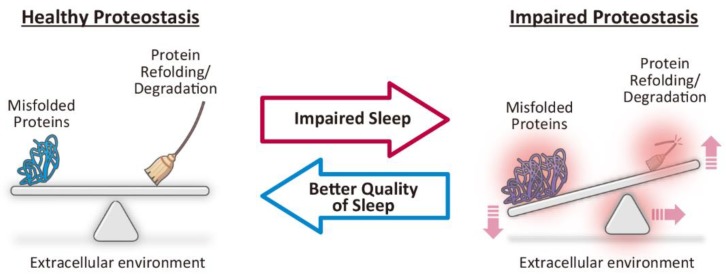
Sleep disturbance is a common symptom in patients with various neurodegenerative diseases, including Alzheimer's disease (AD), and it can manifest in the early stages of the disease. Impaired sleep in patients with AD has been attributed to AD pathology that affects brain regions regulating the sleep⁻wake or circadian rhythm. However, recent epidemiological and experimental studies have demonstrated an association between impaired sleep and an increased risk of AD. These studies have led to the idea of a bidirectional relationship between AD and impaired sleep; in addition to the conventional concept that impaired sleep is a consequence of AD pathology, various evidence strongly suggests that impaired sleep is a risk factor for the initiation and progression of AD. Despite this recent progress, much remains to be elucidated in order to establish the benefit of therapeutic interventions against impaired sleep to prevent or alleviate the disease course of AD. In this review, we provide an overview of previous studies that have linked AD and sleep. We then highlight the studies that have tested the causal relationship between impaired sleep and AD and will discuss the molecular and cellular mechanisms underlying this link. We also propose future works that will aid the development of a novel disease-modifying therapy and prevention of AD via targeting impaired sleep through non-pharmacological and pharmacological interventions.
Keywords: Alzheimer’s disease; amyloid beta; cognitive behavioral therapy for insomnia; default-mode network; proteostasis; sleep disturbance; sleep fragmentation; slow-wave sleep; tau.
Conflict of interest statement
The authors declare no conflict of interest.
Figures

References
-
- Guarnieri B., Adorni F., Musicco M., Appollonio I., Bonanni E., Caffarra P., Caltagirone C., Cerroni G., Concari L., Cosentino F.I.I., et al. Prevalence of sleep disturbances in mild cognitive impairment and dementing disorders: A multicenter italian clinical cross-sectional study on 431 patients. Dement. Geriatr. Cogn. Disord. 2012;33:50–58. doi: 10.1159/000335363. - DOI - PMC - PubMed
Publication types
MeSH terms
Grants and funding
LinkOut - more resources
Full Text Sources
Medical
