


Symptoms of anxiety and depression and use of anxiolytic-hypnotics and antidepressants in current and former smokers with and without COPD - A cross sectional analysis of the COPDGene cohort
- PMID: 30782350
- PMCID: PMC6383809
- DOI: 10.1016/j.jpsychores.2019.01.002
Symptoms of anxiety and depression and use of anxiolytic-hypnotics and antidepressants in current and former smokers with and without COPD - A cross sectional analysis of the COPDGene cohort
Abstract
Objectives: To compare the frequency of anxiety/depressive symptoms and use of anxiolytic-hypnotics/antidepressants in smokers with and without COPD and to identify characteristics associated with having unmedicated symptoms.
Methods: Cross-sectional analysis of ambulatory, current/former smokers ≥10 pack years enrolled in the COPDGene study. We measured anxiety/depressive symptoms using the Hospital Anxiety and Depression Scale (subscales ≥8), recorded anxiolytic-hypnotic/antidepressant use, and defined unmedicated symptoms as elevated anxiety/depressive symptoms and not on medications. Regression analysis identified characteristics associated with having unmedicated symptoms.
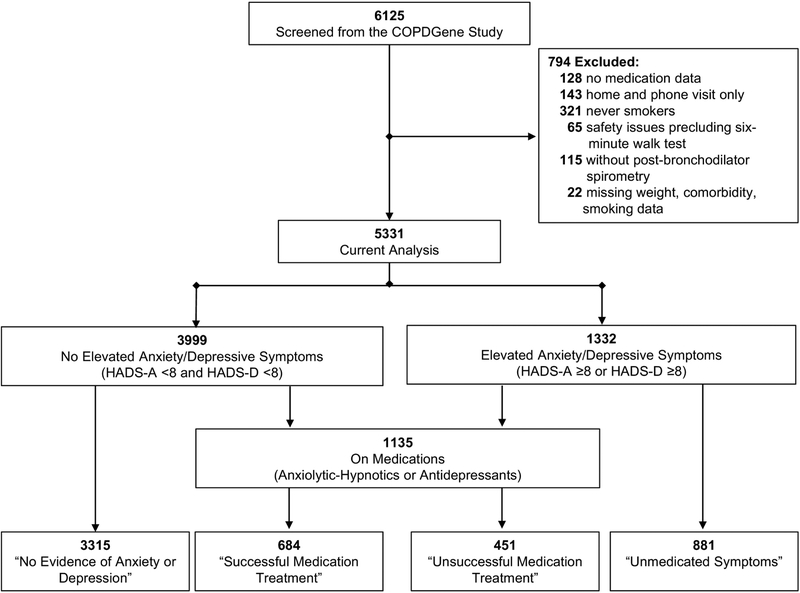
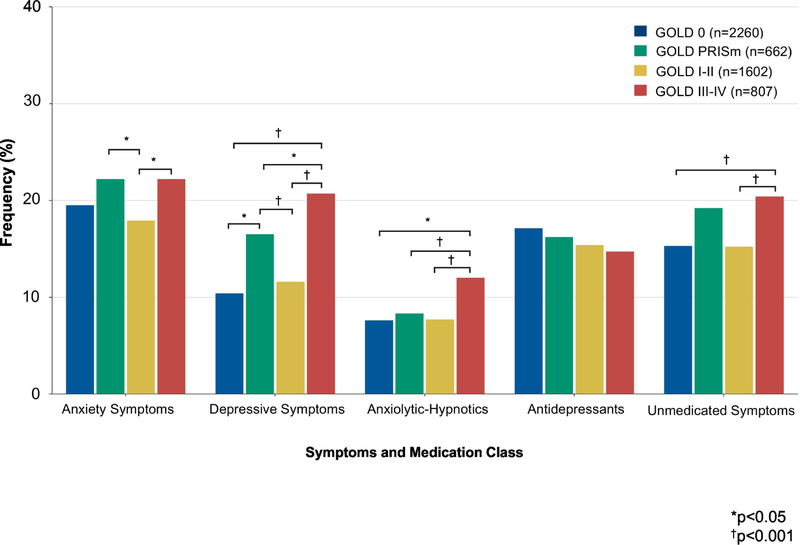
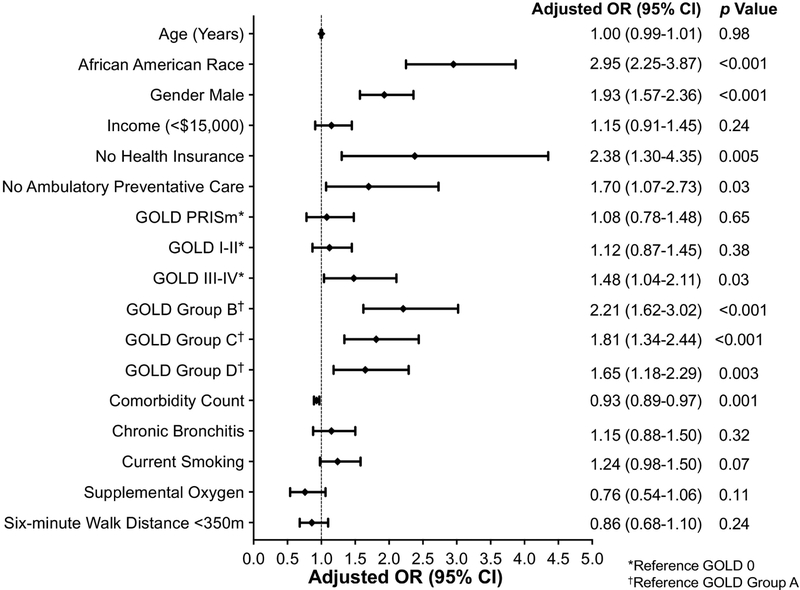
Key results: Of 5331 current/former smokers (45% with and 55% without COPD), 1332 (25.0%) had anxiety/depressive symptoms. Anxiety symptoms were similar in frequency in smokers with and without COPD (19.7% overall), while depressive symptoms were most frequent in severe-very severe COPD at 20.7% (13.1% overall). In the entire cohort, 1135 (21.2%) were on medications. Anxiolytic-hypnotic use was highest in severe-very severe COPD (range 7.6%-12.0%), while antidepressant use showed no significant variation in smokers with and without COPD (range 14.7%-17.1%). Overall, 881 (66% of those with symptoms) had unmedicated symptoms, which was associated with African American race (adjusted OR 2.95, 95% CI 2.25-3.87), male gender (adjusted OR 1.93, 95% CI 1.57-2.36), no health insurance (adjusted OR 2.38, 95% CI 1.30-4.35), severe-very severe COPD (adjusted OR 1.48, 95% CI 1.04-2.11), and higher respiratory symptoms/exacerbation history (adjusted OR 2.21, 95% CI 1.62-3.02).
Conclusions: Significant unmet mental health care needs exist in current and former smokers with and without COPD. One in five have unmedicated symptoms, identified by key demographic and clinical characteristics.
Primary funding source: National Institutes of Health and The COPD Foundation.
Keywords: Access to care; Antianxiety agents; Antidepressive agents; Anxiety; Chronic obstructive pulmonary disease; Clinical epidemiology; Depression; Mental health; Population health; Pulmonary diseases; Smoking.
Copyright © 2019 Elsevier Inc. All rights reserved.
Figures
References
-
- Kamal R, Cox C, Rousseau D, Kaiser Family F. Costs and Outcomes of Mental Health and Substance Use Disorders in the US. JAMA. 2017;318(5):415. - PubMed
-
- Yohannes AM, Mullerova H, Hanania NA, Lavoie K, Tal-Singer R, Vestbo J, et al. Long-term Course of Depression Trajectories in Patients With COPD: A 3-Year Follow-up Analysis of the Evaluation of COPD Longitudinally to Identify Predictive Surrogate Endpoints Cohort. Chest. 2016;149(4):916–26. - PubMed
-
- Jasek JP, Williams JM, Mandel-Ricci J, Johns M. Trends in smoking among adults with serious psychological distress during comprehensive tobacco control in New York City, 2003–2012. Tob Control. 2015;24(6):622–3. - PubMed
