Lower Extremity Amputation and Health Care Utilization in the Last Year of Life among Medicare Beneficiaries with ESRD
- PMID: 30782596
- PMCID: PMC6405144
- DOI: 10.1681/ASN.2018101002
Lower Extremity Amputation and Health Care Utilization in the Last Year of Life among Medicare Beneficiaries with ESRD
Abstract
Background: Lower extremity amputation is common among patients with ESRD, and often portends a poor prognosis. However, little is known about end-of-life care among patients with ESRD who undergo amputation.
Methods: We conducted a mortality follow-back study of Medicare beneficiaries with ESRD who died in 2002 through 2014 to analyze patterns of lower extremity amputation in the last year of life compared with a parallel cohort of beneficiaries without ESRD. We also examined the relationship between amputation and end-of-life care among the patients with ESRD.
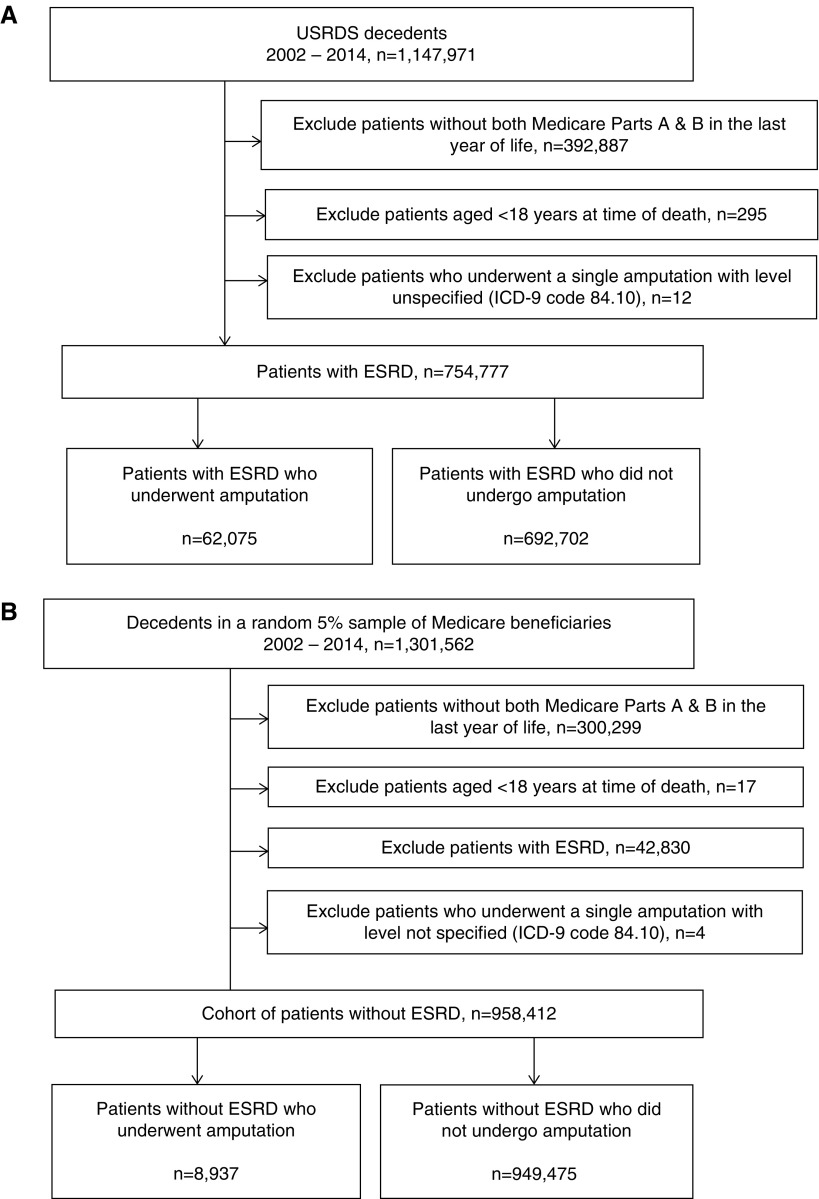
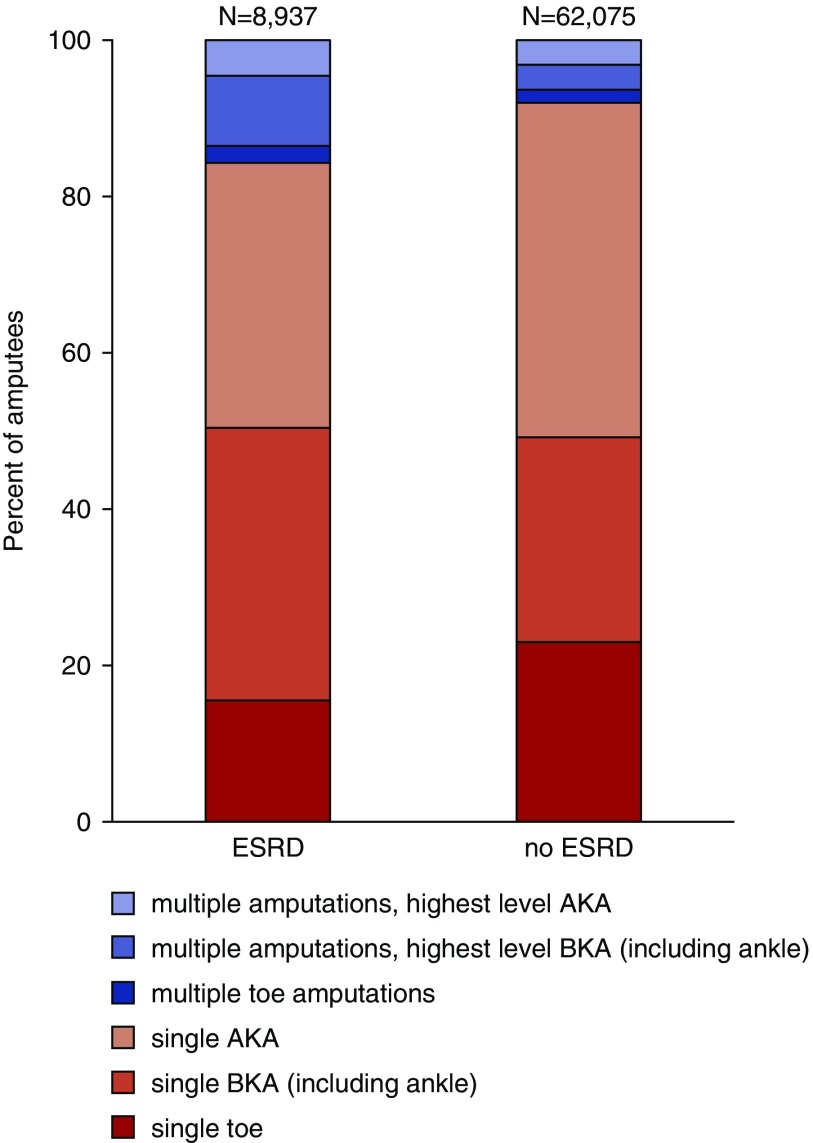
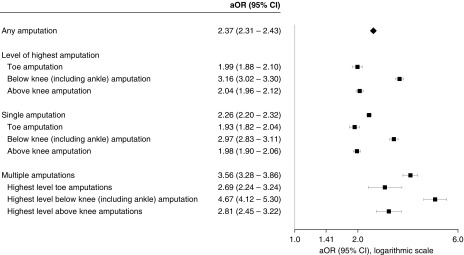
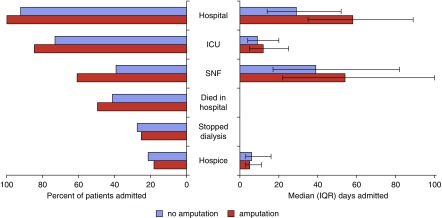
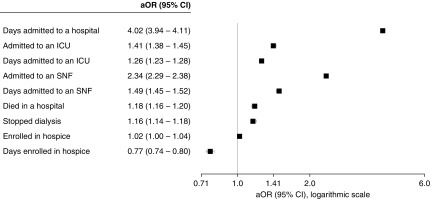
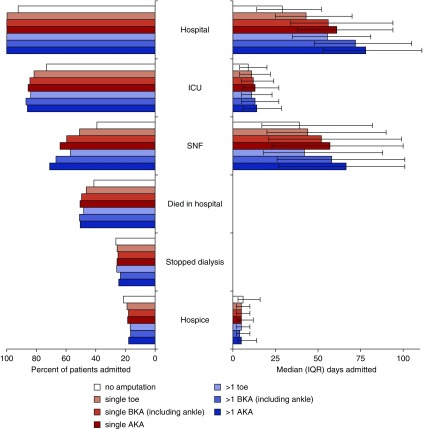
Results: Overall, 8% of 754,777 beneficiaries with ESRD underwent at least one lower extremity amputation in their last year of life compared with 1% of 958,412 beneficiaries without ESRD. Adjusted analyses of patients with ESRD showed that those who had undergone lower extremity amputation were substantially more likely than those who had not to have been admitted to-and to have had prolonged stays in-acute and subacute care settings during their final year of life. Amputation was also associated with a greater likelihood of dying in the hospital, dialysis discontinuation before death, and less time receiving hospice services.
Conclusions: Nearly one in ten patients with ESRD undergoes lower extremity amputation in their last year of life. These patients have prolonged stays in acute and subacute health care settings and appear to have limited access to hospice services. These findings likely signal unmet palliative care needs among seriously ill patients with ESRD who undergo amputation as well as opportunities to improve their care.
Keywords: amputation; end-of-life; end-stage renal disease; palliative care; surgery; vascular disease.
Copyright © 2019 by the American Society of Nephrology.
Figures

References
-
- O’Hare A, Johansen K: Lower-extremity peripheral arterial disease among patients with end-stage renal disease. J Am Soc Nephrol 12: 2838–2847, 2001 - PubMed
-
- Combe C, Albert JM, Bragg-Gresham JL, Andreucci VE, Disney A, Fukuhara S, et al.: The burden of amputation among hemodialysis patients in the Dialysis Outcomes and Practice Patterns Study (DOPPS). Am J Kidney Dis 54: 680–692, 2009 - PubMed
-
- Dossa CD, Shepard AD, Amos AM, Kupin WL, Reddy DJ, Elliott JP, et al.: Results of lower extremity amputations in patients with end-stage renal disease. J Vasc Surg 20: 14–19, 1994 - PubMed
-
- Wukich DK, Ahn J, Raspovic KM, Gottschalk FA, La Fontaine J, Lavery LA: Comparison of transtibial amputations in diabetic patients with and without end-stage renal disease. Foot Ankle Int 38: 388–396, 2017 - PubMed
-
- Mathew A, Devereaux PJ, O’Hare A, Tonelli M, Thiessen-Philbrook H, Nevis IF, et al.: Chronic kidney disease and postoperative mortality: A systematic review and meta-analysis. Kidney Int 73: 1069–1081, 2008 - PubMed
Grants and funding
LinkOut - more resources
Full Text Sources