


Health Outcomes, Pathogenesis and Epidemiology of Severe Acute Malnutrition (HOPE-SAM): rationale and methods of a longitudinal observational study
- PMID: 30782694
- PMCID: PMC6361330
- DOI: 10.1136/bmjopen-2018-023077
Health Outcomes, Pathogenesis and Epidemiology of Severe Acute Malnutrition (HOPE-SAM): rationale and methods of a longitudinal observational study
Abstract
Introduction: Mortality among children hospitalised for complicated severe acute malnutrition (SAM) remains high despite the implementation of WHO guidelines, particularly in settings of high HIV prevalence. Children continue to be at high risk of morbidity, mortality and relapse after discharge from hospital although long-term outcomes are not well documented. Better understanding the pathogenesis of SAM and the factors associated with poor outcomes may inform new therapeutic interventions.
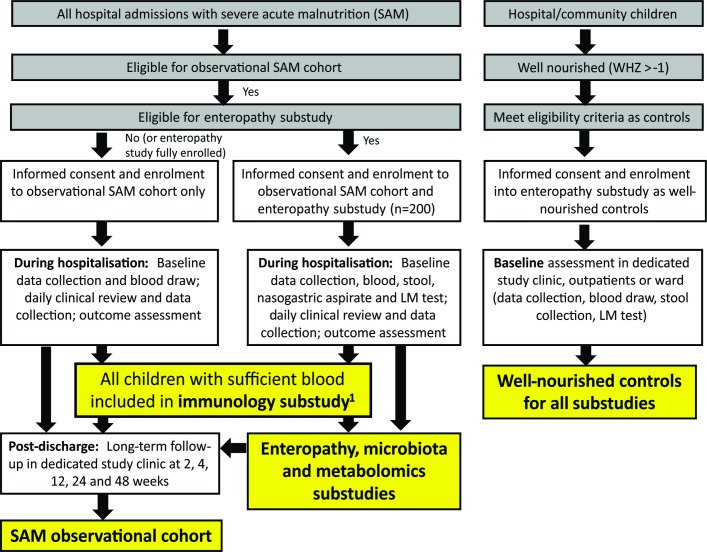
Methods and analysis: The Health Outcomes, Pathogenesis and Epidemiology of Severe Acute Malnutrition (HOPE-SAM) study is a longitudinal observational cohort that aims to evaluate the short-term and long-term clinical outcomes of HIV-positive and HIV-negative children with complicated SAM, and to identify the risk factors at admission and discharge from hospital that independently predict poor outcomes. Children aged 0-59 months hospitalised for SAM are being enrolled at three tertiary hospitals in Harare, Zimbabwe and Lusaka, Zambia. Longitudinal mortality, morbidity and nutritional data are being collected at admission, discharge and for 48 weeks post discharge. Nested laboratory substudies are exploring the role of enteropathy, gut microbiota, metabolomics and cellular immune function in the pathogenesis of SAM using stool, urine and blood collected from participants and from well-nourished controls.
Ethics and dissemination: The study is approved by the local and international institutional review boards in the participating countries (the Joint Research Ethics Committee of the University of Zimbabwe, Medical Research Council of Zimbabwe and University of Zambia Biomedical Research Ethics Committee) and the study sponsor (Queen Mary University of London). Caregivers provide written informed consent for each participant. Findings will be disseminated through peer-reviewed journals, conference presentations and to caregivers at face-to-face meetings.
Keywords: Africa; HIV; enteropathy; malnutrition; microbiota; mortality.
© Author(s) (or their employer(s)) 2019. Re-use permitted under CC BY. Published by BMJ.
Conflict of interest statement
Competing interests: None declared.
Figures
References
-
- World Health Organisation. Guideline updates on the management of severe acute malnutrition in infants and children. Geneva: World Health Organisation, 2013. - PubMed
Publication types
MeSH terms
Grants and funding
LinkOut - more resources
Full Text Sources
Medical
