


Fibroblast growth factor receptor influences primary cilium length through an interaction with intestinal cell kinase
- PMID: 30782830
- PMCID: PMC6410813
- DOI: 10.1073/pnas.1800338116
Fibroblast growth factor receptor influences primary cilium length through an interaction with intestinal cell kinase
Abstract
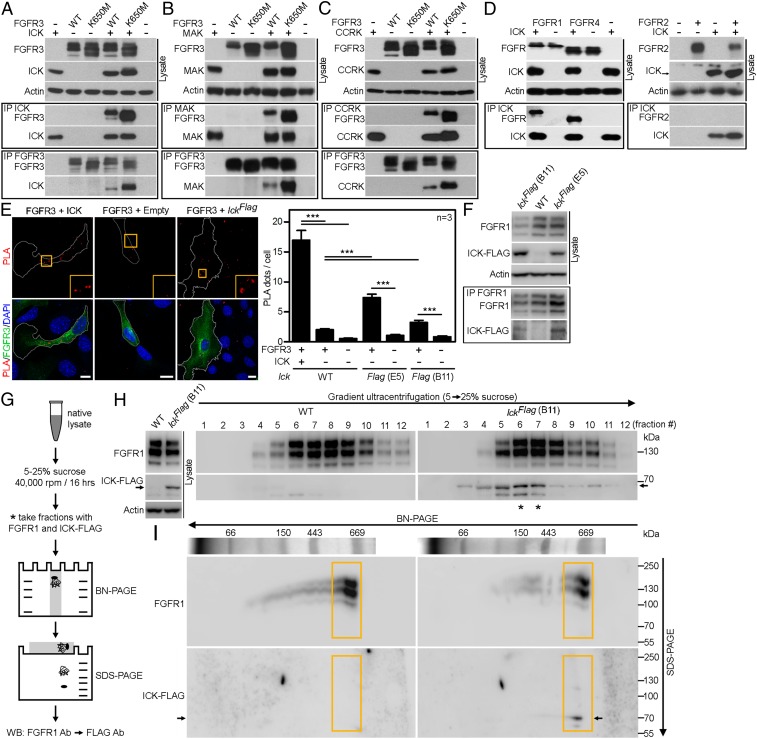
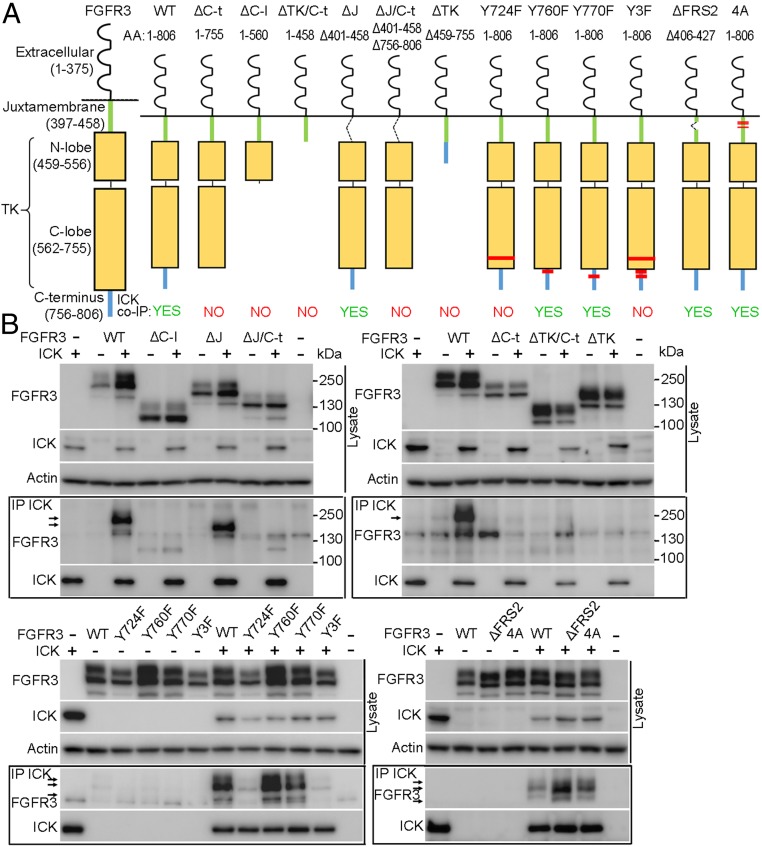
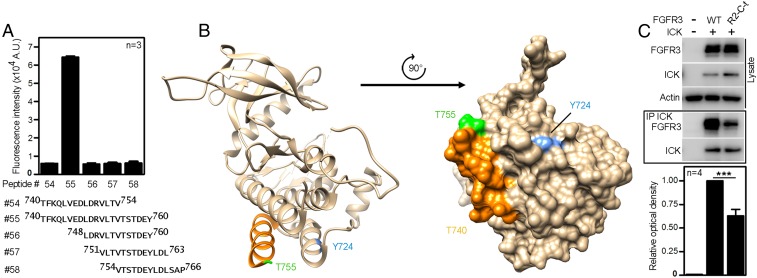
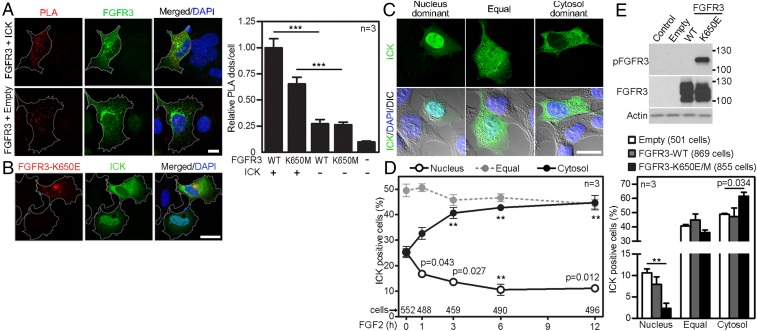
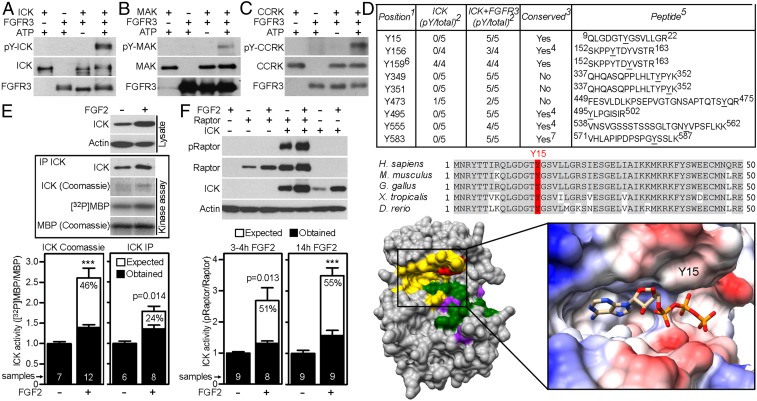
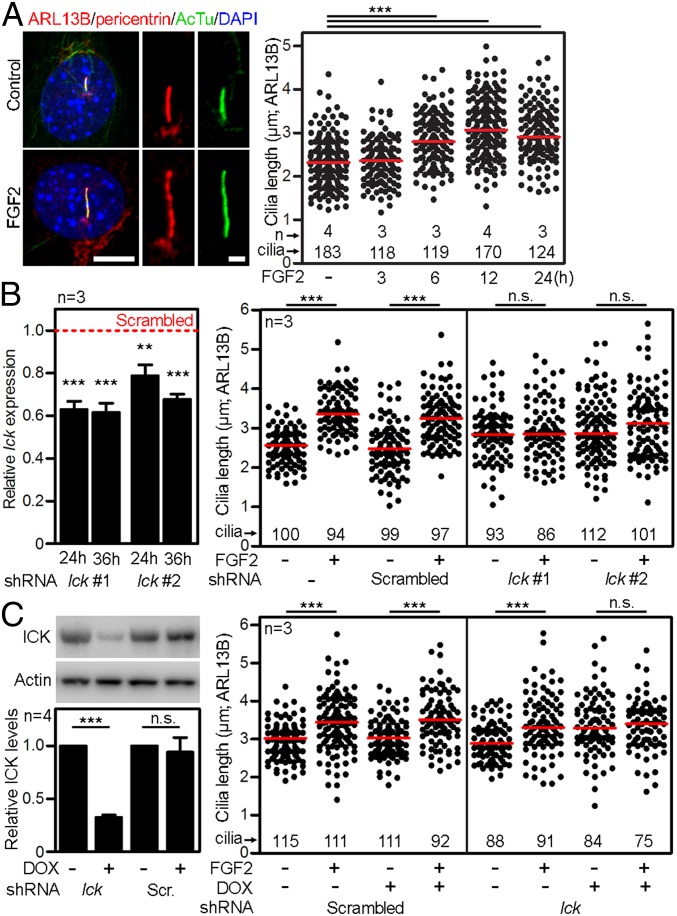
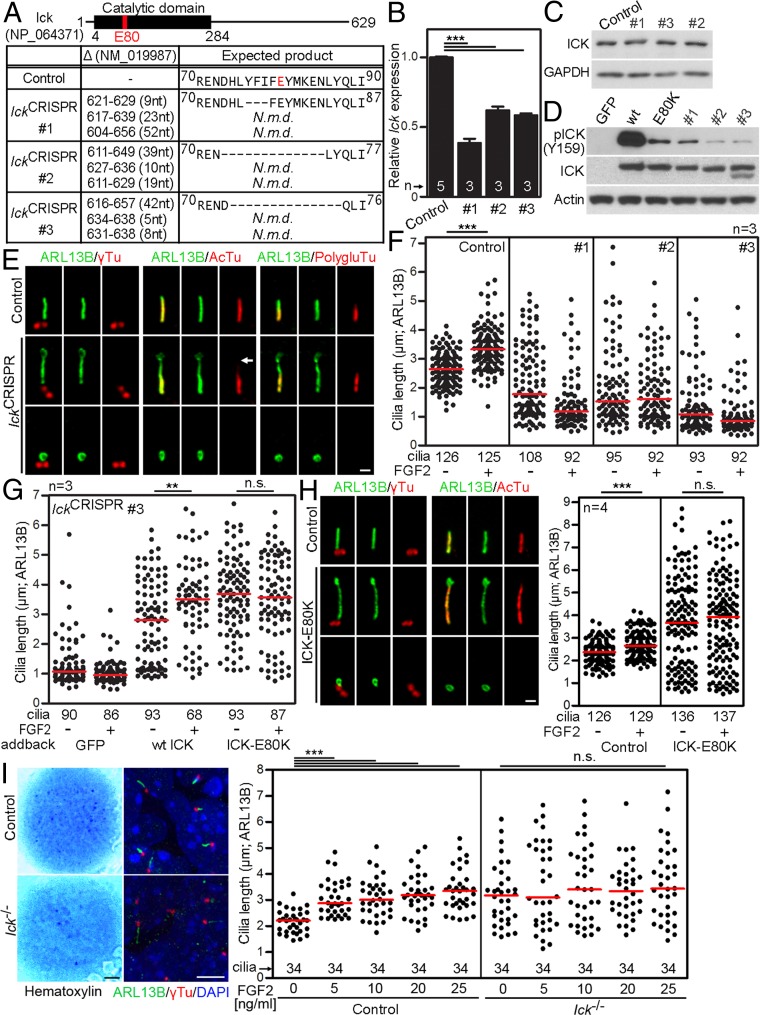
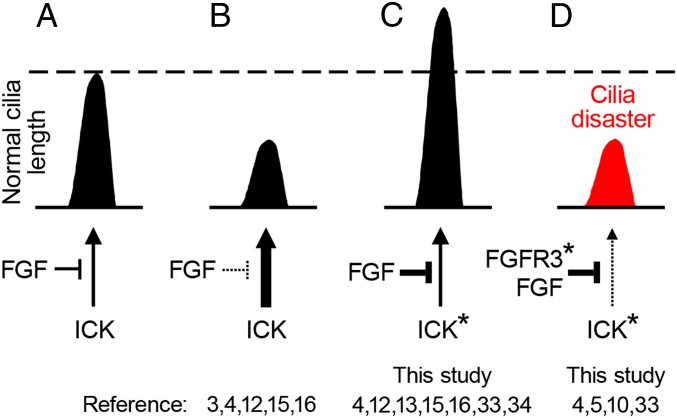
Vertebrate primary cilium is a Hedgehog signaling center but the extent of its involvement in other signaling systems is less well understood. This report delineates a mechanism by which fibroblast growth factor (FGF) controls primary cilia. Employing proteomic approaches to characterize proteins associated with the FGF-receptor, FGFR3, we identified the serine/threonine kinase intestinal cell kinase (ICK) as an FGFR interactor. ICK is involved in ciliogenesis and participates in control of ciliary length. FGF signaling partially abolished ICK's kinase activity, through FGFR-mediated ICK phosphorylation at conserved residue Tyr15, which interfered with optimal ATP binding. Activation of the FGF signaling pathway affected both primary cilia length and function in a manner consistent with cilia effects caused by inhibition of ICK activity. Moreover, knockdown and knockout of ICK rescued the FGF-mediated effect on cilia. We provide conclusive evidence that FGF signaling controls cilia via interaction with ICK.
Keywords: FGFR; ICK; cilia length; fibroblast growth factor; intestinal cell kinase.
Copyright © 2019 the Author(s). Published by PNAS.
Conflict of interest statement
The authors declare no conflict of interest.
Figures
References
-
- Martin L, et al. Constitutively-active FGFR3 disrupts primary cilium length and IFT20 trafficking in various chondrocyte models of achondroplasia. Hum Mol Genet. 2018;27:1–13. - PubMed
Publication types
MeSH terms
Substances
Grants and funding
LinkOut - more resources
Full Text Sources
Molecular Biology Databases
Research Materials
Miscellaneous
