


Cancer risk in primary sclerosing cholangitis: Epidemiology, prevention, and surveillance strategies
- PMID: 30783370
- PMCID: PMC6378537
- DOI: 10.3748/wjg.v25.i6.659
Cancer risk in primary sclerosing cholangitis: Epidemiology, prevention, and surveillance strategies
Abstract
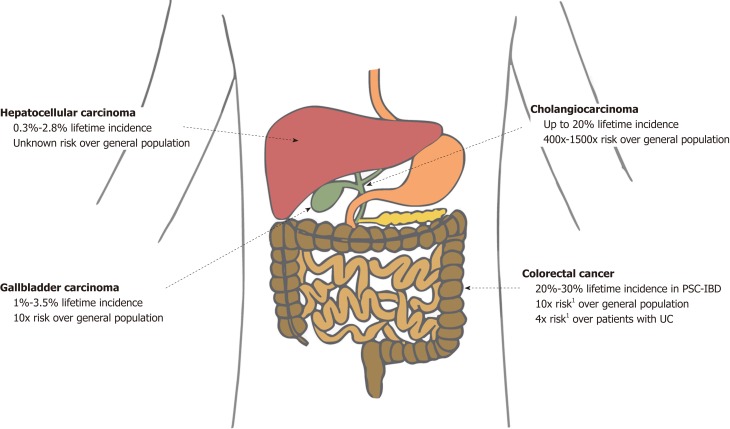
Primary sclerosing cholangitis (PSC) is a rare cholestatic liver disease characterized by progressive fibroinflammatory destruction of the intra- and/or extrahepatic biliary ducts. While its features and disease course can be variable, most patients with PSC have concurrent inflammatory bowel disease and will eventually develop liver cirrhosis and end-stage liver disease, with liver transplantation representing the only potentially curative option. Importantly, PSC is associated with a significantly increased risk of malignancy compared to the general population, mainly cholangiocarcinoma, gallbladder carcinoma, hepatocellular carcinoma, and colorectal cancer, with nearly 50% of deaths in patients with PSC being due to cancer. Therefore, robust surveillance strategies are needed, though uncertainty remains regarding how to best do so. In this review, we discuss the epidemiology, prevention, and surveillance of cancers in patients with PSC. Where evidence is limited, we present pragmatic approaches based on currently available data and expert opinion.
Keywords: Bile duct diseases; Chemoprotection; Cholangiocarcinoma; Colorectal cancer; Gallbladder carcinoma; Hepatocellular carcinoma; Inflammatory bowel disease.
Conflict of interest statement
Conflict-of-interest statement: The authors have no financial disclosures or conflicts of interest.
Figures
References
-
- Tabibian JH, Lindor KD. Primary sclerosing cholangitis: A review and update on therapeutic developments. Expert Rev Gastroenterol Hepatol. 2013;7:103–114. - PubMed
-
- Porayko MK, Wiesner RH, LaRusso NF, Ludwig J, MacCarty RL, Steiner BL, Twomey CK, Zinsmeister AR. Patients with asymptomatic primary sclerosing cholangitis frequently have progressive disease. Gastroenterology. 1990;98:1594–1602. - PubMed
-
- Boonstra K, Weersma RK, van Erpecum KJ, Rauws EA, Spanier BW, Poen AC, van Nieuwkerk KM, Drenth JP, Witteman BJ, Tuynman HA, Naber AH, Kingma PJ, van Buuren HR, van Hoek B, Vleggaar FP, van Geloven N, Beuers U, Ponsioen CY EpiPSCPBC Study Group. Population-based epidemiology, malignancy risk, and outcome of primary sclerosing cholangitis. Hepatology. 2013;58:2045–2055. - PubMed
