


Protein S-nitrosylation in programmed cell death in plants
- PMID: 30783684
- PMCID: PMC11105606
- DOI: 10.1007/s00018-019-03045-0
Protein S-nitrosylation in programmed cell death in plants
Abstract
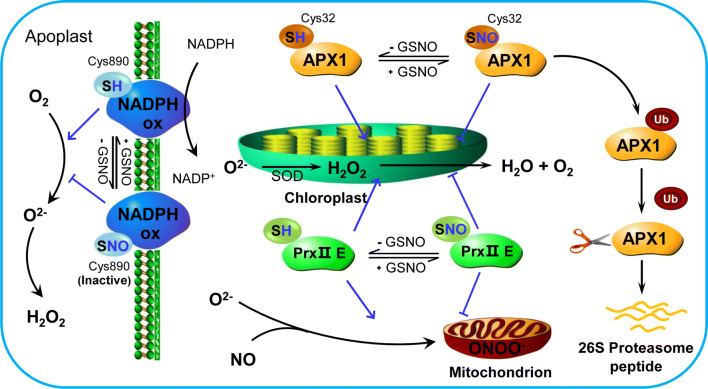
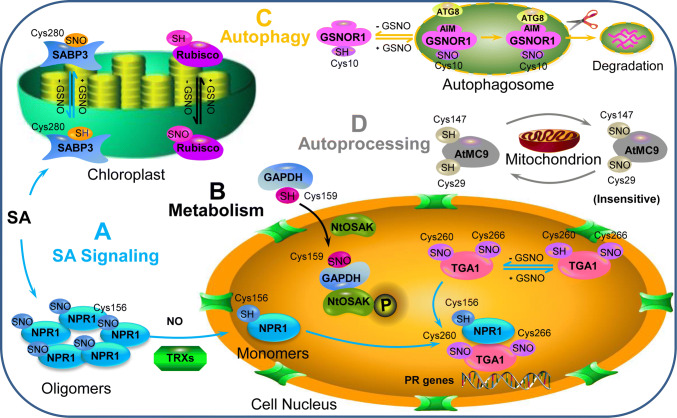
Programmed cell death (PCD) is associated with different phases of plant life and provides resistance to different kinds of biotic or abiotic stress. The redox molecule nitric oxide (NO) is usually produced during the stress response and exerts dual effects on PCD regulation. S-nitrosylation, which NO attaches to the cysteine thiol of proteins, is a vital posttranslational modification and is considered as an essential way for NO to regulate cellular redox signaling. In recent years, a great number of proteins have been identified as targets of S-nitrosylation in plants, especially during PCD. S-nitrosylation can directly affect plant PCD positively or negatively, mainly by regulating the activity of cell death-related enzymes or reconstructing the conformation of several functional proteins. Here, we summarized S-nitrosylated proteins that are involved in PCD and provide insight into how S-nitrosylation can regulate plant PCD. In addition, both the importance and challenges of future works on S-nitrosylation in plant PCD are highlighted.
Keywords: Plants; Programmed cell death; Protein S-nitrosylation.
Figures
References
-
- Locato V, Paradiso A, Sabetta W, De Gara L, de Pinto MC. Advances in botanical research. New York: Academic; 2016. Nitric Oxide-biol Ch and reactive oxygen species in PCD signaling; pp. 165–192.
Publication types
MeSH terms
Substances
Grants and funding
LinkOut - more resources
Full Text Sources
