Value-Based Pricing for Emerging Gene Therapies: The Economic Case for a Higher Cost-Effectiveness Threshold
- PMID: 30784347
- PMCID: PMC10397597
- DOI: 10.18553/jmcp.2019.18378
Value-Based Pricing for Emerging Gene Therapies: The Economic Case for a Higher Cost-Effectiveness Threshold
Abstract
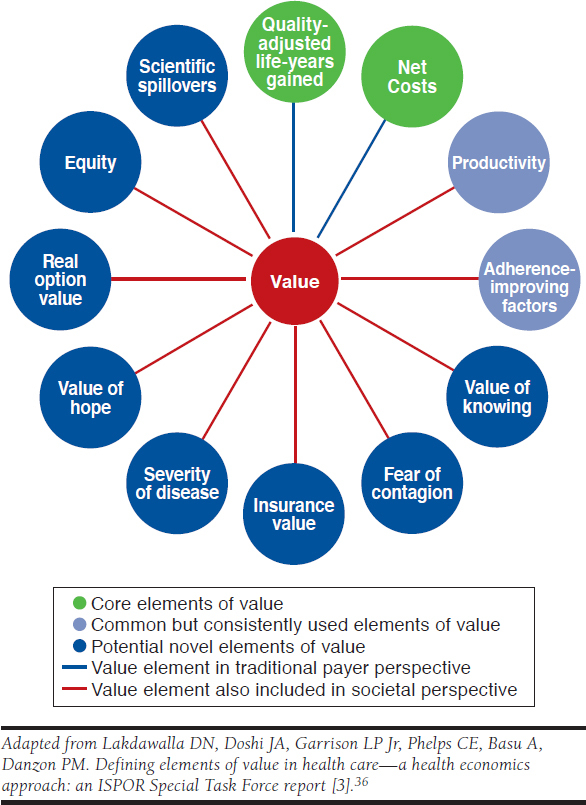
While one-time gene replacement therapies may offer transformative innovation for the management of ultrarare, health-catastrophic diseases, they also pose challenges to the current U.S. health care system. Historically, the United States and other countries have demonstrated a willingness to support higher prices for health gains in rare diseases. However, payers may be ill-prepared to address reimbursement based on single administrations associated with gene therapies. As yet, there is no consensus on how to appropriately reward gene therapy innovation. The purpose of this article is to characterize challenges for traditional approaches to assessing the value of one-time gene replacement therapies and to provide a health economic rationale for a higher value-based cost-effectiveness threshold (CET). There is a general recognition that ultrarare, health-catastrophic conditions should be judged against a higher CET. The Institute for Clinical and Economic Review in the United States has discussed a range of up to $500K per quality-adjusted life-year (QALY) gained for ultrarare diseases, and the National Institute for Health and Care Excellence in the United Kingdom has described a variable threshold up to £300,000 per QALY depending on the magnitude of the health gains. In practice, health technology assessment decision makers often make comparisons to "benchmarks" to justify both standard and extraordinary CETs. We briefly review and present a list of relevant benchmarks. We also sketch out how a broader concept of value could provide the basis for higher CETs for some ultrarare diseases. This approach is outlined by the recent International Society for Pharmacoeconomics and Outcomes Research Special Task Force on Value Assessment Frameworks. In addition to the QALY gains, other elements of value related to uncertainty may also be important. They include insurance value, severity of disease, real option value, value of hope, and equity. A gene therapy currently in development for the treatment of spinal muscular atrophy (SMA) provides an exemplar for discussing the issues that accompany one-time gene replacement therapies. It is imperative that we find a consensus on how to appropriately reward value created by these gene therapies to incentivize appropriate risk taking and investments by their developers-a higher CET would, by economic logic, support a higher value-based price. If consensus on appropriate rewards cannot be found for safe and effective gene therapies for diseases such as SMA with clear criticality and unmet need, it will be even more difficult to do so for diseases where the value provided is less apparent. DISCLOSURES: Funding for the writing of this article was provided by AveXis Pharmaceuticals, which reviewed the manuscript and contributed feedback during manuscript development. The authors had final editorial control. Jackson and Paul are employees of MME, a biopharmaceutical consulting firm that received funding from AveXis for work on this project. Jackson and Paul also report consulting fees from numerous other biopharmaceutical companies outside of this project. Garrison reports consulting fees from AveXis for work on this project and advisory/consultancy fees from BioMarin, Roche, Novartis, and Pfizer unrelated to this project. Kenston is a former employee of AveXis and reports consulting fees from AveXis for this project and for other projects outside of this work.
Conflict of interest statement
Funding for the writing of this article was provided by AveXis Pharmaceuticals, which reviewed the manuscript and contributed feedback during manuscript development. The authors had final editorial control. Jackson and Paul are employees of MME, a biopharmaceutical consulting firm that received funding from AveXis for work on this project. Jackson and Paul also report consulting fees from numerous other biopharmaceutical companies outside of this project. Garrison reports consulting fees from AveXis for work on this project and advisory/consultancy fees from BioMarin, Roche, Novartis, and Pfizer unrelated to this project. Kenston is a former employee of AveXis and reports consulting fees from AveXis for this project and for other projects outside of this work.
References
-
- Danzon PM. Affordability challenges to value-based pricing: mass diseases, orphan diseases, and cures. Value Health. 2018;21(3):252-57. - PubMed
-
- Marsden G, Towse A, Pearson SD, Dreitlein B, Henshall C. Gene therapy: understanding the science, assessing the evidence, and paying for value. A report from the 2016 ICER Membership Policy Summit. March 2017. Available at: https://icer-review.org/wp-content/uploads/2017/03/ICER-Gene-Therapy-Whi.... Accessed January 23, 2019.
-
- Neumann PJ, Sanders GD, Russell LB, Siegel JE, Ganiats TG, eds. Cost-Effectiveness in Health and Medicine. 2nd ed. New York: Oxford University Press; 2016.
-
- Hirth RA, Chernew ME, Miller E, Fendrick AM, Weissert WG. Willingness to pay for a quality-adjusted life year: in search of a standard. Med Decis Making. 2000;20(3):332-42. - PubMed
-
- Ubel PA, Hirth RA, Chernew ME, Fendrick AM. What is the price of life and why doesn’t it increase with inflation? Arch Int Med. 2003;163(14):1637-41. - PubMed
MeSH terms
LinkOut - more resources
Full Text Sources
Medical
Research Materials
Miscellaneous