


In vivo prediction of temporomandibular joint disc thickness and position changes for different jaw positions
- PMID: 30786005
- PMCID: PMC6481408
- DOI: 10.1111/joa.12951
In vivo prediction of temporomandibular joint disc thickness and position changes for different jaw positions
Abstract
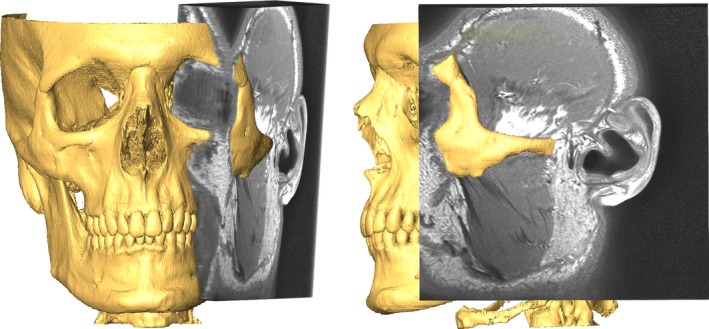
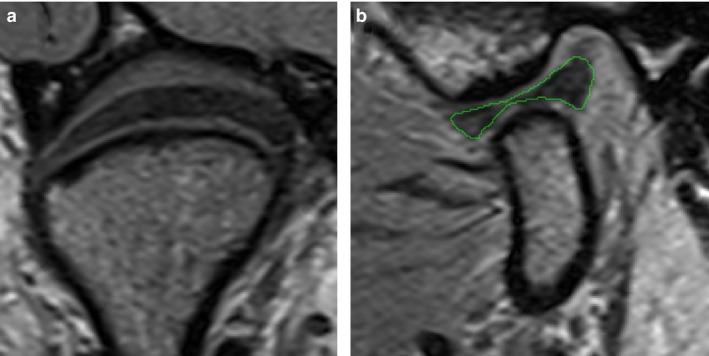
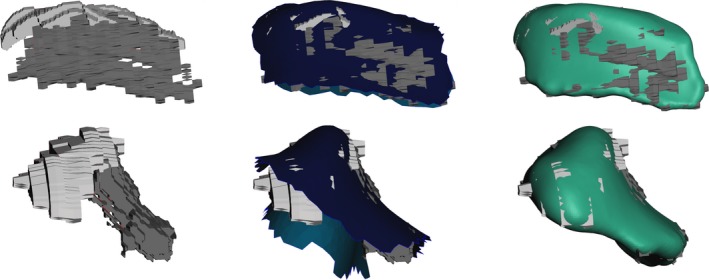
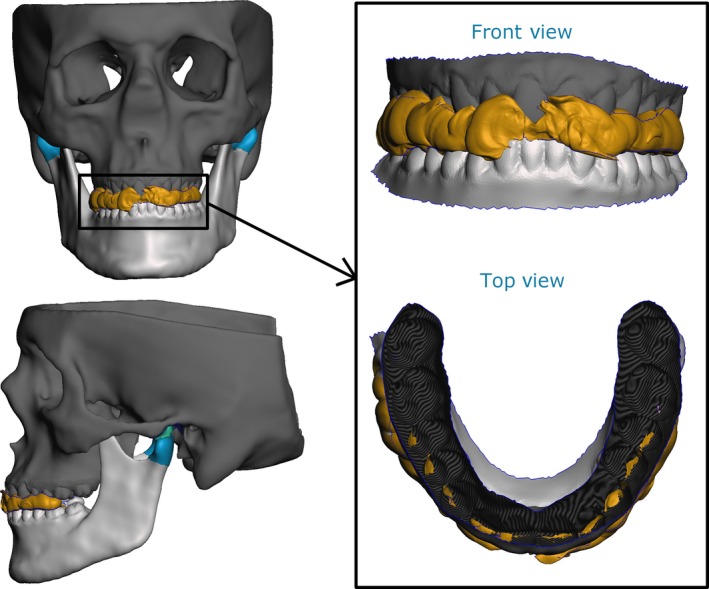
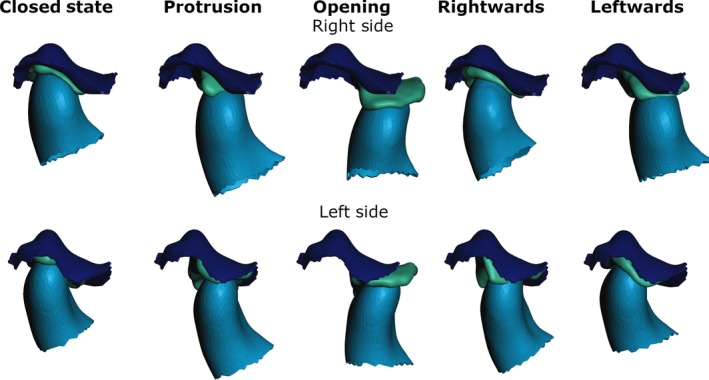
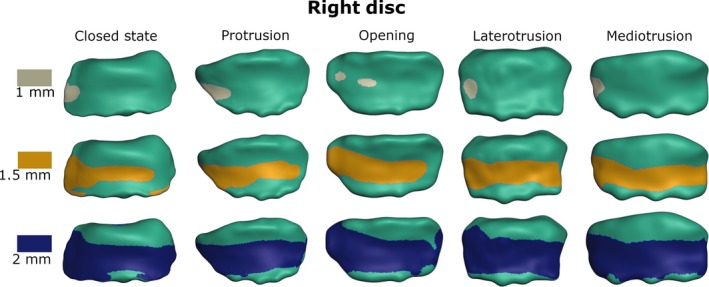
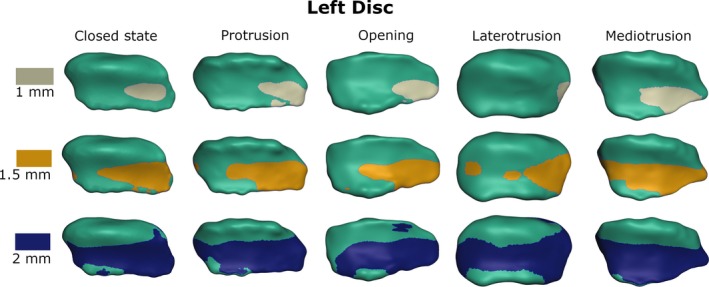
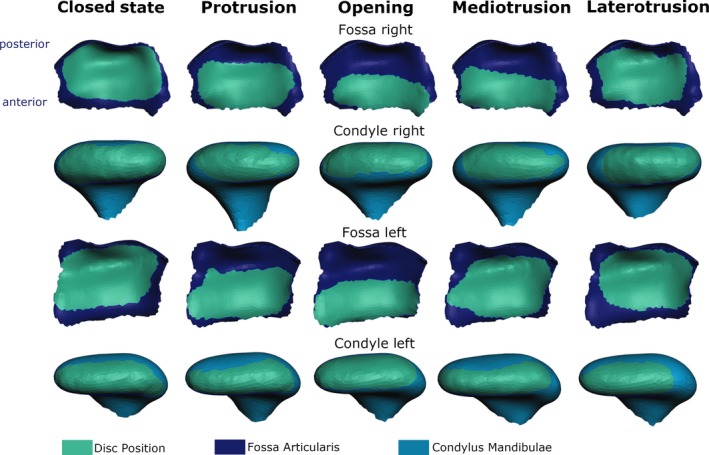
Temporomandibular joint disorders (TMD) are common dysfunctions of the masticatory region and are often linked to dislocation or changes of the temporomandibular joint (TMJ) disc. Magnetic resonance imaging (MRI) is the gold standard for TMJ imaging but standard clinical sequences do not deliver a sufficient resolution and contrast for the creation of detailed meshes of the TMJ disc. Additionally, bony structures cannot be captured appropriately using standard MRI sequences due to their low signal intensity. The objective of this study was to enable researchers to create high resolution representations of all structures of the TMJ and consequently investigate morphological as well as positional changes of the masticatory system. To create meshes of the bony structures, a single computed tomography (CT) scan was acquired. In addition, a high-resolution MRI sequence was produced, which is used to collect the thickness and position change of the disc for various static postures using bite blocks. Changes in thickness of the TMJ disc as well as disc translation were measured. The newly developed workflow successfully allows researchers to create high resolution models of all structures of the TMJ for various static positions, enabling the investigation of TMJ disc translation and deformation. Discs were thinnest in the lateral part and moved mainly anteriorly and slightly medially. The procedure offers the most comprehensive picture of disc positioning and thickness changes reported to date. The presented data can be used for the development of a biomechanical computer model of TMJ anatomy and to investigate dynamic and static loads on the components of the system, which could be useful for the prediction of TMD onset.
Keywords: magnetic resonance imaging; temporomandibular joint; temporomandibular joint disc; temporomandibular joint morphology.
© 2019 Anatomical Society.
Conflict of interest statement
The authors declare no conflict of interest.
Figures
References
-
- Agerberg G, Carlsson GE (1972) Functional disorders of the masticatory system I. Distribution of symptoms according to age and sex as judged from investigation by questionnaire. Acta Odontol Scand 30, 597–613. - PubMed
-
- Amaral RDO, Damasceno NNDL, De Souza LA, et al. (2013) Magnetic resonance images of patients with temporomandibular disorders: Prevalence and correlation between disk morphology and displacement. Eur J Radiol 82, 990–994. - PubMed
Publication types
MeSH terms
LinkOut - more resources
Full Text Sources
Medical
