


The plastidial metabolite 2-C-methyl-D-erythritol-2,4-cyclodiphosphate modulates defence responses against aphids
- PMID: 30786032
- PMCID: PMC6850158
- DOI: 10.1111/pce.13538
The plastidial metabolite 2-C-methyl-D-erythritol-2,4-cyclodiphosphate modulates defence responses against aphids
Abstract
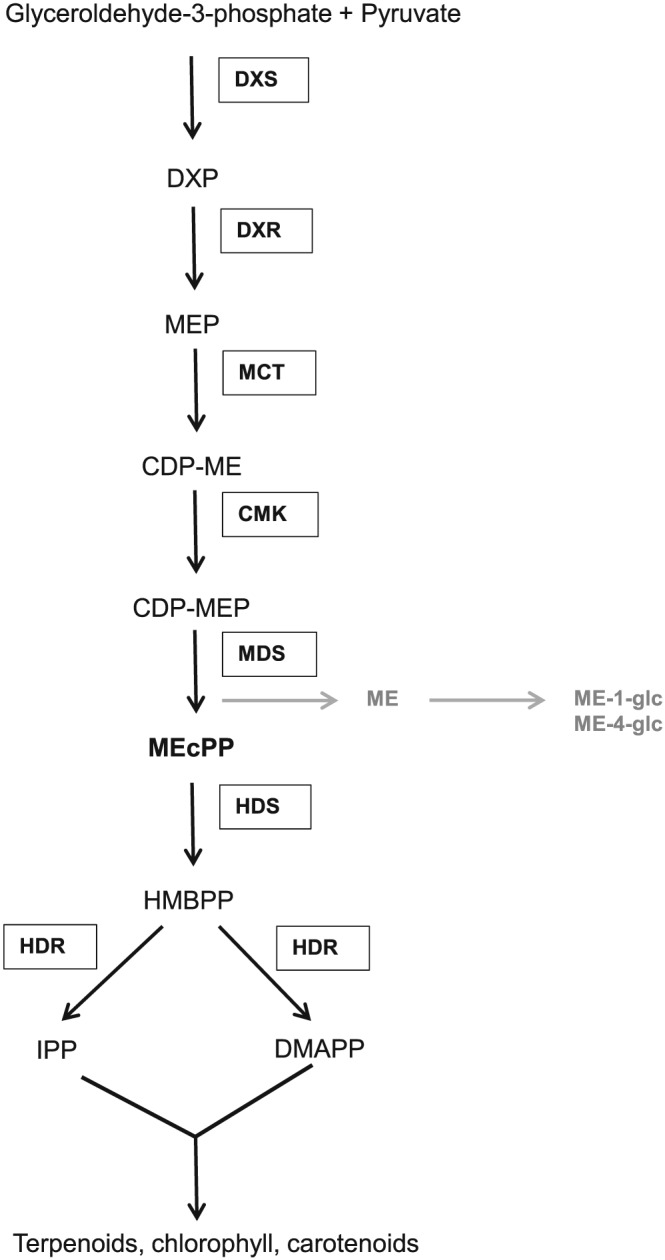
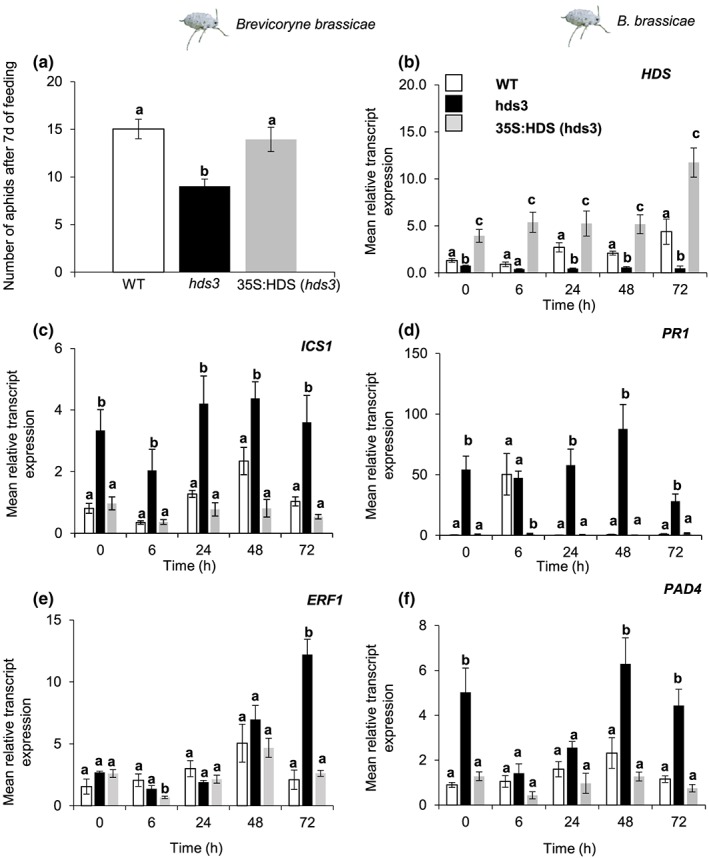
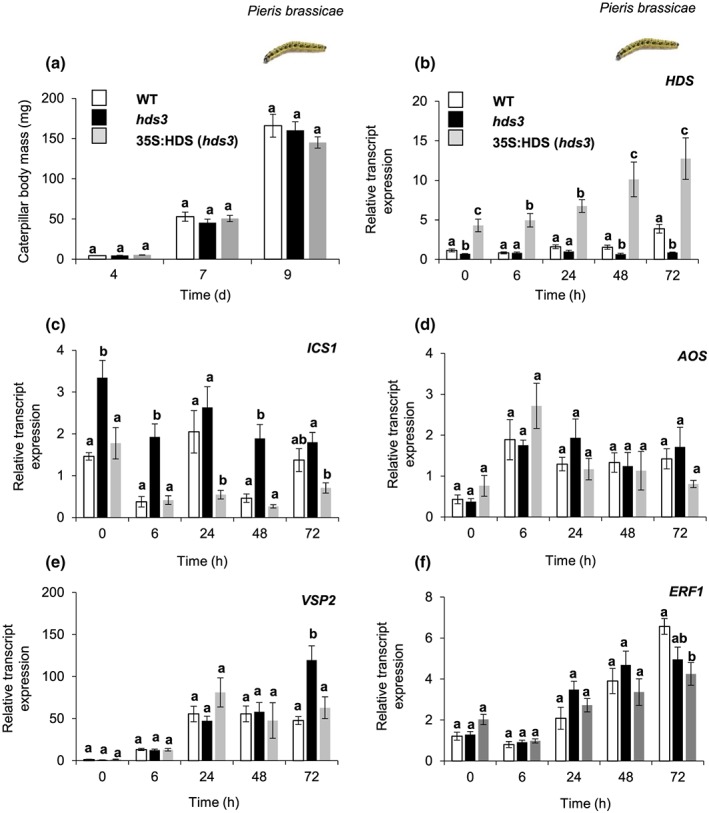
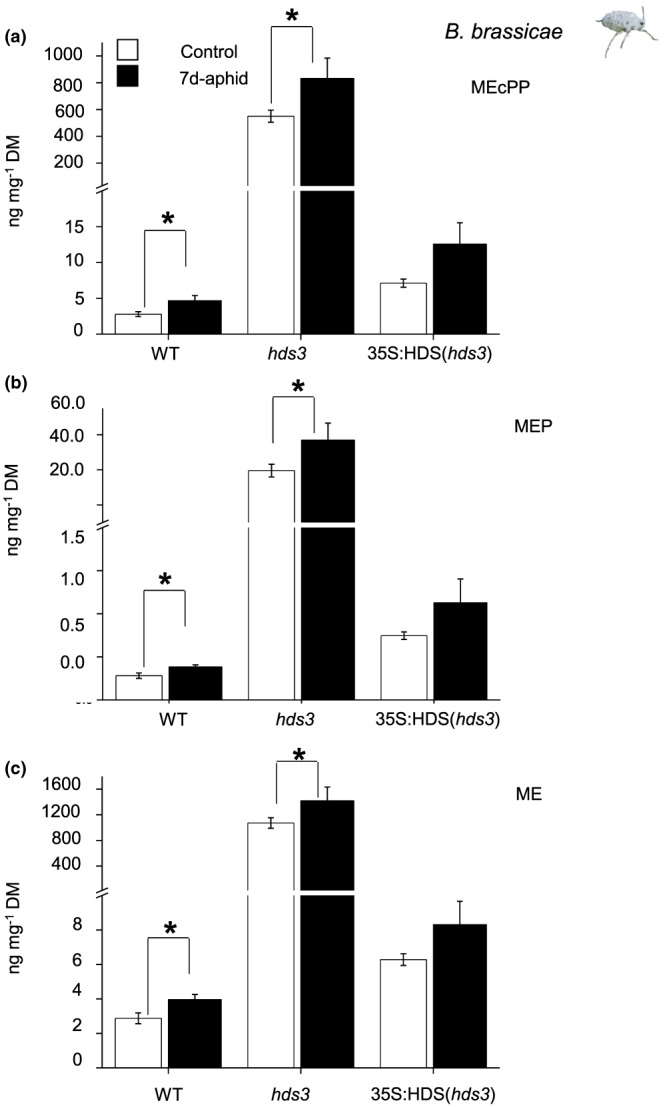
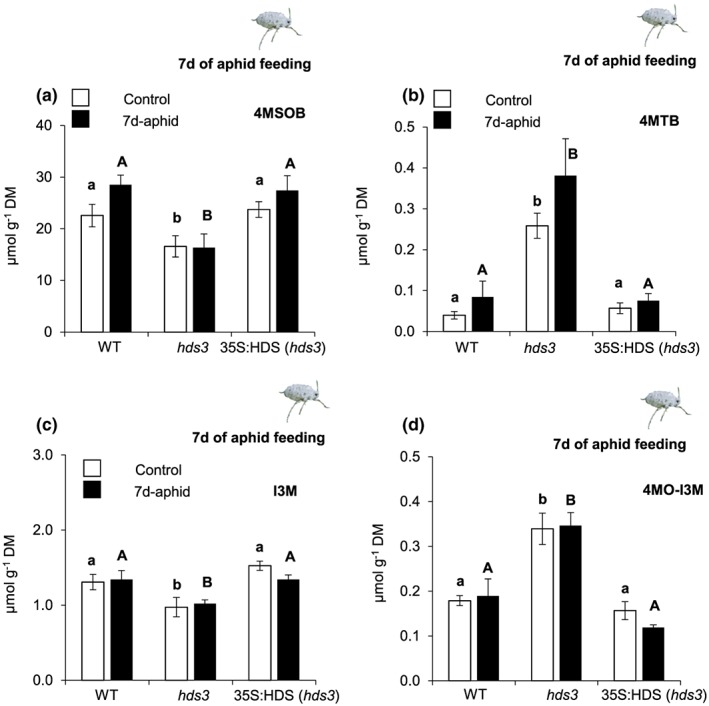
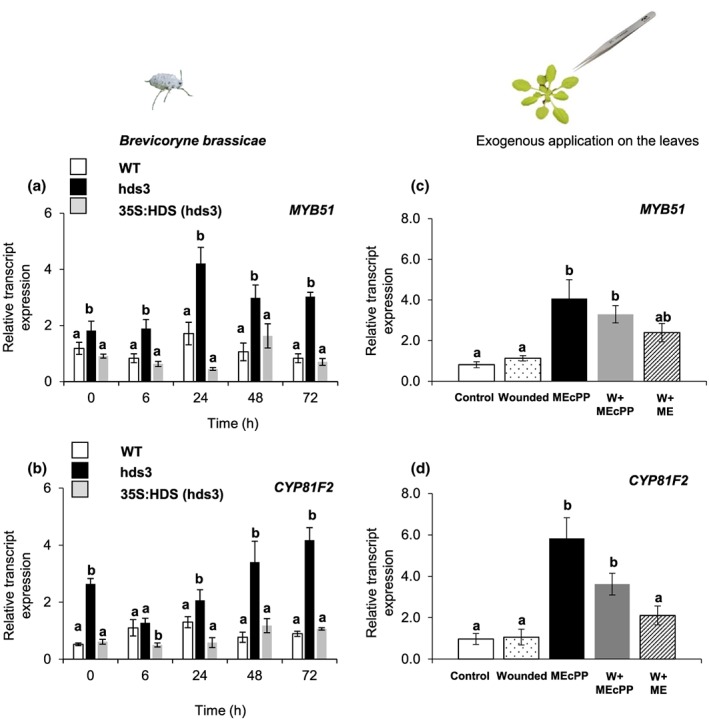
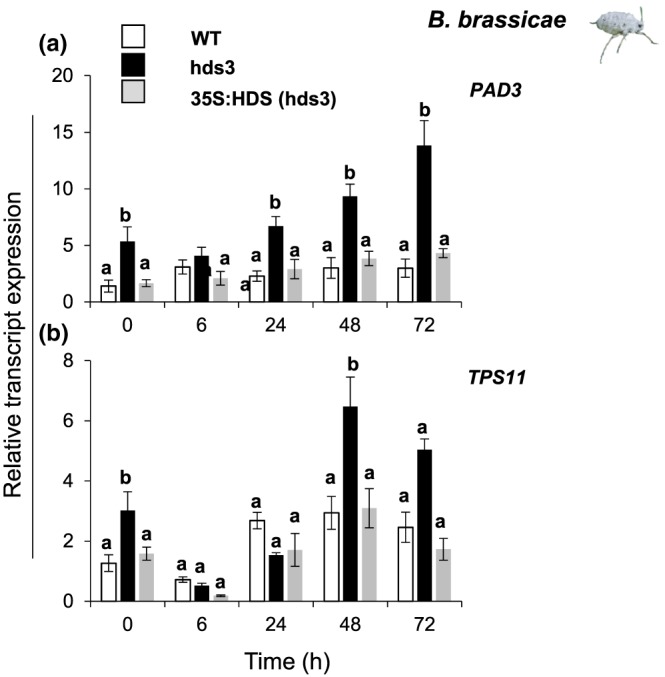
Feeding by insect herbivores such as caterpillars and aphids induces plant resistance mechanisms that are mediated by the phytohormones jasmonic acid (JA) and salicylic acid (SA). These phytohormonal pathways often crosstalk. Besides phytohormones, methyl-D-erythriol-2,4-cyclodiphosphate (MEcPP), the penultimate metabolite in the methyl-D-erythritol-4-phosphate pathway, has been speculated to regulate transcription of nuclear genes in response to biotic stressors such as aphids. Here, we show that MEcPP uniquely enhances the SA pathway without attenuating the JA pathway. Arabidopsis mutant plants that accumulate high levels of MEcPP (hds3) are highly resistant to the cabbage aphid (Brevicoryne brassicae), whereas resistance to the large cabbage white caterpillar (Pieris brassicae) remains unaltered. Thus, MEcPP is a distinct signalling molecule that acts beyond phytohormonal crosstalk to induce resistance against the cabbage aphid in Arabidopsis. We dissect the molecular mechanisms of MEcPP mediating plant resistance against the aphid B. brassicae. This shows that MEcPP induces the expression of genes encoding enzymes involved in the biosynthesis of several primary and secondary metabolic pathways contributing to enhanced resistance against this aphid species. A unique ability to regulate multifaceted molecular mechanisms makes MEcPP an attractive target for metabolic engineering in Brassica crop plants to increase resistance to cabbage aphids.
Keywords: Arabidopsis; aphid resistance; indole glucosinolates; phloem-sucking herbivores; phytohormone signalling; retrograde signalling; secondary metabolites.
© 2019 The Authors Plant, Cell & Environment Published by John Wiley & Sons Ltd.
Figures
References
-
- Burow, M. , Muller, R. , Gershenzon, J. , & Wittstock, U. (2006). Altered glucosinolate hydrolysis in genetically engineered Arabidopsis thaliana and its influence on the larval development of Spodoptera littoralis . Journal of Chemical Ecology, 32, 2333–2349. 10.1007/s10886-006-9149-1 - DOI - PubMed
-
- Cui, J. P. , Jander, G. , Racki, L. R. , Kim, P. D. , Pierce, N. E. , & Ausubel, F. M. (2002). Signals involved in Arabidopsis resistance to Trichoplusia ni caterpillars induced by virulent and avirulent strains of the phytopathogen Pseudomonas syringae . Plant Physiology, 129, 551–564. 10.1104/pp.010815 - DOI - PMC - PubMed
MeSH terms
Substances
LinkOut - more resources
Full Text Sources
