


Using a Developmental Ecology Framework to Align Fear Neurobiology Across Species
- PMID: 30786246
- PMCID: PMC7219957
- DOI: 10.1146/annurev-clinpsy-050718-095727
Using a Developmental Ecology Framework to Align Fear Neurobiology Across Species
Abstract
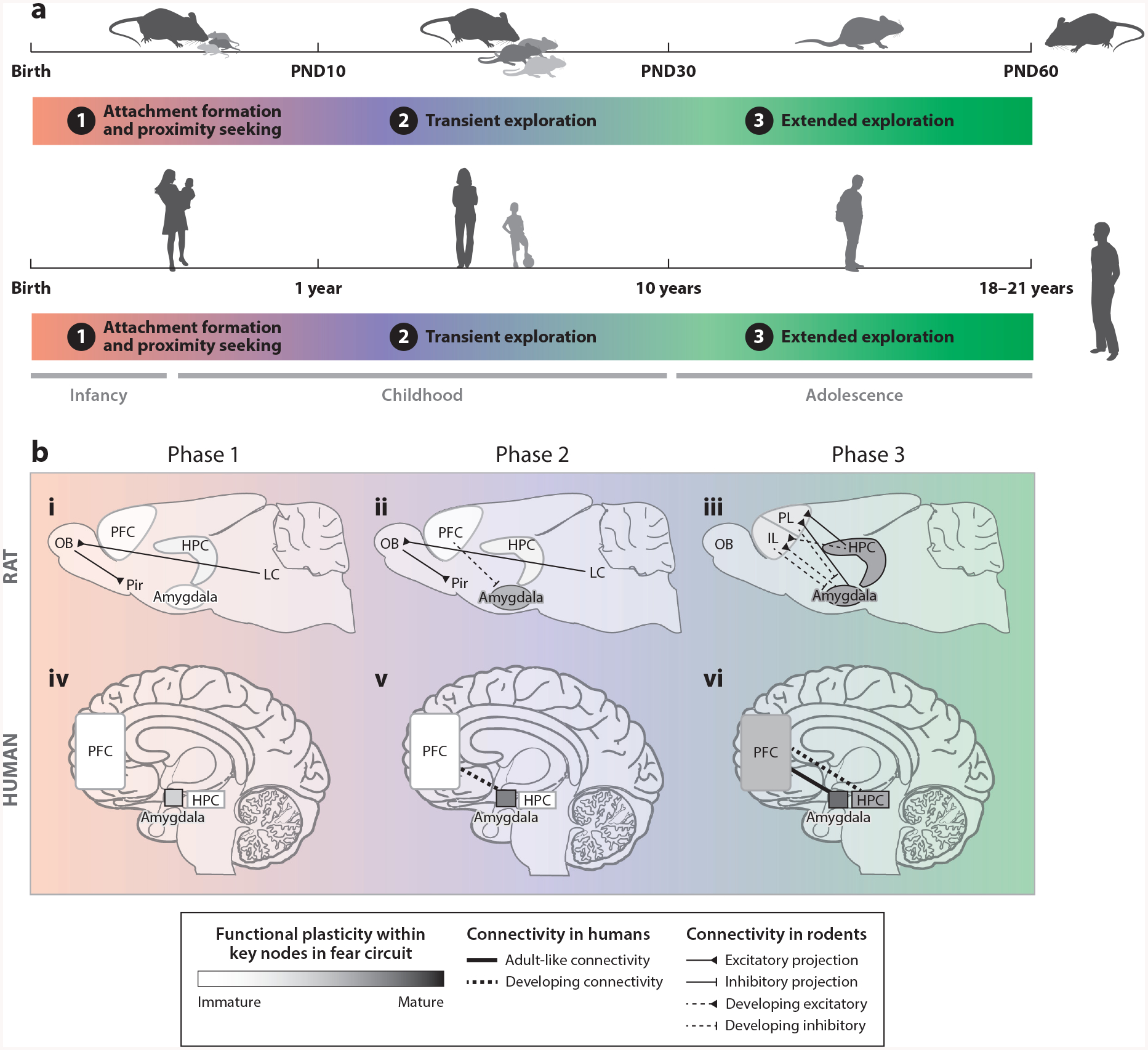
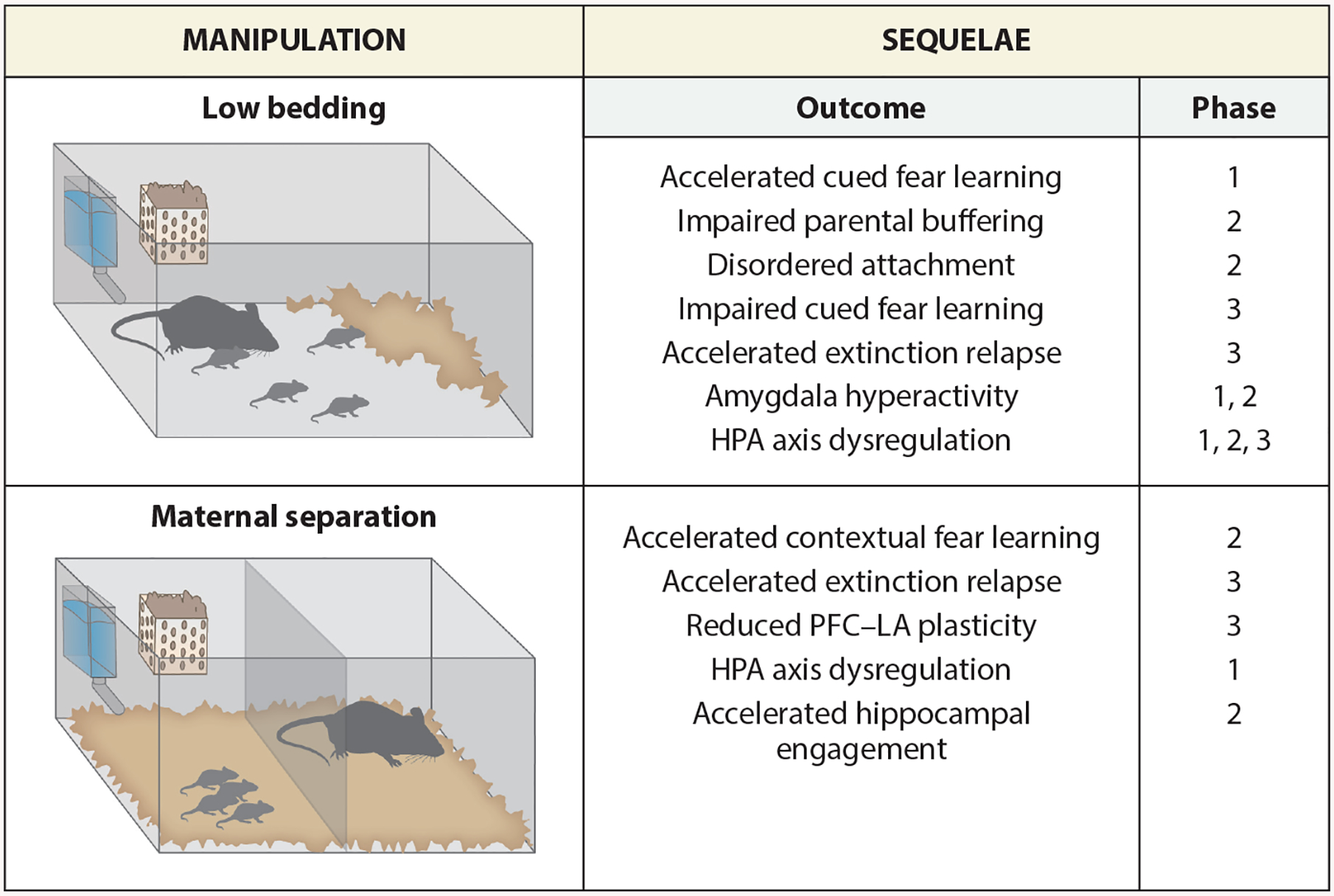
Children's development is largely dependent on caregiving; when caregiving is disrupted, children are at increased risk for numerous poor outcomes, in particular psychopathology. Therefore, determining how caregivers regulate children's affective neurobiology is essential for understanding psychopathology etiology and prevention. Much of the research on affective functioning uses fear learning to map maturation trajectories, with both rodent and human studies contributing knowledge. Nonetheless, as no standard framework exists through which to interpret developmental effects across species, research often remains siloed, thus contributing to the current therapeutic impasse. Here, we propose a developmental ecology framework that attempts to understand fear in the ecological context of the child: their relationship with their parent. By referring to developmental goals that are shared across species (to attach to, then, ultimately, separate from the parent), this framework provides a common grounding from which fear systems and their dysfunction can be understood, thus advancing research on psychopathologies and their treatment.
Keywords: development; ecology; fear; human; parental buffering; rodent; stress.
Conflict of interest statement
DISCLOSURE STATEMENT
The authors are not aware of any affiliations, memberships, funding, or financial holdings that might be perceived as affecting the objectivity of this review. N.T. is a member of the Child Mind Institute’s Scientific Research Council, is a board member of the Flux Congress and the Society for Social Neuroscience, has received funding from the US National Institutes of Health and the Mindset Scholars Network Foundation, and is a member of the Scientific Advisory Board of the Leipzig Research Center for Early Child Development.
Figures
References
-
- Adolph KE, Berger SE. 2006. Motor development In Handbook of Child Psychology, Vol. 2: Cognition, Perception, and Language, ed. Kuhn D, Siegler RS, pp. 161–213. New York: Wiley; 6th ed.
-
- Ahnert L, Gunnar MR, Lamb ME, Barthel M. 2004. Transition to child care: associations with infant–mother attachment, infant negative emotion, and cortisol elevations. Child Dev. 75:639–50 - PubMed
-
- Ainsworth MD, Bell SM. 1970. Attachment, exploration, and separation: illustrated by the behavior of one year-olds in a strange situation. Child Dev. 41:49–67 - PubMed
-
- Andrews K, Fitzgerald M. 1997. Barriers to optimal pain management in infants, children, and adolescents: biological barriers to paediatric pain management. Clin. J. Pain 13:138–43 - PubMed
Publication types
MeSH terms
Grants and funding
LinkOut - more resources
Full Text Sources
Medical
