


The Proportion of Lower Limb Running Injuries by Gender, Anatomical Location and Specific Pathology: A Systematic Review
- PMID: 30787648
- PMCID: PMC6370968
The Proportion of Lower Limb Running Injuries by Gender, Anatomical Location and Specific Pathology: A Systematic Review
Abstract
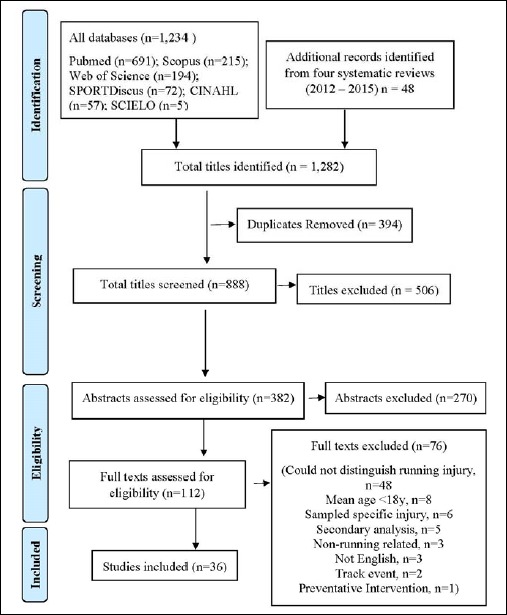
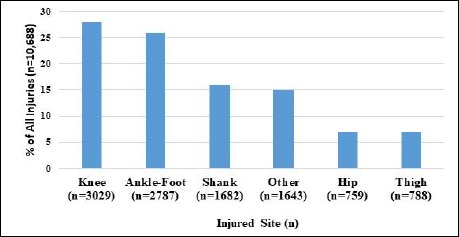
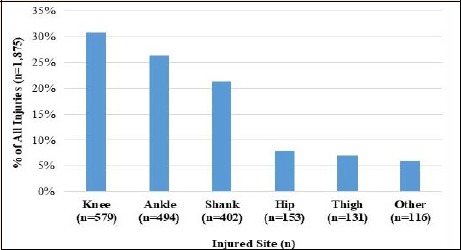
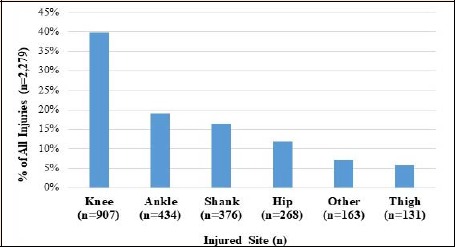
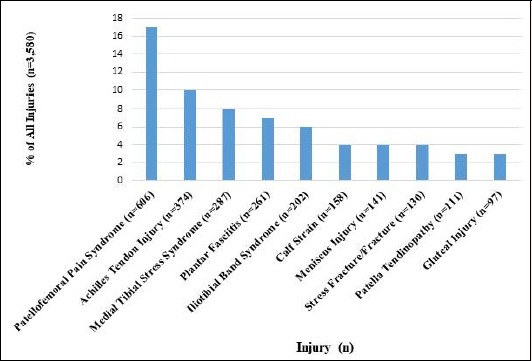
Running is associated with a higher risk of overuse injury than other forms of aerobic exercise such as walking, swimming and cycling. An accurate description of the proportion of running injuries per anatomical location and where possible, per specific pathology, for both genders is required. The aim of this review was to determine the proportion of lower limb running injuries by anatomical location and by specific pathology in male and female runners (≥800m - ≤ marathon). The preferred reporting items for systematic reviews and meta-analyses guidelines were followed for this review. A literature search was performed with no restriction on publication year in Web of Science, Scopus, Sport-Discus, PubMed, and CINAHL up to July 2017. Retrospective, cross-sectional, prospective and randomised-controlled studies which surveyed injury data in runners were included. 36 studies were included to report the overall proportion of injury per anatomical location. The overall proportion of injury by specific pathology was reported from 11 studies. The knee (28%), ankle-foot (26%) and shank (16%) accounted for the highest proportion of injury in male and female runners, although the proportion of knee injury was greater in women (40% vs. 31%). Relative to women, men had a greater proportion of ankle-foot (26% vs. 19%) and shank (21% vs. 16%) injuries. Patellofemoral pain syndrome (PFPS; 17%), Achilles tendinopathy (AT; 10%) and medial tibial stress syndrome (MTS; 8%) accounted for the highest proportion of specific pathologies recorded overall. There was insufficient data to sub-divide specific pathology between genders. The predominate injury in female runners is to the knee. Male runners have a more even distribution of injury between the knee, shank and ankle-foot complex. There are several methodological issues, which limit the interpretation of epidemiological data in running injury.
Keywords: Running; epidemiology; injury; injury prevention.
Figures
References
-
- Altman A.R., Davis I.S. (2016) Prospective comparison of running injuries between shod and barefoot runners. British Journal of Sports Medicine 50, 476-480 - PubMed
-
- Arendt E., Dick R. (1995) Knee injury patterns among men and women in collegiate basketball and soccer. NCAA data and review of literature. American Journal of Sports Medicine 23, 694-701. - PubMed
-
- Bredeweg S.W., Zijlstra S., Bessem B., Buist I. (2012) The effectiveness of a preconditioning programme on preventing running-related injuries in novice runners: a randomised controlled trial. British Journal of Sports Medicine 46, 865-870. - PubMed
-
- Chang W.L., Shih Y.F., Chen W.Y. (2012) Running injuries and associated factors in participants of ING Taipei Marathon. Physical Therapy in Sport 13, 170-174. - PubMed
Publication types
MeSH terms
LinkOut - more resources
Full Text Sources
Medical