


Comprehensive Genomic Characterization of Parathyroid Cancer Identifies Novel Candidate Driver Mutations and Core Pathways
- PMID: 30788456
- PMCID: PMC6372985
- DOI: 10.1210/js.2018-00043
Comprehensive Genomic Characterization of Parathyroid Cancer Identifies Novel Candidate Driver Mutations and Core Pathways
Abstract
Context: Elucidating the genomic landscape of sporadic parathyroid carcinoma (PC) has been limited by low tumor incidence.
Objective: Identify driver mutations of sporadic PC and potential actionable pathways.
Methods: Patients undergoing surgical resection for sporadic PC between 1980 and 2016 at MD Anderson Cancer Center were identified. Patients with sporadic PC according to World Health Organization diagnostic criteria and with available formalin-fixed, paraffin-embedded (FFPE) PC tumor tissue were included and their clinical data analyzed to assess extent of disease. Patients with parathyroid tumors of uncertain malignancy or atypical parathyroid neoplasms were excluded. Thirty-one patients meeting diagnostic criteria had available tissue for analysis. FFPE PC tumors were subjected to DNA extraction and next-generation whole-exome sequencing. All variant calls are single-algorithm only. Twenty-nine samples passed quality assurance after DNA extraction.
Main outcome measures: Somatic or private germline mutations present in sporadic PC and identification of pathways involved in tumorigenesis.
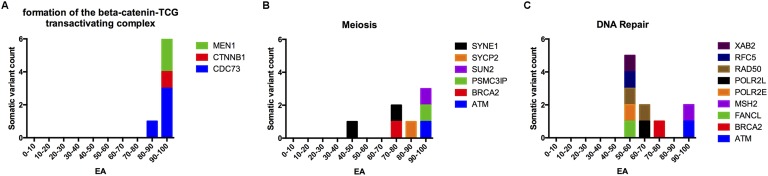
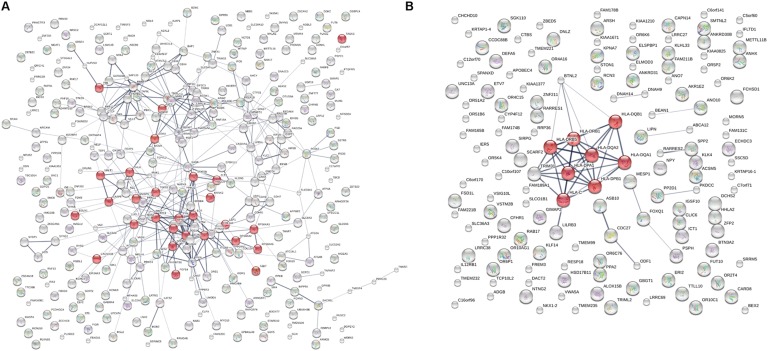
Results: We identified 35 genes with considerable mutational load; only eight genes were previously identified in other PC cohorts. These genes mediate critical processes, including chromosome organization, DNA repair, and cell cycle regulations. Gene mutations involved in MAPK signaling and immune response are also heavily implicated. These findings are limited by inherent molecular artifacts in FFPE tissue analysis and the absence of matched germline DNA. Additionally, variant calls are only single algorithm and may include false-positive/negative calls.
Conclusion: We identified 33 candidate driver genes of sporadic PC, in addition to previously known driver genes CDC73 and MEN1.
Keywords: genome; mutation; parathyroid carcinoma; whole exome sequencing.
Figures



References
-
- Hundahl SA, Fleming ID, Fremgen AM, Menck HR; The American College of Surgeons Commission on Cancer and the American Cancer Society . Two hundred eighty-six cases of parathyroid carcinoma treated in the U.S. between 1985-1995: a National Cancer Data Base Report. Cancer. 1999;86(3):538–544. - PubMed
-
- Busaidy NL, Jimenez C, Habra MA, Schultz PN, El-Naggar AK, Clayman GL, Asper JA, Diaz EM Jr, Evans DB, Gagel RF, Garden A, Hoff AO, Lee JE, Morrison WH, Rosenthal DI, Sherman SI, Sturgis EM, Waguespack SG, Weber RS, Wirfel K, Vassilopoulou-Sellin R. Parathyroid carcinoma: a 22-year experience. Head Neck. 2004;26(8):716–726. - PubMed
-
- Christakis I, Silva AM, Kwatampora LJ, Warneke CL, Clarke CN, Williams MD, Grubbs EG, Lee JE, Busaidy NL, Perrier ND. Oncologic progress for the treatment of parathyroid carcinoma is needed. J Surg Oncol. 2016;114(6):708–713. - PubMed
-
- Silva-Figueroa AM, Hess KR, Williams MD, Clarke CN, Christakis I, Graham PH, Grubbs EG, Lee JE, Busaidy NL, Perrier ND. Prognostic scoring system to risk stratify parathyroid carcinoma [published online ahead of print 15 March 2017]. J Am Coll Surg. doi: 10.1016/j.jamcollsurg.2017.01.060. - PubMed
Grants and funding
LinkOut - more resources
Full Text Sources