


A strategic research alliance: Turner syndrome and sex differences
- PMID: 30790449
- PMCID: PMC6414291
- DOI: 10.1002/ajmg.c.31677
A strategic research alliance: Turner syndrome and sex differences
Abstract
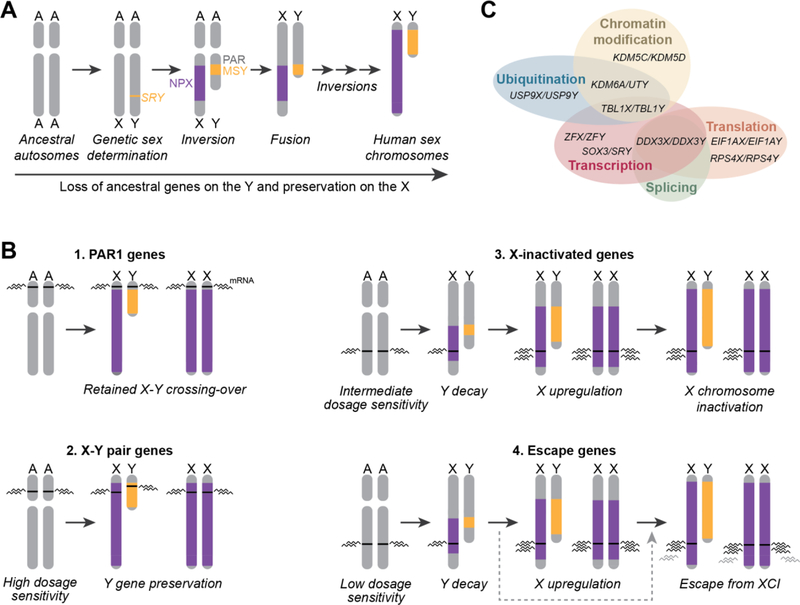
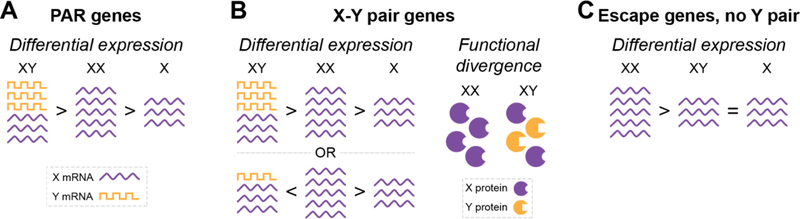
Sex chromosome constitution varies in the human population, both between the sexes (46,XX females and 46,XY males), and within the sexes (e.g., 45,X and 46,XX females, and 47,XXY and 46,XY males). Coincident with this genetic variation are numerous phenotypic differences between males and females, and individuals with sex chromosome aneuploidy. However, the molecular mechanisms by which sex chromosome constitution impacts phenotypes at the cellular, tissue, and organismal levels remain largely unexplored. Thus, emerges a fundamental question connecting the study of sex differences and sex chromosome aneuploidy syndromes: How does sex chromosome constitution influence phenotype? Here, we focus on Turner syndrome (TS), associated with the 45,X karyotype, and its synergies with the study of sex differences. We review findings from evolutionary studies of the sex chromosomes, which identified genes that are most likely to contribute to phenotypes as a result of variation in sex chromosome constitution. We then explore strategies for investigating the direct effects of the sex chromosomes, and the evidence for specific sex chromosome genes impacting phenotypes. In sum, we argue that integrating the study of TS with sex differences offers a mutually beneficial alliance to identify contributions of the sex chromosomes to human development, health, and disease.
Keywords: Turner syndrome; sex chromosome aneuploidy; sex chromosome evolution; sex differences.
© 2019 Wiley Periodicals, Inc.
Figures

References
-
- Bassi MT, Ramesar RS, Caciotti B, Winship IM, De Grandi A, Riboni M, … Borsani G (1999). X-linked late-onset sensorineural deafness caused by a deletion involving OA1 and a novel gene containing WD-40 repeats. American Journal of Human Genetics, 64(6), 1604–1616. doi: 10.1086/302408 - DOI - PMC - PubMed
Publication types
MeSH terms
Grants and funding
LinkOut - more resources
Full Text Sources
Medical
