


Vitamin K: Double Bonds beyond Coagulation Insights into Differences between Vitamin K1 and K2 in Health and Disease
- PMID: 30791399
- PMCID: PMC6413124
- DOI: 10.3390/ijms20040896
Vitamin K: Double Bonds beyond Coagulation Insights into Differences between Vitamin K1 and K2 in Health and Disease
Abstract
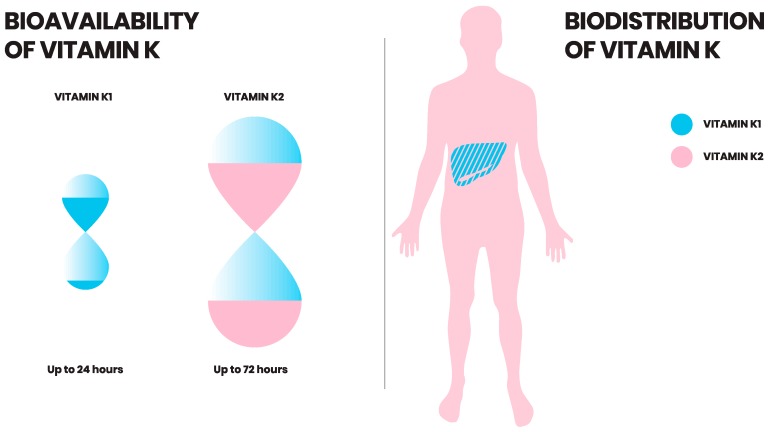
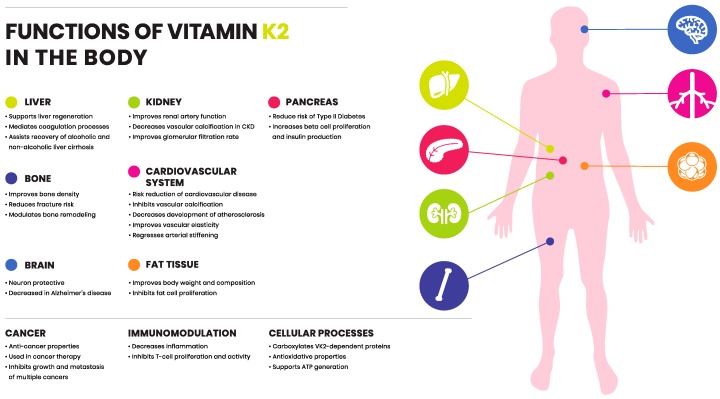
Vitamin K is an essential bioactive compound required for optimal body function. Vitamin K can be present in various isoforms, distinguishable by two main structures, namely, phylloquinone (K1) and menaquinones (K2). The difference in structure between K1 and K2 is seen in different absorption rates, tissue distribution, and bioavailability. Although differing in structure, both act as cofactor for the enzyme gamma-glutamylcarboxylase, encompassing both hepatic and extrahepatic activity. Only carboxylated proteins are active and promote a health profile like hemostasis. Furthermore, vitamin K2 in the form of MK-7 has been shown to be a bioactive compound in regulating osteoporosis, atherosclerosis, cancer and inflammatory diseases without risk of negative side effects or overdosing. This review is the first to highlight differences between isoforms vitamin K1 and K2 by means of source, function, and extrahepatic activity.
Keywords: vascular calcification; vitamin K dependent proteins; vitamin K1; vitamin K2.
Conflict of interest statement
Frode Bohan and Eric Anderson are employed by NattoPharma ASA, which is industrial partner of the Marie Skłodowska-Curie grants No 722609 and No 675111.
Figures
References
-
- Shenkin A. Dietary reference values for vitamin A, vitamin K, arsenic, boron, chromium, copper, iodine, iron, manganese, molybdenum, nickel, silicon, vanadium and zinc. J. Hum. Nutr. Diet. 2003;16:199–200. doi: 10.1046/j.1365-277X.2003.00439.x. - DOI
-
- Shearer M.J., Newman P. Metabolism and cell biology of vitamin K. Thromb. Haemost. 2017;100:530–547. - PubMed
Publication types
MeSH terms
Substances
Grants and funding
LinkOut - more resources
Full Text Sources
Other Literature Sources
Medical
