


Changes in the transcriptome of circulating immune cells of a New Zealand cohort with myalgic encephalomyelitis/chronic fatigue syndrome
- PMID: 30791746
- PMCID: PMC6350121
- DOI: 10.1177/2058738418820402
Changes in the transcriptome of circulating immune cells of a New Zealand cohort with myalgic encephalomyelitis/chronic fatigue syndrome
Abstract
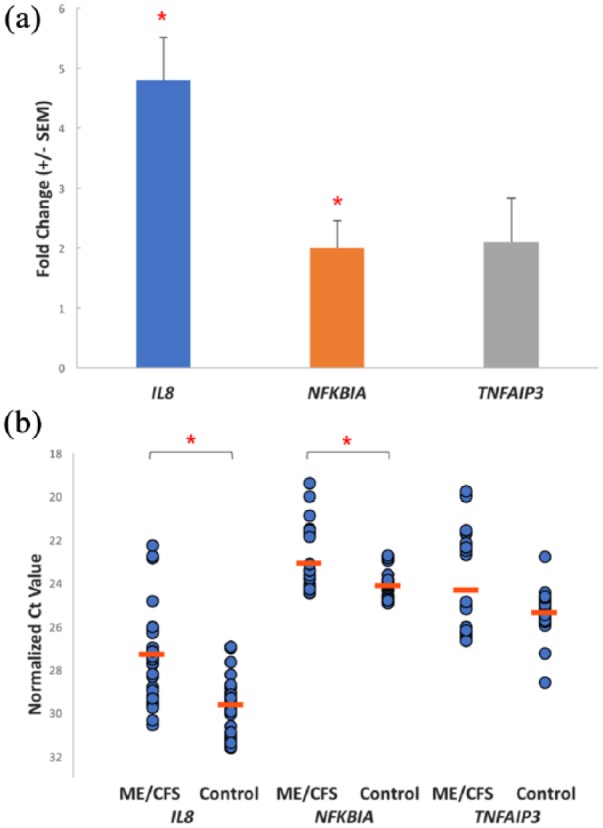
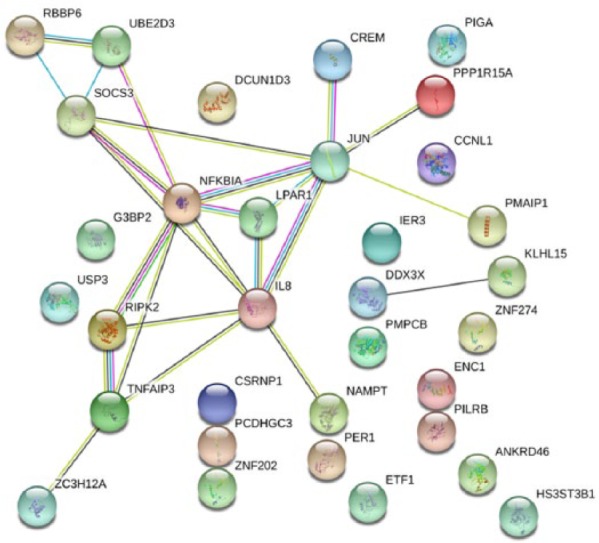
Myalgic encephalomyelitis/chronic fatigue syndrome (ME/CFS) is a poorly understood disease affecting 0.2%-2% of the global population. To gain insight into the pathophysiology of ME/CFS in New Zealand, we examined the transcriptomes of peripheral blood mononuclear cells by RNA-seq analysis in a small well-characterized patient group (10 patients), with age/gender-matched healthy controls (10 control subjects). Twenty-seven gene transcripts were increased 1.5- to sixfold and six decreased three- to sixfold in the patient group ( P < 0.01). The top enhanced gene transcripts, IL8, NFΚBIA and TNFAIP3, are functionally related to inflammation, and significant changes were validated for IL8 and NFΚBIA by quantitative polymerase chain reaction (qPCR). Functional network analysis of the altered gene transcripts ( P < 0.01) detected interactions between the products related to inflammation, circadian clock function, metabolic dysregulation, cellular stress responses and mitochondrial function. Ingenuity pathway analysis ( P < 0.05) provided further insights into the dysfunctional physiology, highlighting stress and inflammation pathways. This analysis provides novel insights into the molecular changes in ME/CFS and contributes to the understanding of the pathophysiological mechanisms of the disease.
Keywords: chronic fatigue syndrome; circadian rhythm; inflammation; metabolic dysregulation; mitochondrial dysfunction; myalgic encephalomyelitis; oxidative stress; transcriptome.
Conflict of interest statement
Figures
References
-
- Shepherd C, Chaudhuri A. (2017) ME/CFS/PVFS: An Exploration of the Key Clinical Issues, 9th edn. Gawcott: The ME Association.
-
- Lorusso L, Mikhaylova SV, Capelli E, et al. (2009) Immunological aspects of chronic fatigue syndrome. Autoimmunity Reviews 8: 287–291. - PubMed
-
- Carruthers BM, Kumar Jain A, De Meirleir KL, et al. (2003) Myalgic encephalomyelitis/chronic fatigue syndrome: Clinical working case definition, diagnostic and treatment protocols. Journal of Chronic Fatigue Syndrome 11: 7–115.
-
- Comas M, Gordon CJ, Oliver BG, et al. (2017) A circadian based inflammatory response – Implications for respiratory disease and treatment. Sleep Science and Practice 1: 18.
MeSH terms
LinkOut - more resources
Full Text Sources
Medical
