


Polypharmacy in a hospitalized psychiatric population: risk estimation and damage quantification
- PMID: 30791883
- PMCID: PMC6383213
- DOI: 10.1186/s12888-019-2056-0
Polypharmacy in a hospitalized psychiatric population: risk estimation and damage quantification
Abstract
Background: Polypharmacy increases the risk of pharmacological interactions, prevalence of secondary effects and with this the lack of adherence to treatment. It is estimated that between 10 and 40% of patients hospitalized in psychiatric institutions are prescribed more than one antipsychotic. The objective of the present study was to identify the prevalence of polypharmacy, evaluate adverse effects associated to the use of psych drugs and to estimate the risk in specific groups.
Methods: We carried out a longitudinal, retrospective study that included the analysis of all discharged patients (n = 140) in the first trimester of the year in a psychiatric hospital in Mexico. The information was classified into 7 sections: sociodemographic, diagnosis, clinical follow-up information, prescribed drugs, adverse reactions, substance abuse, laboratory and complementary results. Risk estimation was obtained with Odds Ratios, to correlate continuous variables Pearson's correlation was used. Student's T and Mann Whitney's U were used to compare 2 independent samples; multiple and linear regressions were carried out.
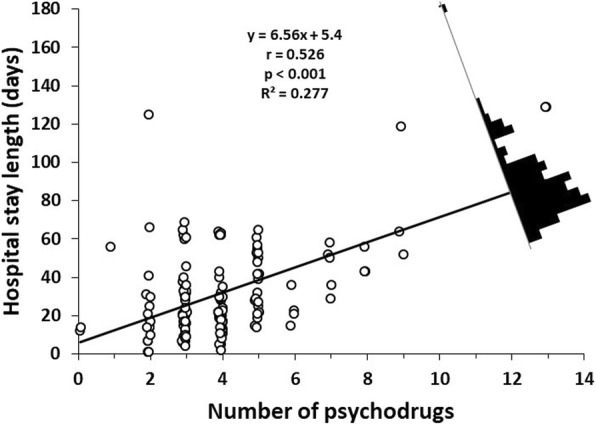
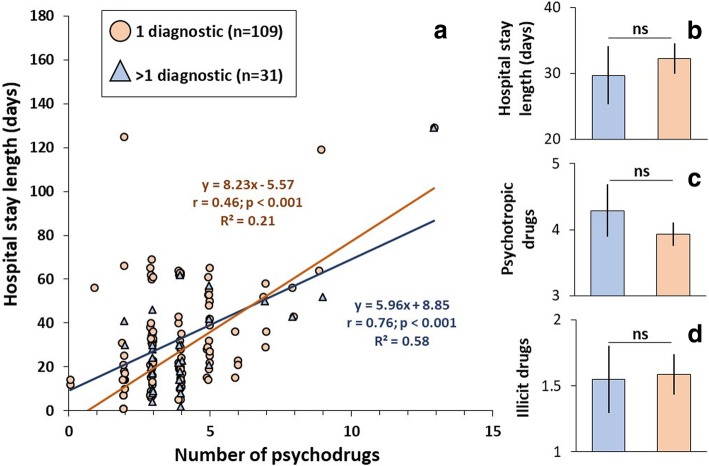
Results: The mean number of drugs used during hospitalization was 7.8 drugs per patient. The mean prescribed psych drugs was 4.07. The mean antipsychotic dose was the risperidone equivalent of 5.08 mg. 29.2% of patients had at least one secondary effect associated to the use of drugs, 17.8% presented extrapyramidal symptoms. 81.4% of patients were prescribed 6 or more drugs (polypharmacy) and were 5 times more likely to suffer a secondary effects (OR 6.24). 14.2% had polypharmacy while receiving antipsychotics and had more than twice the risk of presenting extrapyramidal symptoms (OR 3.05). For each added psych drug, hospital stay increased by 6.56 days.
Conclusions: Despite international guideline recommendations where reasoned and conciliatory prescription of psych drugs is advised, there is still a high prevalence of polypharmacy in patients hospitalized in psychiatric institutions. In the present study 4 out of 5 patients received polypharmacy decreasing tolerability, treatment adherence and increasing the risk and costs secondary to an increased hospital stay.
Keywords: Antipsychotic; Antipsychotic prescription duplicity; Drug-drug interaction; Extrapyramidal symptoms; Hospitalized psychiatric population; Pharmacological interactions; Polypharmacy; Secondary effect.
Conflict of interest statement
Ethics approval and consent to participate
This retrospective study followed the recommendations and guidelines established in the Helsinki declaration and its four major principles: beneficence, nonmaleficence, justice and autonomy. It was approved by the ethics and investigation committee of the Instituto Jalisciense de Salud Mental (Jalisco’s Mental Health Institute). The patients signed an informed consent form allowing the inclusion of their data in the present study.
Consent for publication
Not applicable.
Competing interests
The authors declare that they have no competing interests.
Publisher’s Note
Springer Nature remains neutral with regard to jurisdictional claims in published maps and institutional affiliations.
Figures
References
-
- National Institute for Health and Care Excellence. Psychosis and schizophrenia in adults: treatment and management. United Kingdom. Nice Clinical Guideline 178. 2014. guidance.nice.org.uk/cg178.
-
- American Psychiatric Association . The American Psychiatric Association practice guidelines for the psychiatric evaluation of adults. Washington (DC): American psychiatric association; 2016.
MeSH terms
Substances
LinkOut - more resources
Full Text Sources
Medical
