


Serum klotho: a potential predictor of cerebrovascular disease in hemodialysis patients
- PMID: 30791885
- PMCID: PMC6385422
- DOI: 10.1186/s12882-019-1232-2
Serum klotho: a potential predictor of cerebrovascular disease in hemodialysis patients
Abstract
Background: Hemodialysis patients suffer from a serious threat of cerebrovascular disease. Klotho, as an aging-suppressor gene, contributes to protect on vascular calcification and oxidative stress, which are the risk factors of cerebrovascular disease. The purpose of the present study is to determine the relationship between serum klotho and cerebrovascular disease in patients receiving hemodialysis.
Methods: Serum klotho levels of hemodialysis patients were measured by ELISA. Cerebrovascular diseases were diagnosed by CT or MRI scans. The cognitive function of hemodialysis patients with cerebrovascular disease were evaluated with a neuropsychological battery assessing domains of global cognition verbal memory, spatial memory, executive function and verbal fluency.
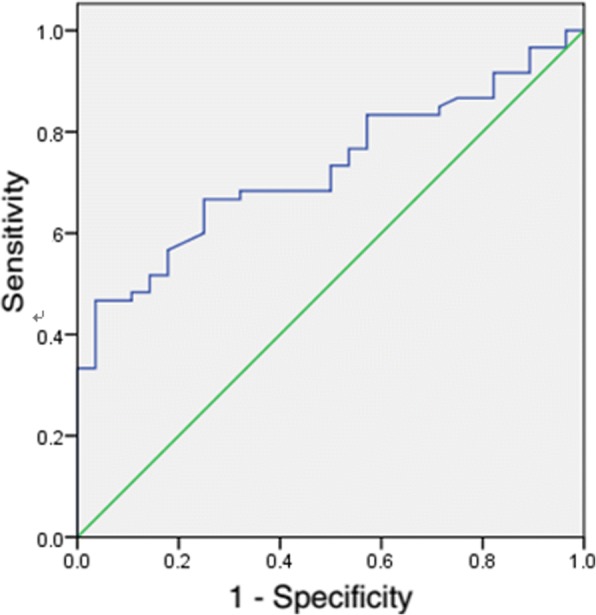
Results: Eighty-eight patients were included, 57 ± 14 years, 63.64% male, 52.27% older than 60 years. Twenty-eight participants had cerebrovascular disease (23 cases had cerebral infarction, 5 cases had cerebral hemorrhage). The average level of serum klotho of all participants was 119.10 ± 47.29 pg/ml. The serum klotho level was significantly associated with cerebrovascular disease in hemodialysis patients (HR(95%CI) = 0.975(0.960-0.990), p = 0.001). The optimal cut-off value of serum klotho for predicting cerebrovascular disease in hemodialysis patients was 137.22 pg/ml, with a specificity of 96.4% and a sensitivity of 46.7%. But serum klotho was not an independent risk factor of cognitive impairment for hemodialysis patients with cerebrovascular disease (HR((95%CI) = 1.002(0.986-1.018), p = 0.776) or with cerebral infarction (HR(95%CI) = 1.005(0.987-1.023), p = 0.576).
Conclusions: The serum klotho level is a potential predictor of cerebrovascular disease in hemodialysis patients, but it is not an independent risk factor of cognitive impairment for hemodialysis patients with cerebrovascular disease.
Keywords: Cerebrovascular disease; Cognitive impairment; Hemodialysis; Klotho.
Conflict of interest statement
Ethics approval and consent to participate
The Biological and Medical Ethics Committee of Puai Hospital, Tongji Medical College, Huazhong University of Science and Technology (Wuhan, China) approved the study. All participants have written informed consent before the study.
Competing interests
The authors declare that they have no competing interests.
Publisher’s Note
Springer Nature remains neutral with regard to jurisdictional claims in published maps and institutional affiliations.
Figures
References
-
- Zhang L, Wang F, Wang L, Wang W, Liu B, Liu J, Chen M, He Q, Liao Y, Yu X, Chen N, Zhang JE, Hu Z, Liu F, Hong D, Ma L, Liu H, Zhou X, Chen J, Pan L, Chen W, Wang W, Li X, Wang H. Prevalence of chronic kidney disease in China: a cross-sectional survey. Lancet. 2012;379(9818):815–822. doi: 10.1016/S0140-6736(12)60033-6. - DOI - PubMed
-
- U.S. Renal Data System . USRDS 2007 Annual Data Report: Atlas of Chronic Kidney Disease and End-Stage Renal Disease in the United States. Bethesda: National Institutes of Health, National Institute of Diabetes and Digestive and Kidney Diseases; 2007.
-
- Sozio SM, Armstrong PA, Coresh J, Jaar BG, Fink NE, Plantinga LC, Powe NR, Parekh RS. Cerebrovascular disease incidence, characteristics, and outcomes in patients initiating dialysis: the choices for healthy outcomes in caring for ESRD (CHOICE) study. Am J Kidney Dis. 2009;54(3):468–477. doi: 10.1053/j.ajkd.2009.01.261. - DOI - PMC - PubMed
-
- Delmez JA, Yan G, Bailey J, Beck GJ, Beddhu S, Cheung AK, Kaysen GA, Levey AS, Sarnak MJ, Schwab SJ. Hemodialysis (HEMO) Study Group. Cerebrovascular disease in maintenance hemodialysis patients: results of the HEMO study. Am J Kidney Dis. 2006;47(1):131–138. doi: 10.1053/j.ajkd.2005.09.031. - DOI - PubMed
Publication types
MeSH terms
Substances
LinkOut - more resources
Full Text Sources
Medical
