


Proteome profiling of triple negative breast cancer cells overexpressing NOD1 and NOD2 receptors unveils molecular signatures of malignant cell proliferation
- PMID: 30791886
- PMCID: PMC6385390
- DOI: 10.1186/s12864-019-5523-6
Proteome profiling of triple negative breast cancer cells overexpressing NOD1 and NOD2 receptors unveils molecular signatures of malignant cell proliferation
Abstract
Background: Triple negative breast cancer (TNBC) is a malignancy with very poor prognosis, due to its aggressive clinical characteristics and lack of response to receptor-targeted drug therapy. In TNBC, immune-related pathways are typically upregulated and may be associated with a better prognosis of the disease, encouraging the pursuit for immunotherapeutic options. A number of immune-related molecules have already been associated to the onset and progression of breast cancer, including NOD1 and NOD2, innate immune receptors of bacterial-derived components which activate pro-inflammatory and survival pathways. In the context of TNBC, overexpression of either NOD1or NOD2 is shown to reduce cell proliferation and increase clonogenic potential in vitro. To further investigate the pathways linking NOD1 and NOD2 signaling to tumorigenesis in TNBC, we undertook a global proteome profiling of TNBC-derived cells ectopically expressing each one of these NOD receptors.
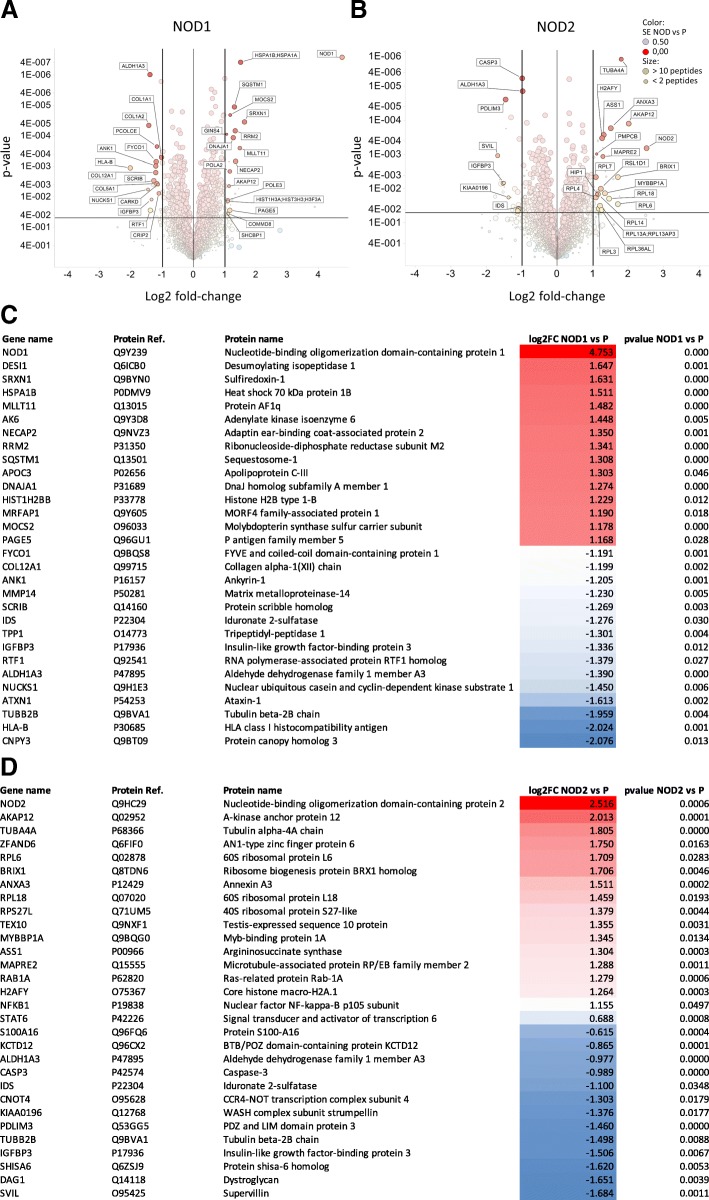
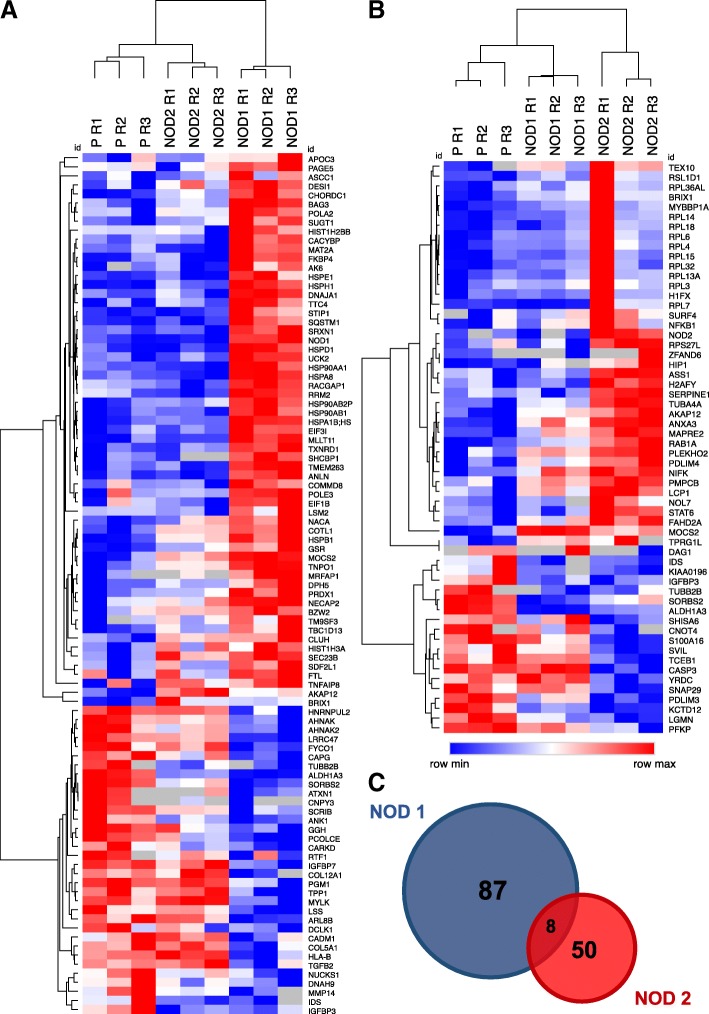
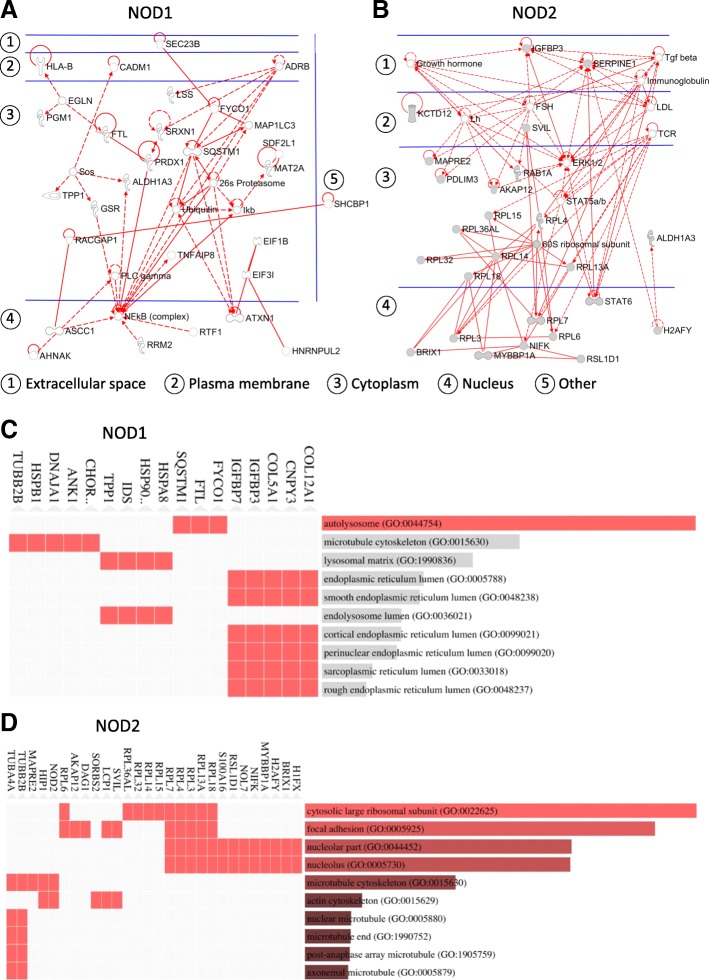
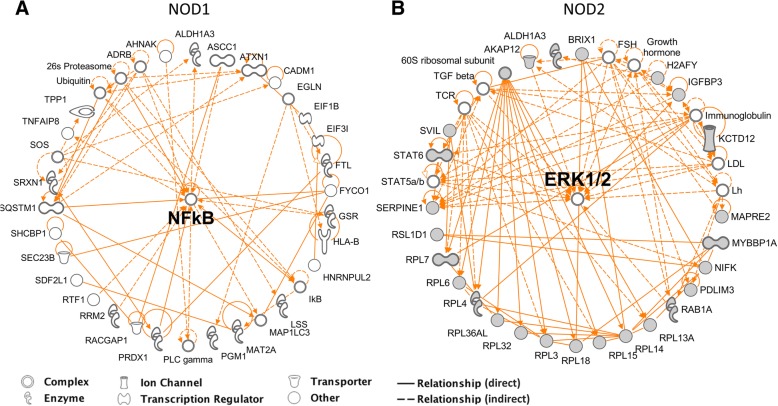
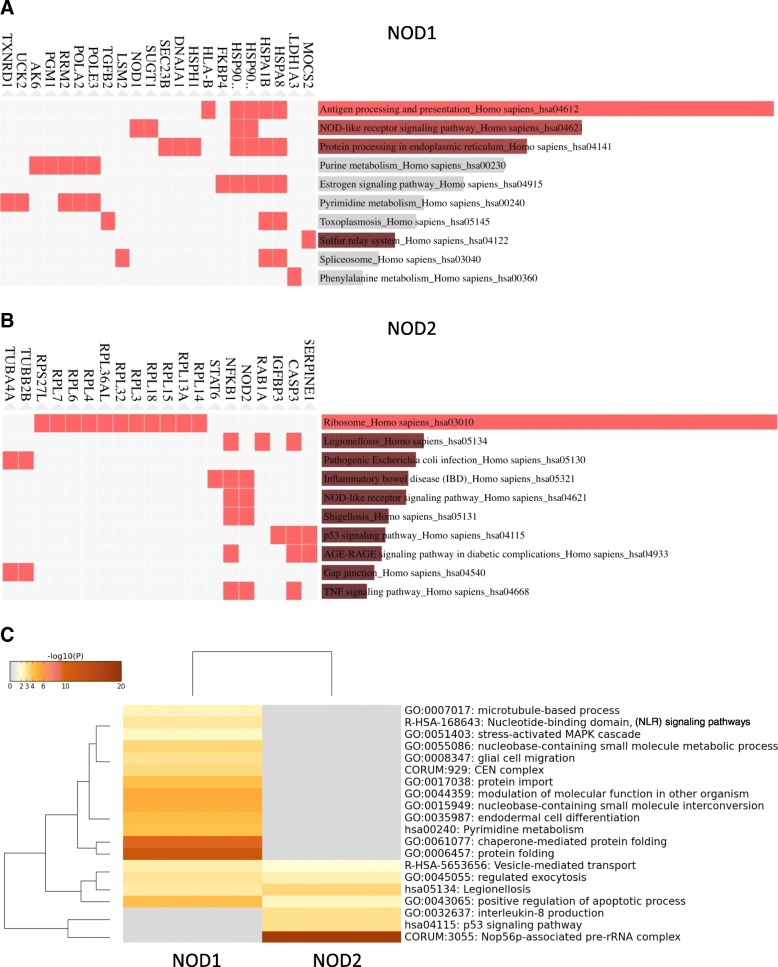
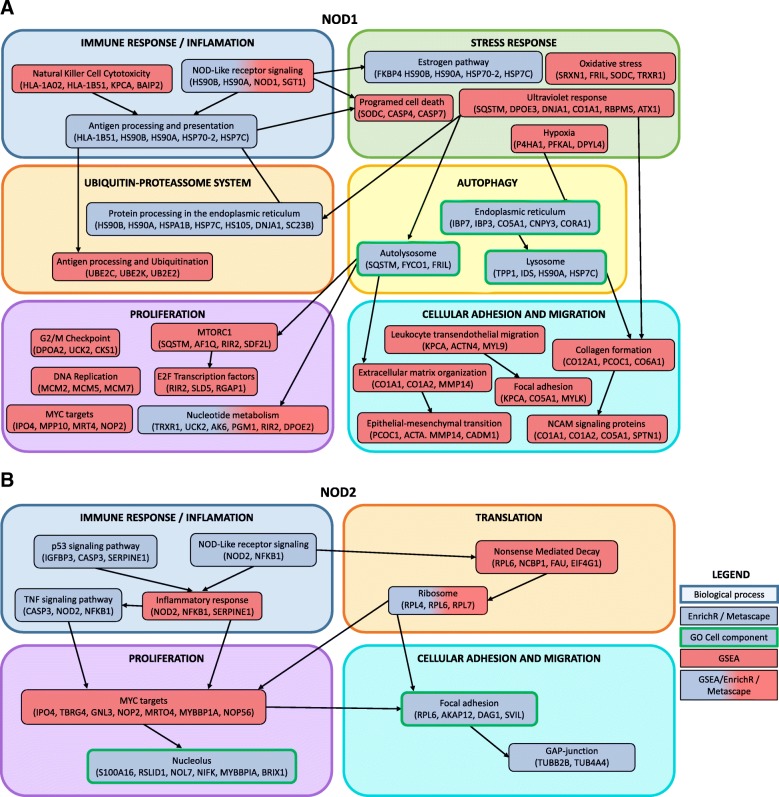
Results: We have identified a total of 95 and 58 differentially regulated proteins in NOD1- and NOD2-overexpressing cells, respectively. We used bioinformatics analyses to identify enriched molecular signatures aiming to integrate the differentially regulated proteins into functional networks. These analyses suggest that overexpression of both NOD1 and NOD2 may disrupt immune-related pathways, particularly NF-κB and MAPK signaling cascades. Moreover, overexpression of either of these receptors may affect several stress response and protein degradation systems, such as autophagy and the ubiquitin-proteasome complex. Interestingly, the levels of several proteins associated to cellular adhesion and migration were also affected in these NOD-overexpressing cells.
Conclusions: Our proteomic analyses shed new light on the molecular pathways that may be modulating tumorigenesis via NOD1 and NOD2 signaling in TNBC. Up- and downregulation of several proteins associated to inflammation and stress response pathways may promote activation of protein degradation systems, as well as modulate cell-cycle and cellular adhesion proteins. Altogether, these signals seem to be modulating cellular proliferation and migration via NF-κB, PI3K/Akt/mTOR and MAPK signaling pathways. Further investigation of altered proteins in these pathways may provide more insights on relevant targets, possibly enabling the immunomodulation of tumorigenesis in the aggressive TNBC phenotype.
Keywords: Hs578T; MAPK triple negative breast cancer; NF-κB; NLR; NOD1; NOD2; Proteome.
Conflict of interest statement
Ethics approval and consent to participate
Not applicable.
Consent for publication
Not applicable.
Competing interests
The authors declare that they have no competing interests.
Publisher’s Note
Springer Nature remains neutral with regard to jurisdictional claims in published maps and institutional affiliations.
Figures
References
-
- IARC. World Cancer report 2014: World Health Organization; 2014. http://publications.iarc.fr/Non-Series-Publications/World-Cancer-Reports...
MeSH terms
Substances
LinkOut - more resources
Full Text Sources
Miscellaneous
