


Dissociating polysensitization and multimorbidity in children and adults from a Polish general population cohort
- PMID: 30792849
- PMCID: PMC6369558
- DOI: 10.1186/s13601-019-0246-y
Dissociating polysensitization and multimorbidity in children and adults from a Polish general population cohort
Erratum in
-
Correction to: Dissociating polysensitization and multimorbidity in children and adults from a Polish general population cohort.Clin Transl Allergy. 2019 Apr 4;9:23. doi: 10.1186/s13601-019-0263-x. eCollection 2019. Clin Transl Allergy. 2019. PMID: 30988897 Free PMC article.
Abstract
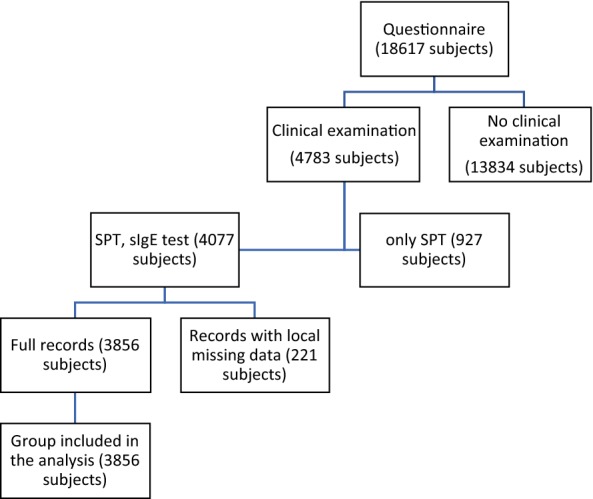
Background: Links between multimorbidity of allergic diseases and allergen sensitization are still under debate, especially in adults. This study aimed to establish a relationship between polysensitization and allergic multimorbidity in children and adults and the allergens involved in multimorbidity.
Material and method: A cross-sectional multicentre study enrolled children aged 6-7 and 13-14 years and adults aged 20-44 years from a Polish national cohort. The diagnosis of allergic diseases was made by a physician. Skin prick tests to 13 allergens and serum IgE levels to 4 allergens were tested.
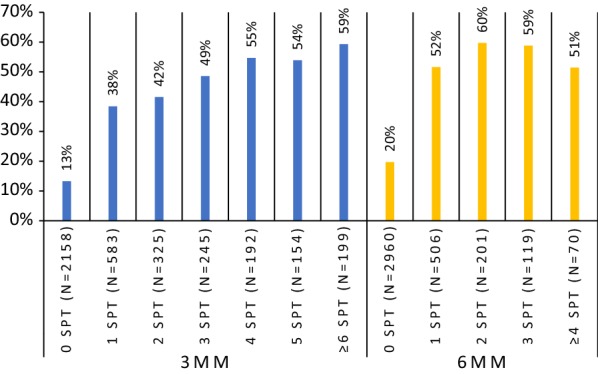
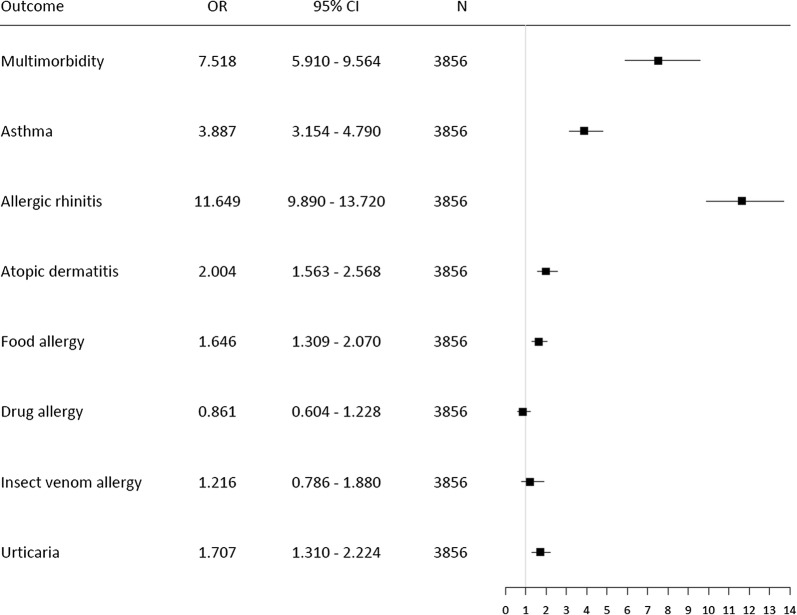
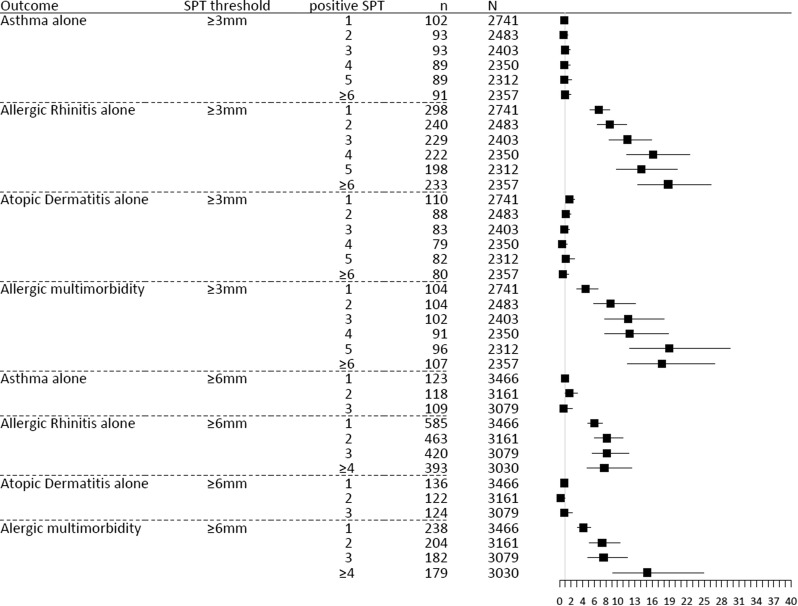
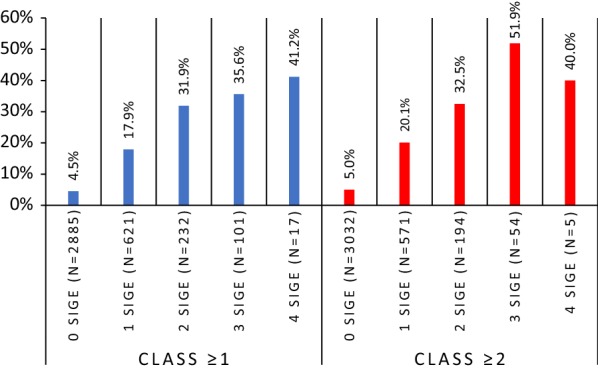
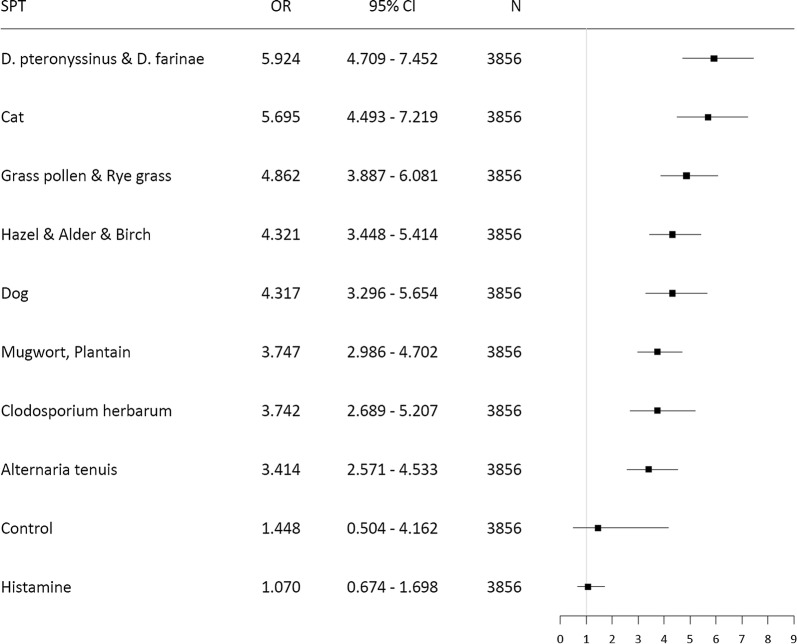
Results: Among the 3856 participants, single disease (asthma, allergic rhinitis or atopic dermatitis) was diagnosed in 27.7% subjects and allergic multimorbidity in 9.3%. Allergic multimorbidity occurred more commonly in children than in adults (p < 0.01). Asthma or atopic dermatitis alone were not associated with polysensitization. Rhinitis and multimorbidity were associated with polysensitization. Allergic multimorbidity occurred in 2.2% of participants with negative skin prick tests, 9.8% of those with one positive prick test (SPT ≥ 3 mm) and 20.6% of polysensitized ones (p < 0.001). There was an increasing risk of multimorbidity depending on the number of positive prick tests for both SPT ≥ 3 mm (OR 9.6-16.5) and SPT ≥ 6 mm (OR 5.9-13.7). A statistically significant relationship was found between allergic multimorbidity and sensitization to cat and mite allergens.
Conclusions: Multimorbidity is associated with polysensitization especially in children compared with adults in Polish population cohort. New insights into single disease patterns were found: bronchial asthma is the strongest risk factor for the development of multimorbidity in comparison with allergic rhinitis and atopic dermatitis.
Keywords: Allergy; Asthma; Atopic dermatitis; IgE; Muitimorbidity; Polysensitization; Rhinitis; Skin tests; Urticaria.
Figures
References
-
- Ponińska JK, Samoliński B, Tomaszewska A, Raciborski F, Samel-Kowalik P, Walkiewicz A, et al. Haplotype dependent association of rs7927894 (11q13.5) with atopic dermatitis and chronic allergic rhinitis: a study in ECAP cohort. PLoS ONE. 2017;12(9):e0183922. doi: 10.1371/journal.pone.0183922. - DOI - PMC - PubMed
-
- Ballardini N, Kull I, Soderhall C, Lilja G, Wickman M, Wahlgren CF. Eczema severity in preadolescent children and its relation to sex, filaggrin mutations, asthma, rhinitis, aggravating factors and topical treatment: a report from the BAMSE birth cohort. Br J Dermatol. 2013;168:588–594. doi: 10.1111/bjd.12196. - DOI - PubMed
LinkOut - more resources
Full Text Sources
Miscellaneous
