


Analysis of core protein clusters identifies candidate variable sites conferring metronidazole resistance in Helicobacter pylori
- PMID: 30792865
- PMCID: PMC6375344
- DOI: 10.1093/gastro/goy048
Analysis of core protein clusters identifies candidate variable sites conferring metronidazole resistance in Helicobacter pylori
Abstract
Background: Metronidazole is one of the first-line drugs of choice in the standard triple therapy used to eradicate Helicobacter pylori infection. Hence, the global emergence of metronidazole resistance in Hp poses a major challenge to health professionals. Inactivation of RdxA is known to be a major mechanism of conferring metronidazole resistance in H. pylori. However, metronidazole resistance can also arise in H. pylori strains expressing functional RdxA protein, suggesting that there are other mechanisms that may confer resistance to this drug.
Methods: We performed whole-genome sequencing on 121 H. pylori clinical strains, among which 73 were metronidazole-resistant. Sequence-alignment analysis of core protein clusters derived from clinical strains containing full-length RdxA was performed. Variable sites in each alignment were statistically compared between the resistant and susceptible groups to determine candidate genes along with their respective amino-acid changes that may account for the development of metronidazole resistance in H. pylori.
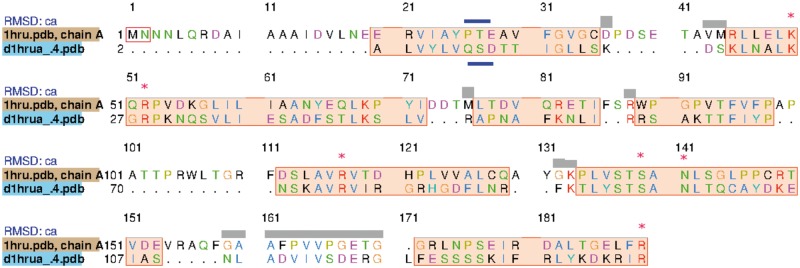
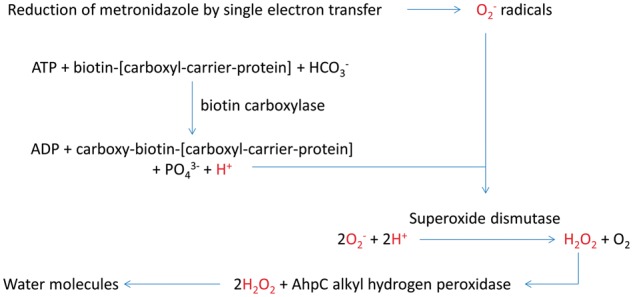
Results: Resistance due to RdxA truncation was identified in 34% of metronidazole-resistant strains. Analysis of core protein clusters derived from the remaining 48 metronidazole-resistant strains and 48 metronidazole-susceptible identified four variable sites significantly associated with metronidazole resistance. These sites included R16H/C in RdxA, D85N in the inner-membrane protein RclC (HP0565), V265I in a biotin carboxylase protein (HP0370) and A51V/T in a putative threonylcarbamoyl-AMP synthase (HP0918).
Conclusions: Our approach identified new potential mechanisms for metronidazole resistance in H. pylori that merit further investigation.
Keywords: Helicobacter pylori; antibiotic resistance; core protein clusters; metronidazole; sequence alignment; whole-genome sequencing.
Figures
References
-
- Marshall BJ, Warren JR. Unidentified curved bacilli in the stomach of patients with gastritis and peptic ulceration. Lancet 1984;1:1311–5. - PubMed
-
- Marshall BJ, Windsor HM. The relation of Helicobacter pylori to gastric adenocarcinoma and lymphoma: pathophysiology, epidemiology, screening, clinical presentation, treatment, and prevention. Med Clin North Am 2005;89:313–44. viii. - PubMed
-
- Malfertheiner P, Megraud F, O’Morain CA et al. Management of Helicobacter pylori infection-the Maastricht V/Florence Consensus Report. Gut 2017;66:6–30. - PubMed
LinkOut - more resources
Full Text Sources
Research Materials
Miscellaneous
