


Bronchopulmonary dysplasia in very preterm infants: Outcome up to preschool age, in a single center of Austria
- PMID: 30793436
- PMCID: PMC6850710
- DOI: 10.1111/ped.13815
Bronchopulmonary dysplasia in very preterm infants: Outcome up to preschool age, in a single center of Austria
Abstract
Background: Bronchopulmonary dysplasia (BPD) is the most frequent chronic lung disease in infancy and is associated with neonatal comorbidity and impairment in pulmonary and neurodevelopmental (ND) long-term outcome.
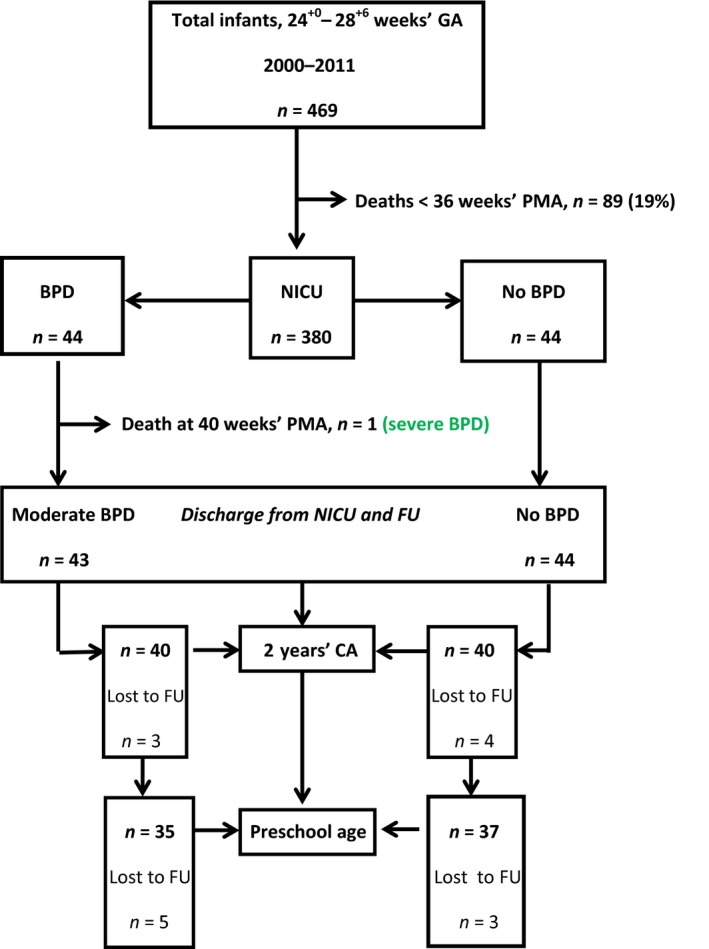
Methods: This was a retrospective, single-center, cohort study to compare a cohort of very preterm infants (gestational age [GA], 24+0 -28+6 weeks) with BPD (n = 44), with a cohort of GA-matched preterm infants without BPD (n = 44) with regard to neonatal morbidity, incidence of lower respiratory tract infection (LRTI), ND outcome and growth to 2 years' corrected age (CA) and preschool age.
Results: Bronchopulmonary dysplasia (incidence, 11.3%) was associated with a higher rate of neonatal pneumonia (26% vs 7%, P = 0.001), longer total duration of mechanical ventilation (mean days, 21 vs 13, P < 0.001), and a higher rate of pulmonary hypertension (20.5% vs 0%, P = 0.002) and of severe retinopathy of prematurity (13.6% vs 0%, P = 0.026). Incidence of LRTI was significantly higher in the BPD infants (50% vs 26%, P = 0.025). ND outcome did not differ between the two groups. Growth at neonatal intensive care unit discharge was similar. In the BPD cohort, rate of weight < 10th percentile was higher at 2 years' CA (52% vs 30%, P = 0.041) and rate of head circumference < 10th percentile was higher at preschool age (59% vs 27%, P = 0.028).
Conclusion: Neonatal respiratory morbidity was significantly higher in the BPD cohort, but long-term ND outcome did not differ. Infants with BPD had poorer growth.
Keywords: bronchopulmonary dysplasia; growth; morbidity; neurodevelopment; preterm infant.
© 2019 The Authors. Pediatrics International published by John Wiley & Sons Australia, Ltd on behalf of Japan Pediatric Society.
Figures
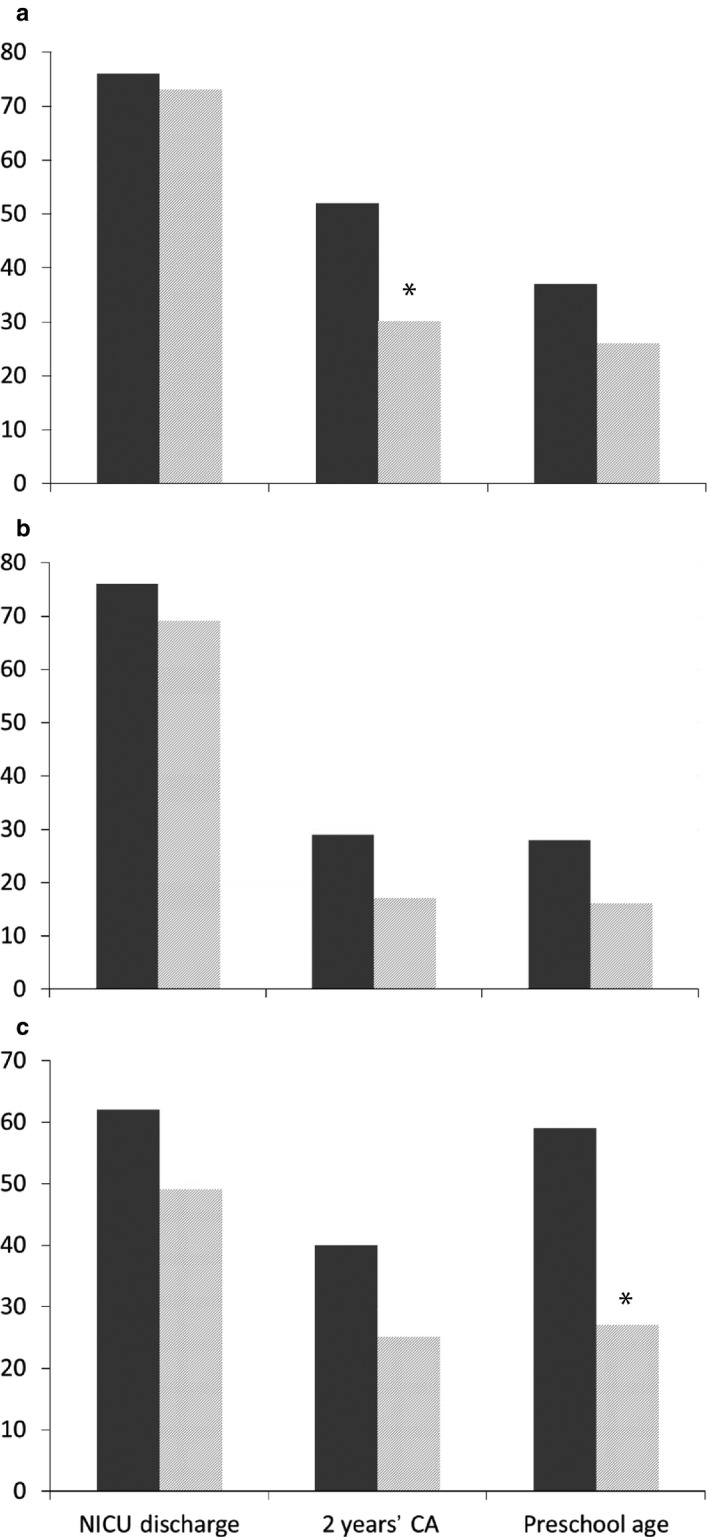
 ) with and (
 ) without bronchopulmonary dysplasia at discharge from the neonatal intensive care unit (
References
-
- Northway WH Jr, Rosan RC, Porter DY. Pulmonary disease following respiratory therapy of hyaline‐membrane disease: Bronchopulmonary dysplasia. N. Engl. J. Med. 1967; 267: 357–68. - PubMed
-
- Jobe AH, Bancalari E. Bronchopulmonary dysplasia. Am. J. Resp. Crit. Care Med. 2001; 163: 1723–9. - PubMed
-
- Jobe AH, Steinhorn R. Can we define bronchopulmonary dysplasia ? J. Pediatr. 2017; 188: 19–33. - PubMed
-
- Shennan AT, Dunn MS, Ohlsson A et al Abnormal pulmonary outcomes in premature infants: Prediction from oxygen requirement in the neonatal period. Pediatrics 1988; 82: 527–32. - PubMed
Publication types
MeSH terms
LinkOut - more resources
Full Text Sources
