


Defining the Role of Novel β-Lactam Agents That Target Carbapenem-Resistant Gram-Negative Organisms
- PMID: 30793757
- PMCID: PMC6601385
- DOI: 10.1093/jpids/piz002
Defining the Role of Novel β-Lactam Agents That Target Carbapenem-Resistant Gram-Negative Organisms
Abstract
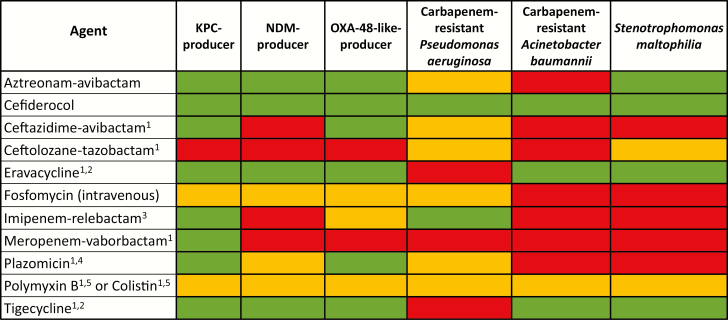
With the current carbapenem-resistant organism crisis, conventional approaches to optimizing pharmacokinetic-pharmacodynamic parameters are frequently inadequate, and traditional salvage agents (eg, colistin, tigecycline, etc) confer high toxicity and/or have low efficacy. However, several β-lactam agents with activity against carbapenem-resistant organisms were approved recently by the US Food and Drug Administration, and more are anticipated to be approved in the near future. The primary goal of this review is to assist infectious disease practitioners with preferentially selecting 1 agent over another when treating patients infected with a carbapenem-resistant organism. However, resistance to some of these antibiotics has already developed. Antibiotic stewardship programs can ensure that they are reserved for situations in which other options are lacking and are paramount for the survival of these agents.
Keywords: aztreonam-avibactam; cefiderocol; ceftazidime-avibactam; ceftolozane-tazobactam; imipenem-cilastatin–relebactam; meropenem-vaborbactam.
© The Author(s) 2019. Published by Oxford University Press on behalf of The Journal of the Pediatric Infectious Diseases Society. All rights reserved. For permissions, please e-mail: journals.permissions@oup.com.
Figures
References
Publication types
MeSH terms
Substances
Grants and funding
LinkOut - more resources
Full Text Sources
Medical
