


Short-Term Changes in Cardiac Function in Osteosarcoma Patients Receiving Anthracyclines
- PMID: 30794081
- PMCID: PMC6909714
- DOI: 10.1089/jayao.2018.0141
Short-Term Changes in Cardiac Function in Osteosarcoma Patients Receiving Anthracyclines
Abstract
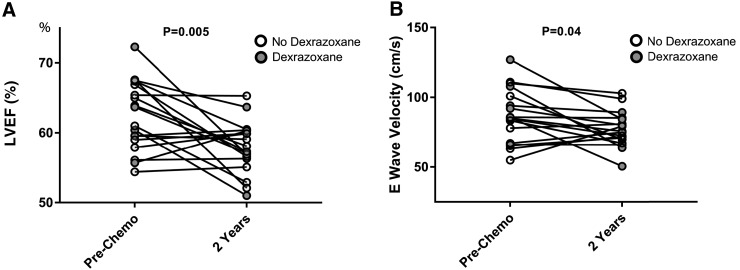
Studies of cardiac function in adolescent and young adult survivors have been performed at least a decade after anthracycline exposure, with little knowledge of short-term changes in cardiac function in this age group. To this end, we evaluated cardiac function within a 2-year period among 18 patients who received high-dose anthracyclines for osteosarcoma treatment. At 2 years, there was a significant decline in left ventricular ejection fraction (p = 0.005), with 8 of 18 patients having a >10% reduction. There was a significant change in E-wave velocity (p = 0.04). To our knowledge, this is the first study assessing short-term change in systolic and diastolic function in osteosarcoma patients receiving anthracyclines.
Keywords: adolescent and young adult cancer survivors; anthracyclines; cardiac function; osteosarcoma.
Conflict of interest statement
No competing financial interests exist.
Figures
References
-
- Lipshultz SE, Alvarez JA, Scully RE. Anthracycline associated cardiotoxicity in survivors of childhood cancer. Heart. 2008;94:525–33 - PubMed
-
- Lang RM, Badano LP, Mor-Avi V, et al. Recommendations for cardiac chamber quantification by echocardiography in adults: an update from the American Society of Echocardiography and the European Association of Cardiovascular Imaging. J Am Soc Echocardiogr. 2015;28:1–39.e14. - PubMed
-
- Cardinale D, Colombo A, Bacchiani G, et al. Early detection of anthracycline cardiotoxicity and improvement with heart failure therapy. Circulation. 2015;131:1981–8 - PubMed
MeSH terms
Substances
LinkOut - more resources
Full Text Sources
Medical
