


Weight Loss-Induced Reduction of Bone Mineral Density in Older Adults with Obesity
- PMID: 30794099
- PMCID: PMC6480356
- DOI: 10.1080/21551197.2018.1564721
Weight Loss-Induced Reduction of Bone Mineral Density in Older Adults with Obesity
Abstract
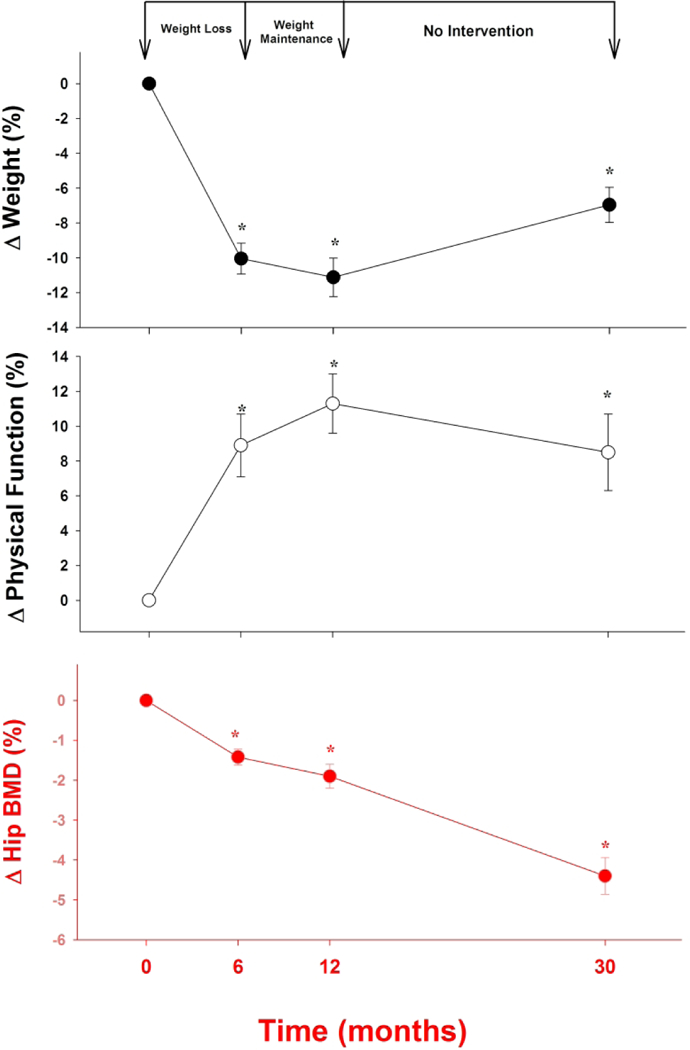
Obesity in older adults is a growing public health problem, yet the appropriate treatment remains controversial partly due to evidence that weight loss reduces bone mass and may increase fracture risk. The purpose of this review is to summarize the research to date on the effects of diet-induced weight loss on bone health in obese (body mass index 30 kg/m2 and above) older (aged 65 years or older) adults. Observational studies have shown that weight loss in this population decreases total hip bone mineral density and increases the risk of frailty fractures (composite of proximal femur, pelvis, and proximal humerus fractures). Randomized controlled trials have largely confirmed these earlier observations but have also shown that exercise, particularly progressive resistance training, can attenuate or even alleviate this bone loss. Further research incorporating outcomes concerning bone quality and mass are needed to identify the optimal exercise and nutritional regimens to counteract the bone loss.
Keywords: Bone; bone markers; bone mineral density; fracture; obesity; older adults; review; weight loss.
Figures
References
-
- National Center for Health Statistics. Health, United States, 2016: with chartbook on long-term trends in health National Center for Health Statistics Website. https://www.cdc.gov/nchs/data/hus/hus16.pdf#058. Published May 2017. Accessed March 25, 2018. - PubMed
-
- Miller SL, Wolfe RR. The danger of weight loss in the elderly. J Nutr Health Aging 2008. Aug-Sep; 12(7):487–491. - PubMed
-
- Jensen MD, Ryan DH, Apovian CM, et al. 2013 AHA/ACC/TOS guideline for the management of overweight and obesity in adults: a report of the American College of Cardiology/American Heart Association Task Force on Practice Guidelines and The Obesity Society. J Am Coll Cardiol 2014. July 1;1;63(25 Pt B):3029–3030. doi: 10.1016/j.jacc.2013.11.004. - DOI - PubMed
Publication types
MeSH terms
Grants and funding
LinkOut - more resources
Full Text Sources
Medical