


Online testing for sexually transmitted infections: A whole systems approach to predicting value
- PMID: 30794589
- PMCID: PMC6386384
- DOI: 10.1371/journal.pone.0212420
Online testing for sexually transmitted infections: A whole systems approach to predicting value
Abstract
Background: Online testing for sexually transmitted infections has a lower unit cost than testing in clinical services and economic analysis has focused on the cost per test and cost per diagnosis in clinics and online. However, online services generate new demand for testing and shift activity between services, requiring system-level analysis to effectively predict cost-effectiveness.
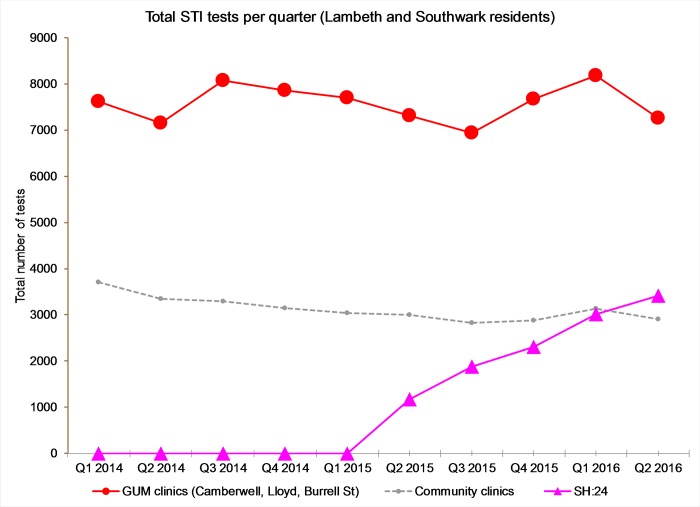
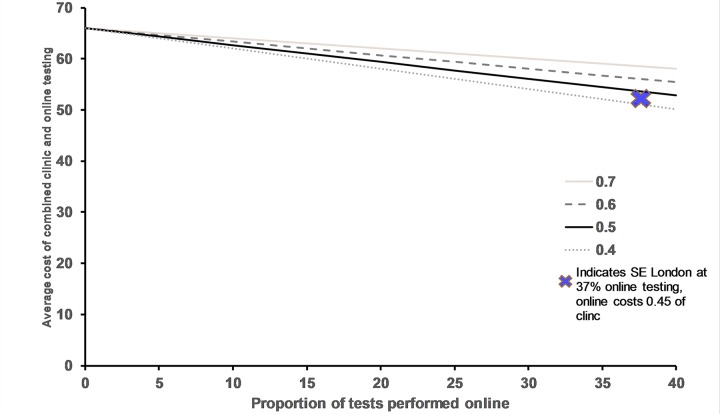
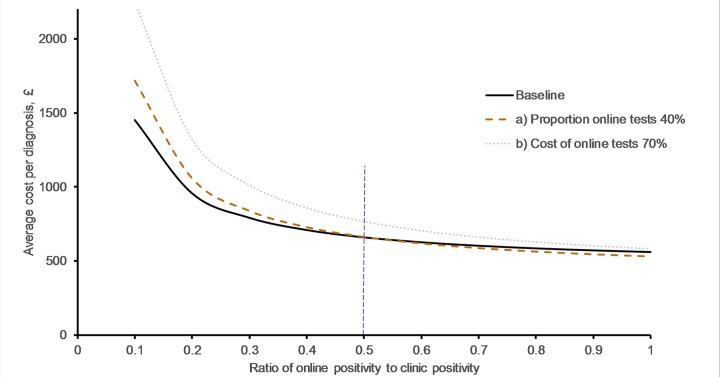
Methods and findings: Routinely collected, anonymised, retrospective data on sexual health service activity from all specialist services (clinic and online) within an inner London sexual health economy were collated and harmonised to generate a complete dataset of individual level clinic attendances. Clinic activity and diagnoses were coded using nationally standardised codes assigned by clinicians. Costs were taken from locally or regionally agreed sexual health tariffs. The introduction of online services changed patterns of testing. In an inner London sexual health economy, online STI testing increased total number of tests, the total cost of testing and total diagnoses while slightly reducing the average cost per diagnosis. Two years after the introduction of online services 37% of tests in the were provided online and total diagnoses increased. The positivity of online services is generally lower than that in clinics but varies between contexts. Where the positivity ratio between clinic and online is less than the cost ratio, online services will reduce cost per diagnosis. In this analysis, areas with different classifications as urban and rural had different clinic/online positivity ratios changing the cost effectiveness between areas. Even after the introduction of online services, simple STI testing activity continues in clinics and providers should consider online-first options where clinically appropriate.
Conclusions: Online services for STI testing are not 'stand alone'. They change STI testing behaviour with impacts on all elements of the sexual health economy. Planning, development and monitoring of such services should reference the dynamic nature of these systems and the role of online services within them.
Conflict of interest statement
Paula Baraitser is a Director of the 'not-for-profit' company SH:24 that provided the online sexual health services in the areas studied. Authors confirm that this does not alter our adherence to PLOS ONE policies on sharing data and materials.
Figures
References
-
- WHO. Sexually transmitted infections (STIs) Fact sheet. World Health Organisation Available from http://wwwwhoint/mediacentre/factsheets/fs110/en/. 2016.
-
- England PH. Sexually transmitted infections and chlamydia screening in England, 2015 2016 [Available from: https://www.gov.uk/government/uploads/system/uploads/attachment_data/fil... Archive by Website at (http://www.webcitation.org/6qZzFeoCs) Accessed 01/03/2017.
-
- Control ECfDPa. Public health benefits of partner notification for sexually transmitted infections and HIV. Accessed on the 10th august 2017 at https://ecdceuropaeu/sites/portal/files/media/en/publications/Publicatio.... 2013.
-
- Estcourt CS, Gibbs J, Sutcliffe LJ, Gkatzidou V, Tickle L, Hone K, et al. The eSexual Health Clinic system for management, prevention, and control of sexually transmitted infections: exploratory studies in people testing for Chlamydia trachomatis. The Lancet Public Health. 2017;2(4):e182–e90. 10.1016/S2468-2667(17)30034-8 - DOI - PubMed
Publication types
MeSH terms
LinkOut - more resources
Full Text Sources
Medical
