. 2019 Feb 22;14(2):e0212406.
doi: 10.1371/journal.pone.0212406. eCollection 2019.

Metagenomic analyses of the gut microbiota associated with colorectal adenoma

Affiliations

Metagenomic analyses of the gut microbiota associated with colorectal adenoma

Keisuke Saito et al. PLoS One. .

Expression of concern in

Abstract

Recent studies have suggested an association between certain members of the Fusobacterium genus, especially F. nucleatum, and the progression of advanced colorectal carcinoma (CRC). We assessed such an association of the gut microbiota in Japanese patients with colorectal adenoma (CRA) or intramucosal CRC using colonoscopy aspirates. We analyzed samples from 81 Japanese patients, including 47 CRA and 24 intramucosal CRC patients, and 10 healthy subjects. Metagenomic analysis of the V3-V4 region of the 16S ribosomal RNA gene was performed. The linear discriminant analysis (LDA) effect size (LEfSe) method was used to examine microbial dysbiosis, revealing significant differences in bacterial abundances between the healthy controls and CRA or intramucosal CRC patients. In particular, F. varium was statistically more abundant in patients with CRA and intramucosal CRC than in healthy subjects. Here, we present the metagenomic profile of CRA and intramucosal CRC and demonstrate that F. varium is at least partially involved in the pathogenesis of CRA and intramucosal CRC.


Conflict of interest statement

Toshitaka Odamaki, Kumiko Kato, and, Jin-zhong Xiao were employed by Morinaga Milk Industry Co., Ltd. This does not alter our adherence to PLOS ONE policies on sharing data and materials.

Figures
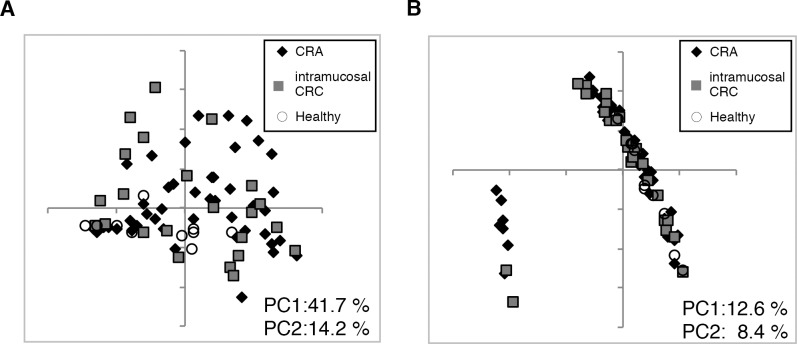
Fig 1
Fig 1
Principal coordinates analysis (PCoA) based on (A) weighted and (B) unweighted UniFrac distance. Diamond, CRA patient; Square, intramucosal CRC patient; Circle, healthy subject.
Fig 2
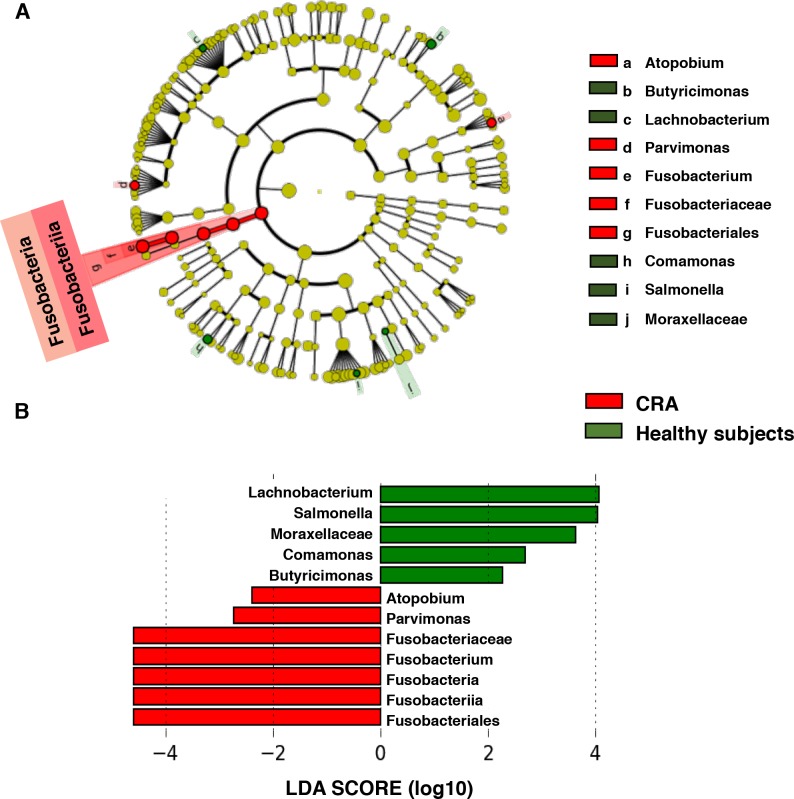
Fig 2. Characterization of microbiomes in CRA patients and healthy subjects by LEfSe analysis and LDA.
(A) Taxonomic representation of statistically and biologically consistent differences in CRA and healthy subjects. (B) Histogram of the LDA scores (log10) computed for features with differential abundance in CRA patients and healthy subjects.
Fig 3
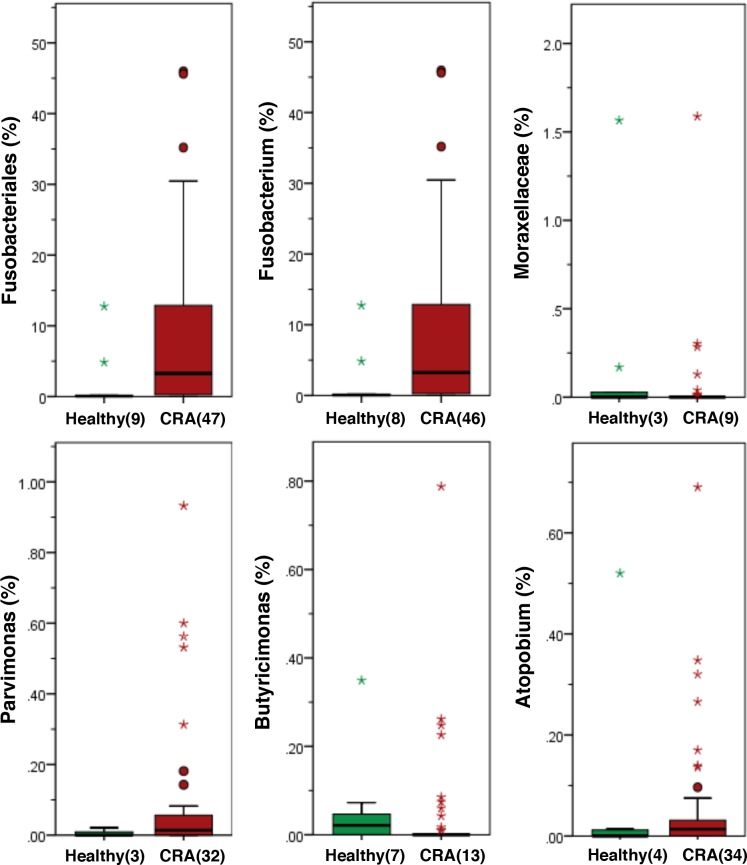
Fig 3. Histogram of the gut microbiota relative abundances in CRA patients and healthy subjects.
The relative abundances of the groups of bacteria displayed significant differences between CRA patients and healthy subjects (LDA score [log 10]>3) (p < 0.001). Data are presented as the mean ± SE. Numbers in parentheses indicate the number of subjects positive for a given group of bacteria.
Fig 4
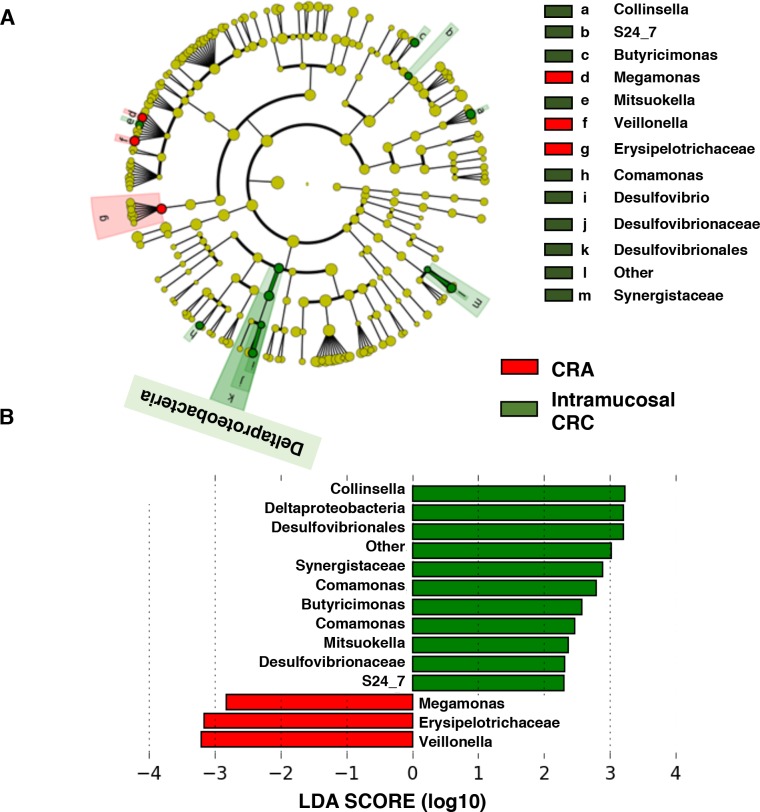
Fig 4. Characterization of microbiomes in intramucosal CRC patients and healthy subjects.
(A) Taxonomic representation of statistically and biologically consistent differences between healthy subjects and intramucosal CRC patients. (B) Histogram of the LDA scores (log10) computed for features differentially abundant in CRC patients and healthy subjects.
Fig 5
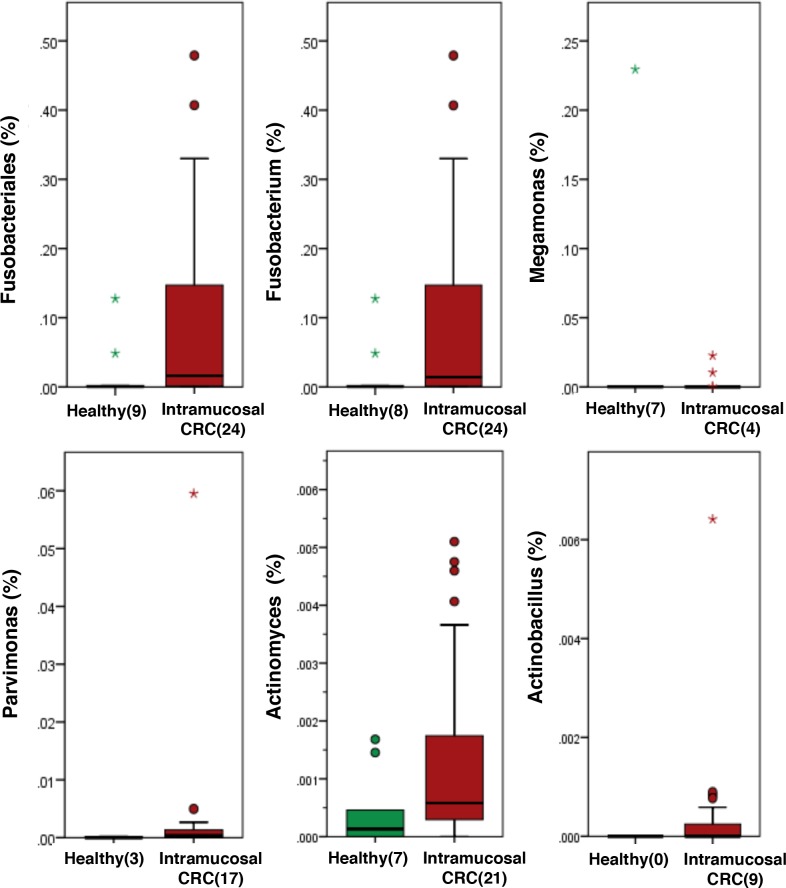
Fig 5. Histogram of the gut microbiota relative abundances in intramucosal CRC patients and healthy subjects.
Relative abundances of the groups of bacteria that displayed significant differences between patients with intramucosal CRC and healthy subjects (LDA score [log 10]>3) (p < 0.001). Data are presented as the mean ± SE. Numbers in parentheses indicate the number of subjects positive for a given group of bacteria.
Fig 6
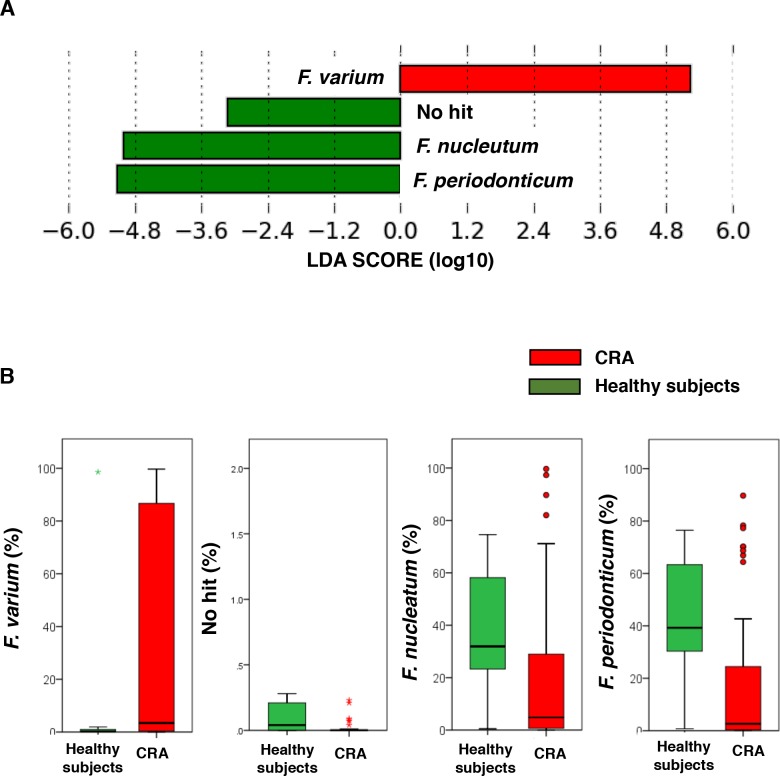
Fig 6. Characterization of Fusobacterium spp. in CRA patients and healthy subjects.
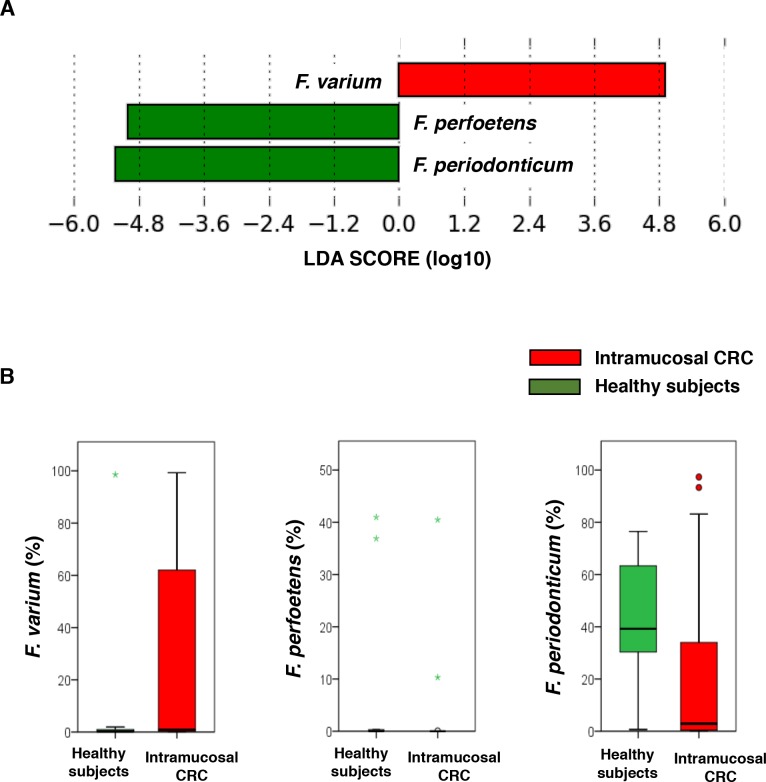
(A) Histogram of the LDA scores (log10) computed for Fusobacterium spp. features that were differentially abundant in CRA and healthy subjects. (B) Relative abundances of the groups of Fusobacterium spp. that displayed significant differences between CRA and healthy subjects (LDA score [log 10]>3) (p < 0.001). Data are presented as the mean ± SE. No hit (%) indicates that there was no information on the components in the database.
Fig 7
Fig 7. Characterization of Fusobacterium spp. in intramucosal CRC patients and healthy subjects.
(A) Histogram of the LDA scores (log10) computed for Fusobacterium spp. Features that were differentially abundant in intramucosal CRC and healthy subjects. (B) Relative abundances of the groups of Fusobacterium spp. displaying significant differences between intramucosal CRC and healthy subjects. (LDA score [log 10]>3) (p < 0.001). Data are presented as the mean ± SE.
Fig 8
Fig 8. Characterization of microbiomes in patients with CRA and intramucosal CRC by LEfSe analysis and LDA.
(A) Taxonomic representation of statistically and biologically consistent differences in patients with CRA and intramucosal CRC. (B) Histogram of the LDA scores (log10) computed for features that were differentially abundant in patients with CRA and intramucosal CRC.
Fig 9
Fig 9. Histogram of the gut microbiota relative abundances in patients with CRA and intramucosal CRC.
Relative abundances of the groups of bacteria that displayed significant differences between CRA patients and healthy subjects (LDA score [log 10]>3) (p < 0.001). Data are presented as the mean ± SE. Numbers in parentheses indicate the number of subjects positive for a given group of bacteria.

References

    1. Louis P, Hold GL, Flint HJ. The gut microbiota, bacterial metabolites and colorectal cancer. Nature reviews Microbiology. 2014;12(10):661–72. Epub 2014/09/10. 10.1038/nrmicro3344 . - DOI - PubMed
    1. Keku TO, Dulal S, Deveaux A, Jovov B, Han X. The gastrointestinal microbiota and colorectal cancer. American journal of physiology Gastrointestinal and liver physiology. 2015;308(5):G351–63. Epub 2014/12/30. 10.1152/ajpgi.00360.2012 - DOI - PMC - PubMed
    1. Arthur JC, Perez-Chanona E, Muhlbauer M, Tomkovich S, Uronis JM, Fan TJ, et al. Intestinal inflammation targets cancer-inducing activity of the microbiota. Science (New York, NY). 2012;338(6103):120–3. Epub 2012/08/21. 10.1126/science.1224820 - DOI - PMC - PubMed
    1. Castellarin M, Warren RL, Freeman JD, Dreolini L, Krzywinski M, Strauss J, et al. Fusobacterium nucleatum infection is prevalent in human colorectal carcinoma. Genome research. 2012;22(2):299–306. Epub 2011/10/20. 10.1101/gr.126516.111 - DOI - PMC - PubMed
    1. Kostic AD, Gevers D, Pedamallu CS, Michaud M, Duke F, Earl AM, et al. Genomic analysis identifies association of Fusobacterium with colorectal carcinoma. Genome research. 2012;22(2):292–8. Epub 2011/10/20. 10.1101/gr.126573.111 - DOI - PMC - PubMed

Publication types

Substances