. 2019 Feb 21;11(2):183.
doi: 10.3390/v11020183.

Development and Characterization of a Sin Nombre Virus Transmission Model in Peromyscus maniculatus

Affiliations

Development and Characterization of a Sin Nombre Virus Transmission Model in Peromyscus maniculatus

Bryce M Warner et al. Viruses. .

Abstract

In North America, Sin Nombre virus (SNV) is the main cause of hantavirus cardiopulmonary syndrome (HCPS), a severe respiratory disease with a fatality rate of 35⁻40%. SNV is a zoonotic pathogen carried by deer mice (Peromyscus maniculatus), and few studies have been performed examining its transmission in deer mouse populations. Studying SNV and other hantaviruses can be difficult due to the need to propagate the virus in vivo for subsequent experiments. We show that when compared with standard intramuscular infection, the intraperitoneal infection of deer mice can be as effective in producing SNV stocks with a high viral RNA copy number, and this method of infection provides a more reproducible infection model. Furthermore, the age and sex of the infected deer mice have little effect on viral replication and shedding. We also describe a reliable model of direct experimental SNV transmission. We examined the transmission of SNV between deer mice and found that direct contact between deer mice is the main driver of SNV transmission rather than exposure to contaminated excreta/secreta, which is thought to be the main driver of transmission of the virus to humans. Furthermore, increases in heat shock responses or testosterone levels in SNV-infected deer mice do not increase the replication, shedding, or rate of transmission. Here, we have demonstrated a model for the transmission of SNV between deer mice, the natural rodent reservoir for the virus. The use of this model will have important implications for further examining SNV transmission and in developing strategies for the prevention of SNV infection in deer mouse populations.

Keywords: Peromyscus maniculatus; Sin Nombre virus; deer mice; hantavirus.


Conflict of interest statement

The authors declare no conflicts of interest.

Figures
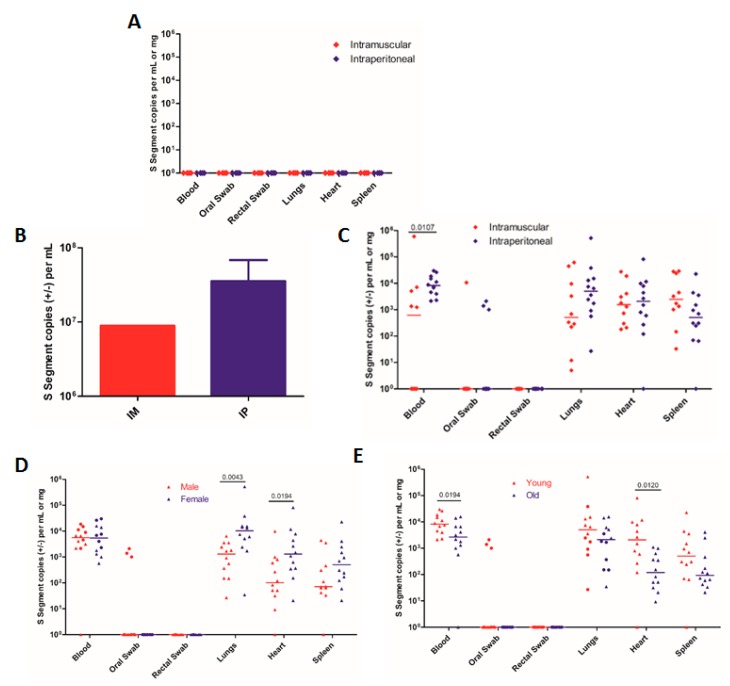
Figure 1
Figure 1
Sin Nombre virus (SNV) replication and shedding in male and female deer mice of different ages. (A) Groups of 1–2-month-old deer mice were inoculated with a VeroE6-adapted SNV. n = 4. (B) and (C) Groups of 10 (intramuscularly (IM) infected) or 12 (intraperitoneally (IP) infected) deer mice were infected with SNV, and S segment copies were detected in (B) pooled lung homogenates from each group for producing viral stocks or (C) each individual mouse to determine the amounts of viral replication and shedding. (B) 1 IM group was tested, and 3 IP groups were tested. (D) and (E) Comparison of replication and shedding seen in (D) male vs. female deer mice 10 days post-infection (circles: 1–2-month-old deer mice; triangles: 5–6-month-old deer mice) or (E) 1–2-month-old (young) vs. 5–6-month-old (old) deer mice 10 days post-infection (circles: male deer mice; triangles: female deer mice). The data shown are the mean + SEM (B) and medians (CE) for each group. The numbers indicate the p value as assessed by a Mann–Whitney test.
Figure 2
Figure 2
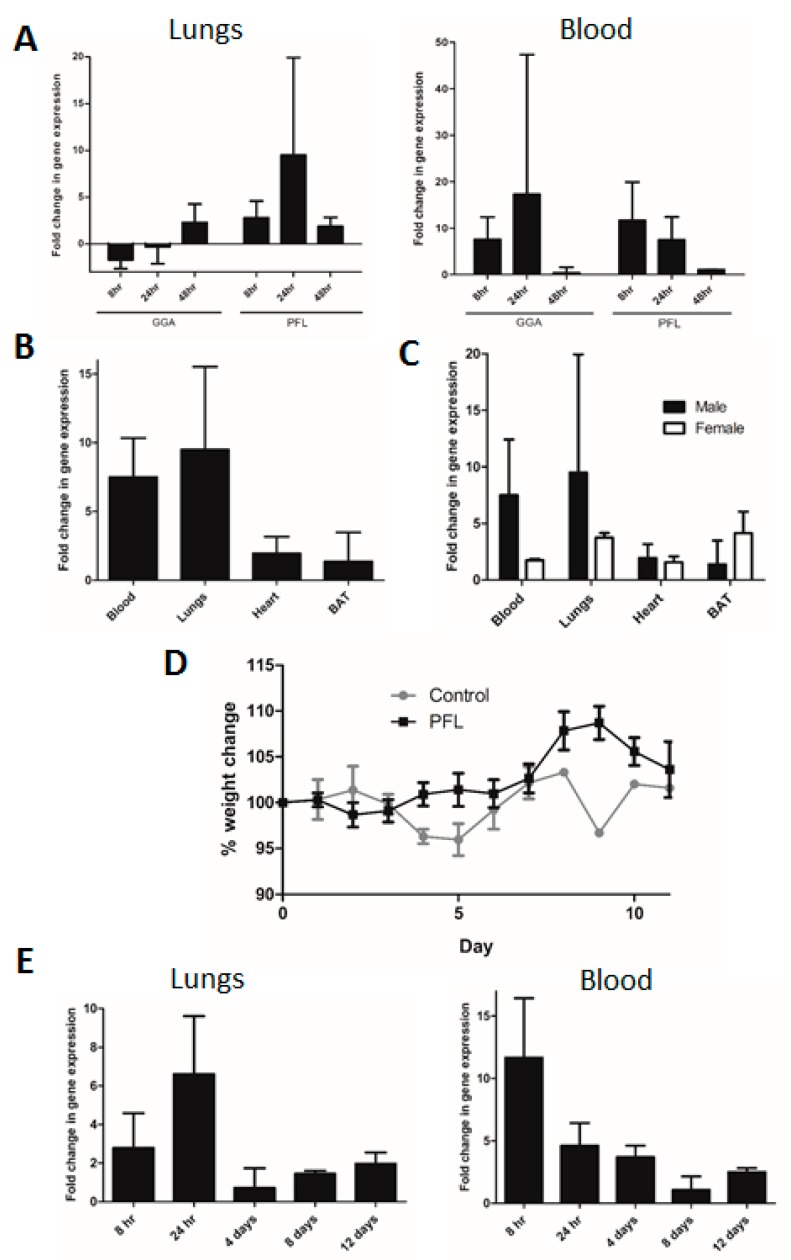
Induction of heat shock protein 70 (HSP70) expression in deer mice. (A) Levels of HSP70 expression were assessed in either the blood or the lungs as compared with the vehicle-treated mice. n = 3. (B) Mice were given PFL, and HSP70 expression was assessed 24 h later in tissues where SNV persistence has been shown to occur. n = 3. (C) HSP70 expression in various tissues in both male and female mice 24 h following oral gavage of PFL. n = 6. (D) Change in weight following daily doses of PFL for 7 days. n = 12. (E) HSP70 expression levels at different time points in the blood and lungs of deer mice following daily PFL administration. n = 12.
Figure 3
Figure 3
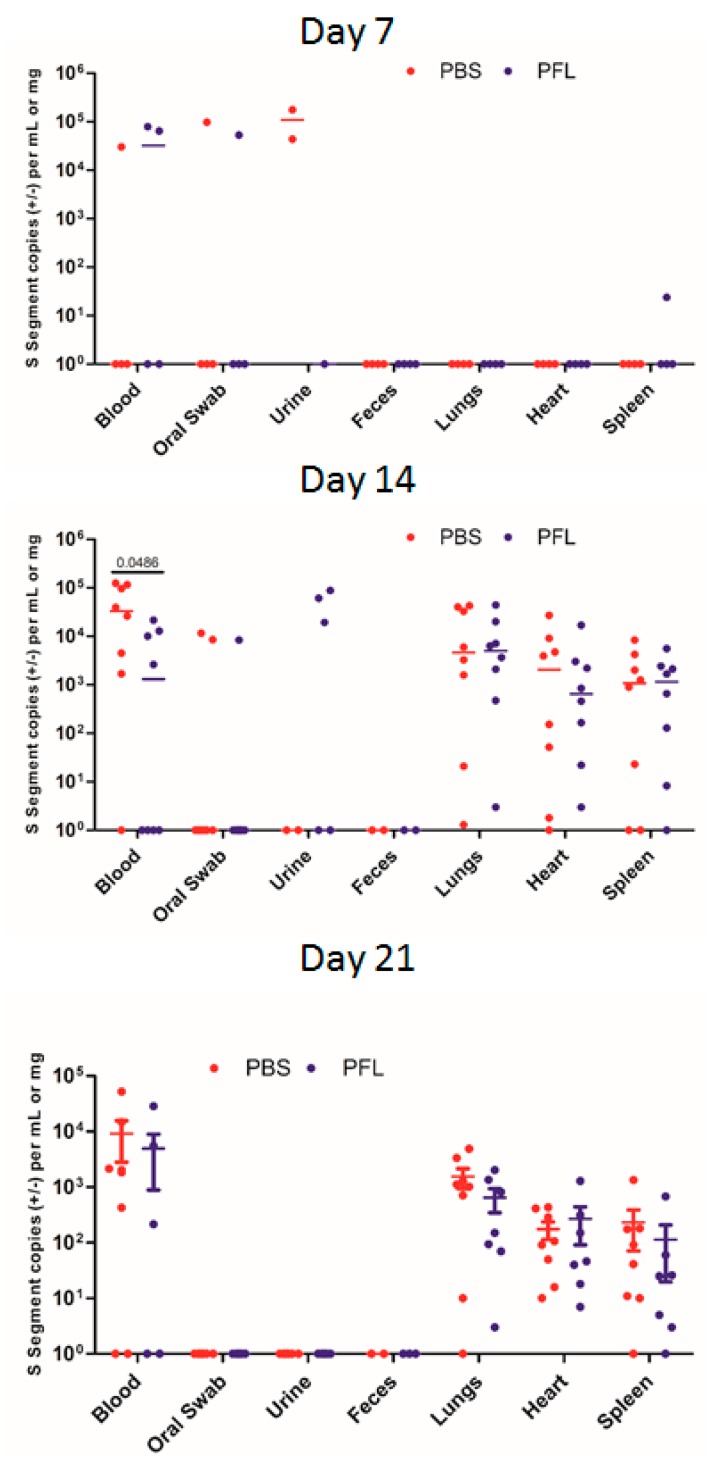
Replication and shedding of SNV in control and paeoniflorin (PFL)-treated deer mice. The SNV viral copy number was assessed in the tissues and samples listed at the indicated time points post-infection. The numbers indicate the p value as assessed by a Mann–Whitney test.
Figure 4
Figure 4
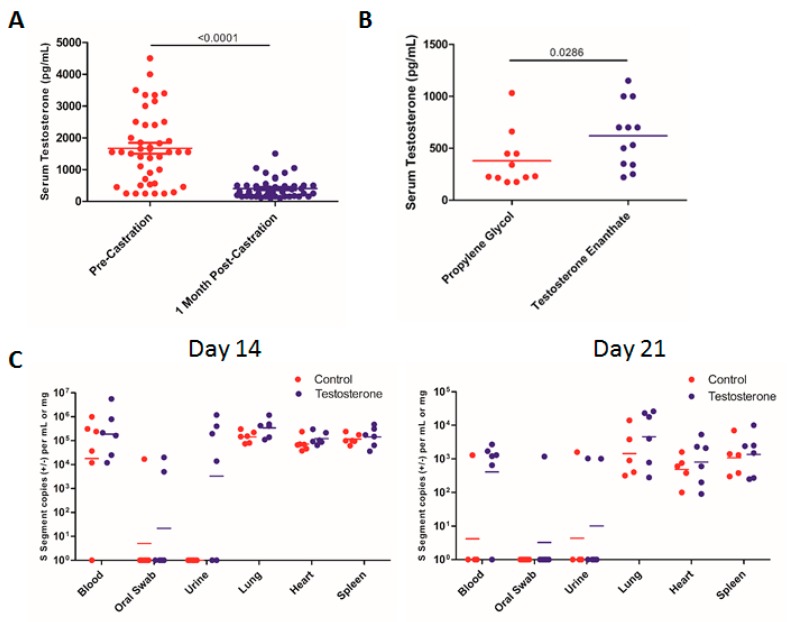
Replication and shedding of SNV in castrated male deer mice given testosterone. (A) Serum testosterone levels in deer mice before and 1 month following castration. (B) Serum testosterone levels in deer mice implanted with osmotic pumps containing either testosterone enanthate or the control. (C) The SNV viral copy number was assessed in the tissues and samples listed at the indicated time points post-infection. The numbers indicate the p value as assessed by a Mann–Whitney test.

References

    1. Muranyi W., Bahr U., Zeier M., van der Woude F.J. Hantavirus Infection. J. Am. Soc. Nephrol. 2005;16:3669–3679. doi: 10.1681/ASN.2005050561. - DOI - PubMed
    1. Lee H.W., Lee P.W., Johnson K.M. Isolation of the Etiologic Agent of Korean Hemorrhagic Fever. J. Infect. Dis. 1978;137:298–308. doi: 10.1093/infdis/190.9.1711. - DOI - PubMed
    1. Hjelle B., Jenison S., Torrez-Martinez N., Yamada T., Nolte K., Zumwalt R., MacInnes K., Myers G. A Novel Hantavirus Associated with an Outbreak of Fatal Respiratory Disease in the Southwestern United States: Evolutionary Relationships to Known Hantaviruses. J. Virol. 1994;68:592–596. - PMC - PubMed
    1. De St Maurice A., Ervin E., Schumacher M., Yaglom H., VinHatton E., Melman S., Komatsu K., House J., Peterson D., Buttke D., et al. Exposure Characteristics of Hantavirus Pulmonary Syndrome Patients, United States, 1993–2015. Emerg. Infect. Dis. 2017;23:733–739. doi: 10.3201/eid2305.161770. - DOI - PMC - PubMed
    1. Drebot M.A., Jones S., Grolla A., Safronetz D., Strong J.E., Kobinger G., Lindsay R.L. Hantavirus Pulmonary Syndrome in Canada: An Overview of Clinical Features, Diagnostics, Epidemiology and Prevention. Can. Commun. Dis. Rep. 2015;41:124–131. doi: 10.14745/ccdr.v41i06a02. - DOI - PMC - PubMed

Publication types