


Saliva molecular inflammatory profiling in female migraine patients responsive to adjunctive cervical non-invasive vagus nerve stimulation: the MOXY Study
- PMID: 30795781
- PMCID: PMC6387501
- DOI: 10.1186/s12967-019-1801-y
Saliva molecular inflammatory profiling in female migraine patients responsive to adjunctive cervical non-invasive vagus nerve stimulation: the MOXY Study
Abstract
Background: Rising evidence indicate that oxytocin and IL-1β impact trigemino-nociceptive signaling. Current perspectives on migraine physiopathology emphasize a cytokine bias towards a pro-inflammatory status. The anti-nociceptive impact of oxytocin has been reported in preclinical and human trials. Cervical non-invasive vagus nerve stimulation (nVNS) emerges as an add-on treatment for the preventive and abortive use in migraine. Less is known about its potential to modulate saliva inflammatory signaling in migraine patients. The rationale was to perform inter-ictal saliva measures of oxytocin and IL-1ß along with headache assessment in migraine patients with 10 weeks adjunctive nVNS compared to healthy controls.
Methods: 12 migraineurs and 12 suitably matched healthy control were studied with inter-ictal saliva assay of pro- and anti-neuroinflammatory cytokines using enzyme-linked immuno assay techniques along with assessment of headache severity/frequency and associated functional capacity at baseline and after 10 weeks adjunctive cervical nVNS.
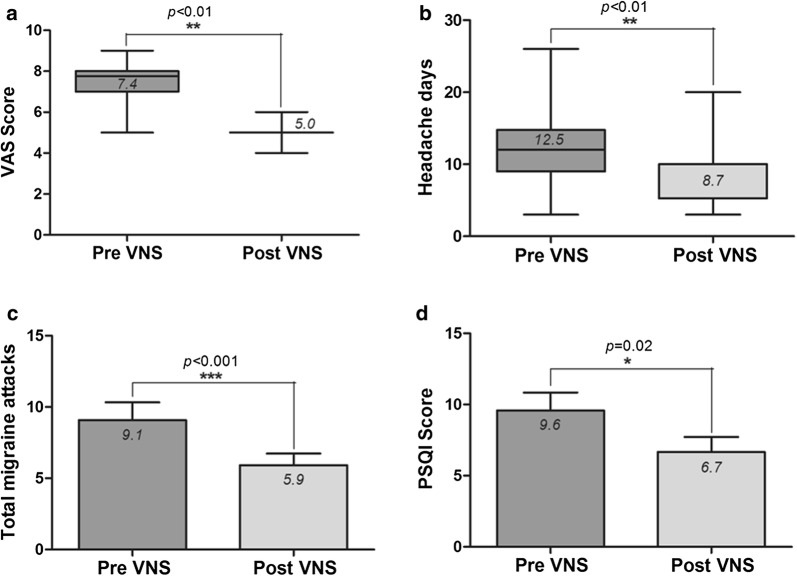
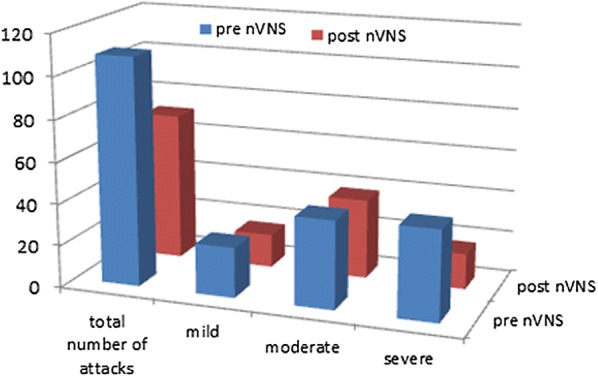
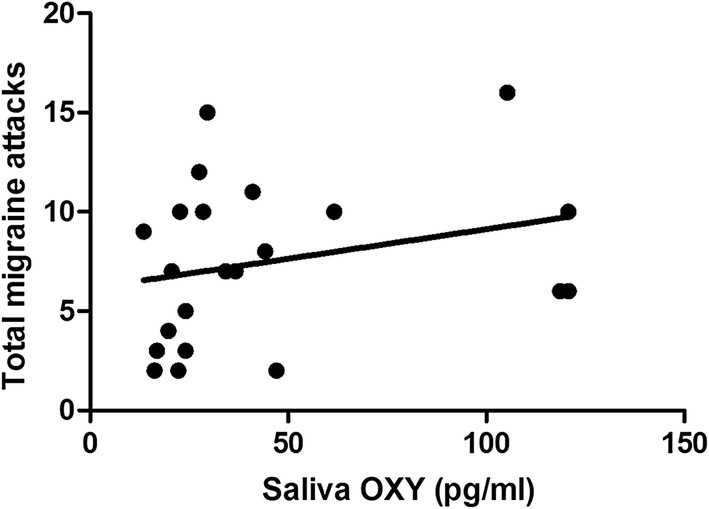
Results: nVNS significantly reduced headache severity (VAS), frequency (headache days and total number of attacks) and significantly improved sleep quality compared to baseline (p < 0.01). Inter-ictal saliva oxytocin and IL-1β were significantly elevated pre- as well as post-nVNS compared to healthy controls (p < 0.01) and similarly showed changes that may reflect the observed clinical effects.
Conclusions: Our results add to accumulating evidence for a therapeutic efficacy of adjunct cervical non-invasive vagus nerve stimulation in migraine patients. This study failed to provide an evidence-derived conclusion addressed to the predictive value and usefulness of saliva assays due to its uncontrolled study design. However, saliva screening of mediators associated with trigemino-nociceptive traffic represents a novel approach, thus deserve future targeted headache research. Trial registration This study was indexed at the German Register for Clinical Trials (DRKS No. 00011089) registered on 21.09.2016.
Keywords: Cervical non-invasive vagus nerve stimulation; MOXY pilot study; Migraine; Saliva oxytocin/IL-1β; Trigemino-nociceptive signaling.
Figures


References
-
- Murray CJ, Vos T, Lozano R, Naghavi M, Flaxman AD, Michaud C, et al. Disability-adjusted life-years (DALYs) for 291 diseases and injuries in 21 regions. 1990–2010: a systemic analysis for the global burden of disease study 2010. Lancet. 2012;380:2197–2223. doi: 10.1016/S0140-6736(12)61689-4. - DOI - PubMed
Publication types
MeSH terms
Substances
LinkOut - more resources
Full Text Sources
Medical
